



Want to stand taller and break the habit of hunching? Pushing your chest out is rarely enough. Hours at a computer or looking down at a phone can leave your shoulders rounded and your head drifting forward. Strengthening the muscles that support your shoulder blades, back, and core can make an upright posture easier to maintain.
Wu Hung-chien, director of Taiwan’s E Sheng Chinese Medicine Clinic, said that, in traditional Chinese medicine (TCM), a persistently collapsed chest may interfere with the flow of qi and blood. Qi refers broadly to the body’s vital energy, while blood nourishes its tissues. From that perspective, Wu said, prolonged slumping may contribute to a sense of restricted breathing or chest tightness.
A rounded upper back can also have causes beyond everyday posture, including spinal changes and osteoporosis. If the curve is pronounced or worsening, or you have persistent pain, numbness, or weakness, seek a professional evaluation before beginning an exercise routine.
For posture related to muscle strength and control, it helps to work beyond the chest. The following moves target the upper back, shoulder blades, and core. Research suggests that therapeutic exercise can improve forward head and rounded shoulder posture, though progress takes consistent practice.
6 Exercises to Strengthen Your Back Muscles
You don’t need a gym—or fancy equipment—to start improving your posture. These six simple moves can be done at home in 10 minutes a day to gradually build strength and improve your posture and alignment.
1. Push-Ups
Step 1: Place your hands on the floor, slightly wider than shoulder-width apart. Kneel on the floor with your feet lifted off the ground.
Step 2: Engage your abs and glutes, keeping your head, shoulders, back, hips, and knees in as straight a line as possible.
Step 3: Inhale as you slowly lower your body, bending your elbows diagonally backward. Avoid letting your lower back sag or arch excessively.
Step 4: Exhale as you straighten your elbows and push your body back to the starting position.
Push-ups primarily work the chest and triceps, but they also require shoulder-blade stability and core control, making them a useful part of an overall upper-body strengthening routine.
2. Superman Reach
Step 1: Lie face down with your legs naturally extended. Place your arms alongside your body, elbows bent to form a W shape.
Step 2: Inhale as you gently lift your legs, chest, and arms off the floor.
Step 3: Exhale as you extend your arms forward, then slowly bring them back into the W position.
Keep your neck naturally aligned throughout the movement. Avoid tilting your head too far back or arching your lower back just to lift higher. In addition to strengthening your back, this exercise improves shoulder-blade control.
3. Superman Scapular Retraction
Step 1: Lie face down with your legs extended and your arms alongside your body, elbows bent into a W shape.
Step 2: Inhale as you slowly lift your arms and legs off the floor, raising your chest slightly. Gently draw your shoulder blades back and together.
Step 3: Exhale as you slowly lower yourself back to the starting position.
The goal isn’t to lift as high as possible, but to focus on controlled movement and feeling your shoulder blades drawing steadily back and together.
4. Mermaid Lift
Step 1: Lie face down with your legs extended and your hands beside your body.
Step 2: Inhale as you use your hands to gently lift your upper body off the floor.
Step 3: Exhale as you slowly lower your upper body back to the starting position.
Keep the range of motion small and controlled. Avoid excessive lower-back arching or forcefully pushing yourself up with your arms. This exercise primarily trains the muscles along the back of the torso and their ability to maintain control.
5. Prone Leg Raise
Step 1: Lie face down with your legs extended. You can place your hands under your forehead to keep your neck in a natural position.
Step 2: Gently lift both legs off the floor.
Step 3: Continue breathing normally as you hold the position for as long as is comfortable, then slowly lower your legs.
Avoid focusing on lifting your legs as high as possible, as this can cause excessive lower-back arching. Instead, focus on engaging your glutes and the muscles along the back of your torso.
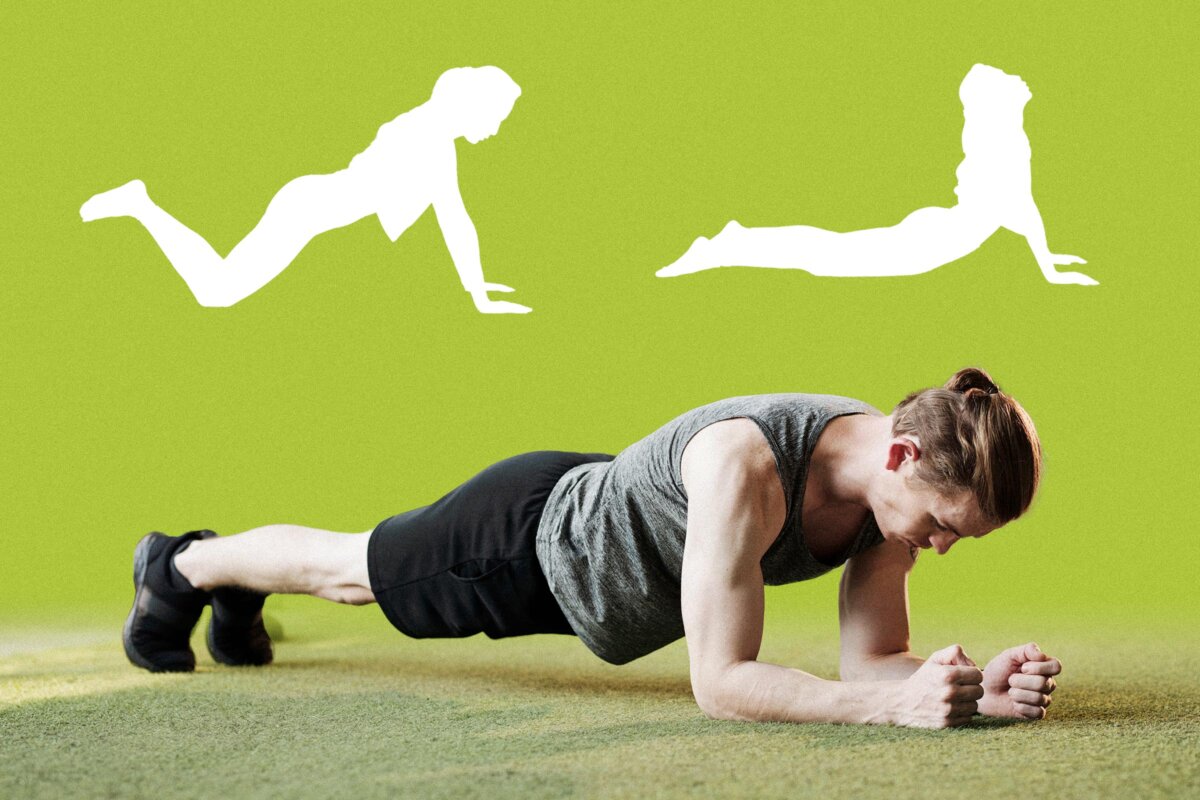
6. Plank
Step 1: Start face down and support your body on your forearms and toes. Keep your forearms flat on the floor with your elbows directly beneath your shoulders. Position your feet about shoulder-width apart.
Step 2: Engage your abs and glutes, keeping your head, shoulders, back, hips, and ankles roughly aligned in a straight line.
Step 3: Continue breathing normally as you hold the position, then slowly lower your body back to the floor.
The plank primarily trains core stability. A strong, stable core supports your upper body and helps you maintain good posture.