



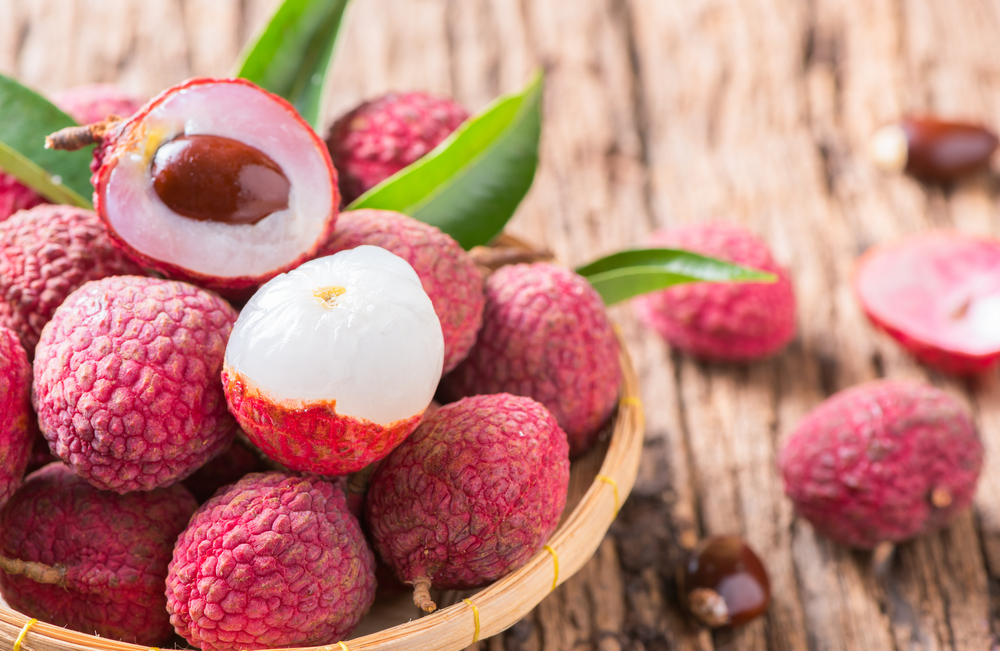
The lychee (Litchi chinensis), an exotic tropical fruit, is a strange round globe with red bumpy skin. The rough rind is easily peeled with the fingers, revealing an opaque white, sweet, and juicy pulp surrounding a dark seed. Also known as “alligator strawberry,” it has been cultivated in China for thousands of years and used in traditional Chinese medicine to alleviate pain and gastrointestinal disorders. The name lychee translates to “gift of a joyful life” in Chinese. Today it grows in many other tropical countries, including India, Vietnam, Indonesia, Australia, Mexico, and the United States.
According to nutritionist Avni Kaul of the University of Delhi, lychees are especially rich in polyphenols and flavonoids, which act as powerful antioxidants in the body. The seeds contain the highest concentration of polyphenols of any fruit tested, second only to strawberries.
Quercetin and oligonol, two powerful antioxidants, help give lychees properties to reduce inflammation, combat stress, and support cardiovascular and diabetic health.
Benefits
Heart
Lychee’s high concentration of vitamin C supports cardiac health by preventing atherosclerosis, hypertension, and stroke. Lychee’s potassium contributes to electrolyte balance which regulates blood pressure and heart rate, while its copper is essential for producing red blood cells. Oligonol, the most important of the polyphenols, acts on the peripheral circulation as a vasodilator.
Glucose Metabolism and Diabetes
Although lychees contain a significant level of fructose and glucose, their low glycemic index of 50 makes them suitable for people with diabetes when eaten in moderation.
A 2013 review published in Complementary and Alternative Medicine states that lychee seed extract has antidiabetic activity that reduces insulin resistance. They also found the polyphenol oligonol helpful with diabetes-related vascular problems.
However, unripened lychees contain the compound hypoglycin A which can cause a drop in glucose levels leading to hypoglycemia. A 2017 Lancet report established a link between the consumption of unripened lychees and hypoglycemia and death in malnourished children in India.
Cancer
Research out of China that examined prostate cancer states that lychee oligonol acts as an antioxidant and may potentially stop the cell growth of other cancers.
This explains why lychees are a traditional Chinese herbal ingredient for liver tonics to strengthen hepatic and pancreatic functions. A recent study using cell cultures and live mice treated with lychee skin (pericarp) extract showed cellular protection from fatty liver disease, which can lead to cirrhosis, liver failure, and liver cancer. This study also indicated the ability of the extract to accelerate cell repair of damaged liver cells.
Brain
Preliminary studies on rats using an oligonol extract and green tea preparation showed promise for reducing cognitive impairment in early Alzheimer’s.
Weight Loss
The high fiber and low calories of lychees can help in weight loss. Their oligonol content may help fight inflammation and oxidative stress associated with obesity.
A 12-week study of overweight and obese women found that those who took lychee-extracted oligonol had lower triglycerides and no weight gain compared to those who took a placebo.
Digestion
Lychees are a known laxative due to their bulk-producing fiber, which helps overcome constipation.
Skin
The high vitamin C concentration in lychees is a powerful antioxidant that reduces inflammation and the antiaging effects of oxidation. It helps produce collagen, thus improving skin appearance while reducing wrinkles and spots.
Nutrition
The vitamin C in lychees equals 89 percent of the recommended daily requirement. This helps heal, repair, and maintain the health of many bodily systems.
According to FoodDataCentral, 2020, 100 grams or approximately ten fresh lychees contain:
- 66 calories.
- .83 grams of protein.
- .44 grams of fat.
- 16.5 grams of carbohydrates.
- 1.3 grams of fiber.
- 15.2 grams of sugar.
- 71.5 milligrams of Vitamin C.
- 171 milligrams of potassium.
- 0 milligrams of cholesterol.
- Trace minerals calcium, selenium, zinc, manganese, iron, copper, and magnesium.
Risks
Lychee contains some proteins that can lead to rare allergic reactions. A few studies reported symptoms such as hives, itchiness, swelling of the lips and tongue, and difficulty breathing.
Unripened lychees contain hypoglycin A which may be toxic if you eat too many. According to NutritionFacts.org, 30 ripe lychees are too many at a time for children, while adults should eat less than 200 at a time.
Tips on Eating Lychees
- Remove the peel and eat the soft fruit, discard or save the seeds for the tip below.
- Air dry the seeds, then grind them into a fine powder using a blender or spice grinder. This homemade lychee seed powder can be added to smoothies, yogurt, or as a seasoning for various dishes.
- Fresh lychees can be refrigerated for 5 to 10 days. They can also be frozen whole with the peel on.
Correction: A previous version of this article contained incorrect nutritional value figures for 100 grams of lychee. The Epoch Times regrets the error.