



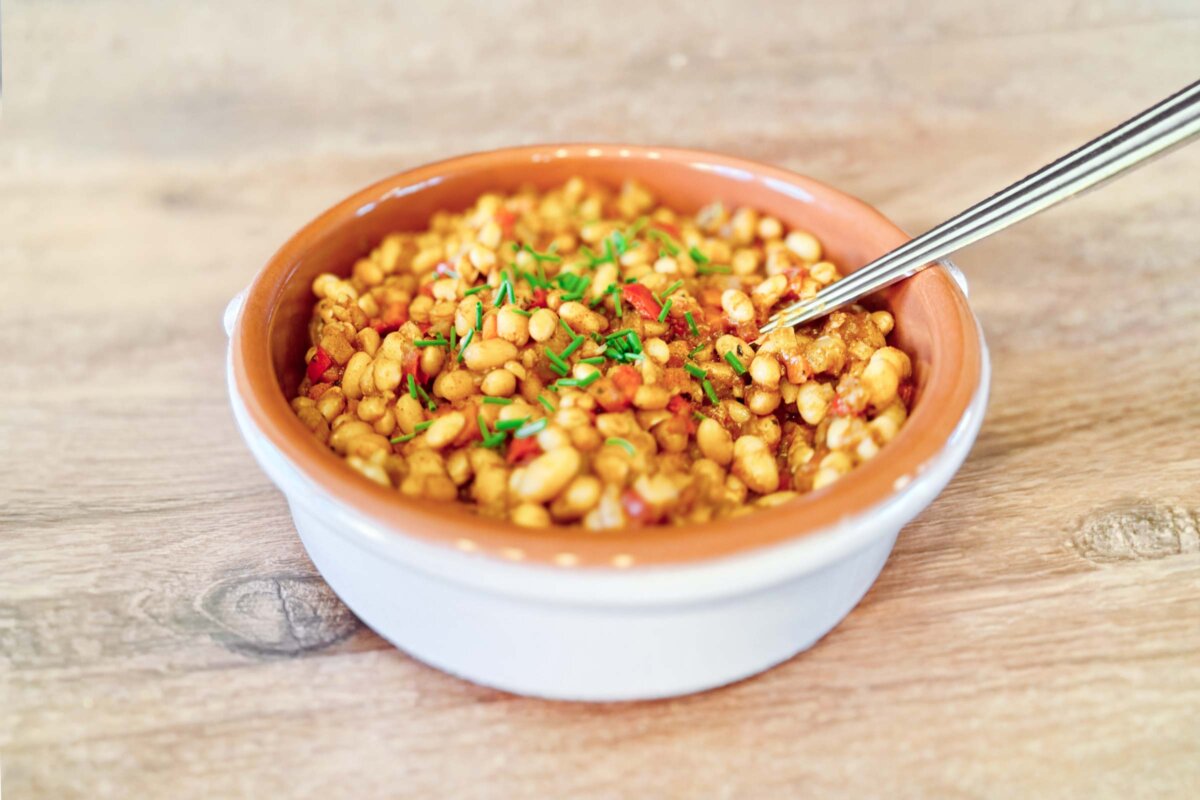
These smoky baked beans will make your kitchen smell cozy and inviting this Memorial Day. Unfortunately, most store-bought and many homemade recipes rely on refined sugar, corn syrup, ketchup, and other ultra-processed ingredients for that sticky-sweet flavor. A small serving can hide several teaspoons of added sugar.
This homemade version takes a different route. A fire-roasted tomato base with onion, carrot, red bell pepper, garlic, thyme, and smoked paprika provides campfire depth. Medjool dates replace brown sugar, creating a rich, naturally sweet sauce. Bacon is optional; extra-virgin olive oil carries the flavor, while smoked paprika adds a classic smoky note.
Real-Food Ingredients, No Refined Sugar
There’s solid nutrition logic behind the comfort of baked beans. The beans provide fiber that feeds beneficial gut bacteria, and the fiber and protein promote satiety. Vegetables and herbs add antioxidants, while healthy fats support the absorption of fat-soluble compounds. Soaking the beans reduces the cooking time, improves digestibility, and reduces antinutrients, which may help the body absorb more of the minerals they contain.
These two whole-food ingredients deliver the sweetness and depth, replacing the refined sugar and ultra-processed ingredients most recipes rely on:
- Medjool Dates: Replace the brown sugar, corn syrup, or molasses found in many baked bean recipes. Medjool dates dissolve into the sauce, creating the same sticky sweetness while adding fiber, potassium, and other minerals rather than empty calories and a blood sugar spike.
- Fire-Roasted Tomatoes: Replace ketchup, which often contains corn syrup, refined sugar, and other additives. Fire-roasted tomatoes provide natural sweetness, a rich tomato base, and a subtle smoky flavor without the ultra‑processed ingredients. They also contain lycopene, an antioxidant linked to reduced risk of heart disease and certain cancers.
How to Make Smoky Baked Beans
Slow‑baked navy beans in a smoky tomato–date sauce make a cozy, crowd‑pleasing side that’s naturally sweetened and made from simple, real‑food ingredients.
Prep Time: 25 minutes
Soak Time: 8 to 12 hours
Cook Time: 1 hour, 20 minutes
Total Time: 10 to 14 hours
Serves 6 to 8
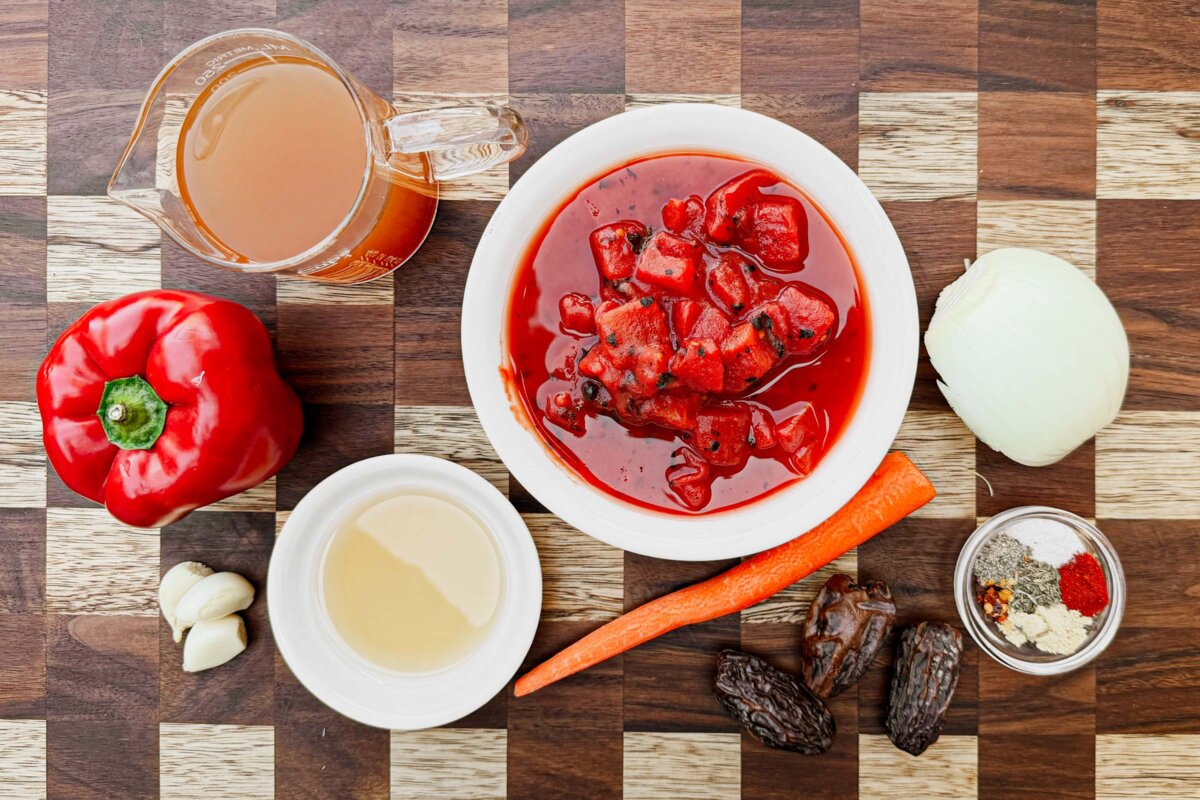
Ingredients
- 1 pound dried navy beans, rinsed, soaked overnight, and drained
- 3 to 4 Medjool dates, pitted and chopped
- 2 tablespoons extra-virgin olive oil or avocado oil
- 1 medium yellow onion, finely chopped
- 1 small carrot, finely chopped
- 1 small red bell pepper, finely chopped
- 3 cloves garlic, minced
- 2 teaspoons smoked paprika
- 1 teaspoon ground mustard
- 1 to 2 teaspoons fresh thyme leaves or 1/2 teaspoon dried thyme
- 1 teaspoon sea salt
- 1/2 teaspoon freshly ground black pepper
- Pinch of crushed red pepper flakes, or more to taste
- 1 (14- to 15-ounce) can fire-roasted tomatoes
- 1 to 2 tablespoons raw apple cider vinegar
- 1 to 2 cups vegetable broth, as needed
Instructions
- Place the soaked and drained beans in a large pot and cover with filtered water by about 1 inch. Bring to a boil, reduce to a gentle simmer, and cook for about 20 to 30 minutes, until just tender but not mushy. Drain well and set aside.
- When the beans are almost done cooking, preheat the oven to 325 F.
- Place the dates in a small bowl and add just enough hot water to cover them. Set them aside to soak for about 10 minutes, until softened.
- Heat the olive or avocado oil in a large, oven-safe Dutch oven over medium heat. Add the onion, carrot, and red bell pepper and cook, stirring occasionally, for 8 to 10 minutes until softened and lightly golden.
- Add the garlic, smoked paprika, ground mustard, thyme, salt, black pepper, and crushed red pepper flakes, if using. Cook, stirring constantly, for 1 to 2 minutes, until fragrant.
- In a blender, combine the dates and their soaking water with the tomatoes, vinegar, and 1 cup of the vegetable broth. Blend for 1 to 2 minutes until the dates are pureed. Add the mixture to the Dutch oven; bring to a simmer and cook for about 5 minutes, stirring occasionally, until the sauce reduces slightly.
- Taste the sauce and adjust for flavor.
- Fold the cooked, drained beans into the sauce, adding up to 1 cup more broth as needed so the mixture is saucy but not soupy.
- Cover the Dutch oven and bake for about 60 minutes until the beans are soft and creamy, stirring once or twice and adding a splash more broth if the beans look too dry.
Storage
Store any leftovers in a covered container in the refrigerator for up to five days, or freeze for up to three months. The beans may soften slightly after freezing and reheating, so for the best texture, avoid overcooking them before freezing.
Notes and Variations
- A pinch of baking soda in soaking water may reduce gas and cooking time, but too much makes beans mushy. Do not add it to cooking water, especially when pressure cooking.
- To save time, the beans can be pressure-cooked for nine to 12 minutes instead of simmering. Check the manufacturer’s instructions and adjust accordingly.
- To avoid using the oven in warm weather, the simmered beans and prepared sauce can be cooked in a slow cooker on low for four to six hours. Add broth as needed to keep them saucy.
Frequently Asked Questions
The following questions and answers cover some practical details about ingredients, digestion, and blood sugar.
Q: Can canned beans be used instead of dried?
A: Yes, but dried beans save money, and the soaking step improves digestibility and reduces antinutrients. If using canned, the texture will be softer and the flavor slightly less developed. Choose a low-sodium option, rinse well under cold running water until no foam remains, and reduce the oven-baking time to 30 to 40 minutes, since the beans are already fully cooked.
Q: Can these smoky baked beans cause gas, and is there anything that helps?
A: Beans contain oligosaccharides—complex carbohydrates that gut bacteria ferment—which can cause gas, especially in people who do not eat beans regularly. Soaking and thoroughly rinsing the beans before cooking removes some of these compounds. Other helpful strategies include adding a pinch of baking soda to the soaking water, cooking the beans with kombu or a bay leaf, taking a digestive enzyme containing alpha-galactosidase before eating, and starting with small portions so your gut can adapt over time.
Q: Aren’t Medjool dates just another form of sugar?
A: Medjool dates are a form of sugar. The difference is how they behave in the body. Dates are a whole food that also provides fiber, potassium, and polyphenols that slow digestion and absorption. Conversely, brown sugar and molasses are concentrated sweeteners that deliver sugar without the same buffering effect from fiber.
Q: Will these baked beans spike blood sugar for someone with insulin resistance or diabetes?
A: While these baked beans are lower in sugar than many canned or traditional versions, they still contain carbohydrates and natural sugars. Portion size, pairing with fat and protein, and individual response all matter for blood sugar management.