



I love old movies. I find it amazing how polished and professional many of the old-time actors and actresses were, and many of the subjects they covered still have strong relevance today.
A movie I watched recently was called “The Admirable Crichton,” a made-for-television remake of the original. In this movie, a group of aristocrats is shipwrecked, only to discover that their butler is the only one capable of ensuring their survival until help arrives.
I admired how effectively the lead character transitioned his practical training as a butler into survival skills. It then occurred to me how busy and engaged today’s “household estate managers” are and how many of their duties require a certain degree of physical fitness.
Maybe butlers are on to something.
5 Exercises to Keep Your Muscles in Service
Let’s see if we can emulate some of the movements the modern butler does on a frequent—if not daily—basis and turn them into exercises that can help keep us fit.
These exercises work well for my patients, and I regularly perform many of them myself. I think they’ll work well for you, but I recommend consulting your medical provider to ensure that they are right for you.
1. Waiter’s Carry
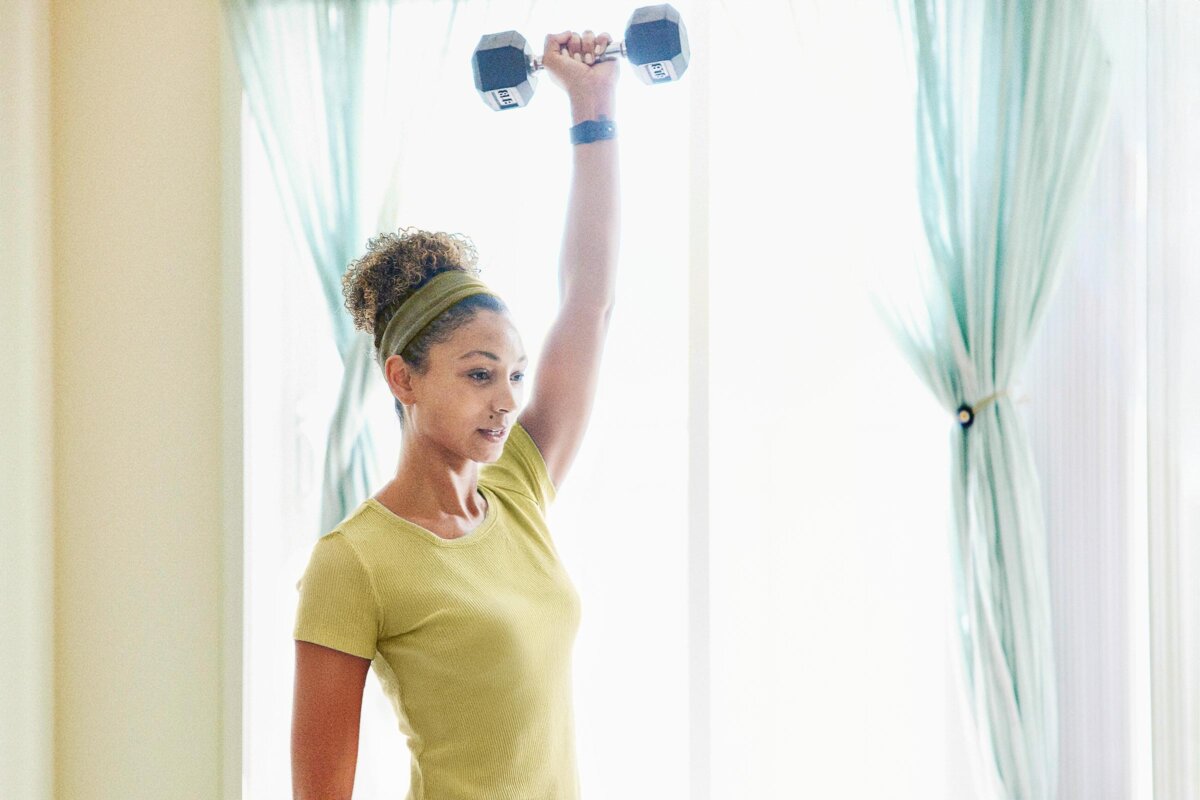
Waiters can serve many drinks in a day, often carrying them on a laden tray. It’s good exercise for the server, and it can be good exercise for us, too. The waiter’s carry exercise is great for cardiovascular strengthening, balance, and shoulder flexibility.
Step 1: Stand holding a 2-pound weight with your right hand, and push your arm straight overhead. Make sure your arm is straight up rather than at an angle, and keep your posture upright rather than leaning away from your midline to counterbalance the weight.
Step 2: Once you have the weight stabilized overhead, begin walking while keeping your arm up. Walk at your normal pace for 30 seconds.
Step 3: Lower your arm in the reverse form that you raised it, and switch the weight to your left hand. Perform the exercise on that side for another 30 seconds.
Step 4: Performing the waiter’s carry for 30 seconds on one side counts as one set.
Step 5: Try to perform three 30-second carries per side.
Modifications: You can perform the carry for more or less than 30 seconds, depending on your abilities or desires, and you can also do more or fewer sets.
Why I Like It: The waiter’s carry exercise takes a good bit of focus to complete and is energy-intensive, which is a good thing. You’ll understand why I only have you perform it for 30 seconds at a time after a set or two.
2. Single-Leg Romanian Deadlift
Butlers have to set many things down and pick many things up, adding to their good shape. We don’t always reach down with both hands to pick things up, and this is where the single-leg Romanian deadlift comes in, because it emulates single-hand item pickup. It’s a great strengthening and balance exercise that can benefit all of us, not just butlers.
Step 1: Stand with a weight in your right hand, and your feet approximately 2 feet apart.
Step 2: Slowly lower the weight to the ground while keeping your back straight and lifting your left leg at the same time. Keep your left leg in line with your trunk as you move downward.
Step 3: Keeping the form, return to standing while lowering your left leg back down to the ground.
Step 4: Lowering the weight to the floor and rising back up counts as one repetition. Try to perform three sets of 12 repetitions on both the right and left sides, either performing all movements on one side and then the other or alternating sides as you go.
Modifications: Stand next to a stable surface, such as a wall, if maintaining your balance while performing the activity is a challenge.
Why I Like It: The single-leg Romanian deadlift is a multi-focus exercise that benefits both balance and strength.
3. Suitcase Carry
Butlers often carry many suitcases, which can build robust full-body strength. In fact, the suitcase carry is a classic weighted exercise that can benefit everyone.
Step 1: Stand holding a weight in one hand. I suggest approximately 2 pounds per side.
Step 2: Maintaining an upright posture, start walking at your normal pace and continue for one minute.
Step 3: After one minute, switch the weight to the other hand and walk for another minute.
Step 4: Perform the activity three times per side, alternating hands as you go.
Modifications: Use more or less weight to make the exercise easier or harder. You can also increase or decrease the amount of time you spend walking.
Why I Like It: The suitcase carry strengthens your body asymmetrically, providing an excellent core strengthening movement that’s easy to perform.
4. Chair Squats
An abundance of sitting and standing movements occur in the day of a butler—and also for us. Strong quadriceps and gluteal muscles help us get up from sitting, climb and descend stairs, and sit-to-stand exercises can help.
Step 1: Sit at the front of a chair, holding your arms straight out in front of you or with your hands clasped in front of your chest. Set your feet hip-width apart.
Step 2: Lean forward and slowly stand up.
Step 3: Return to a sitting position. Move slowly in both directions, and avoid landing hard as you sit, as this can put stress on your back.
Step 4: Standing up and sitting back down counts as one repetition. Try to perform three sets of 12 repetitions.
Modifications: Is it too challenging to sit all the way down and then rise back up? Only go down partially before coming back up. Want to increase the challenge? You can add repetitions or hold a weight in your hands.
Why I Like Them: This exercise can seriously power up your glutes and quads, making you feel younger and stronger while improving your movement safety.
5. Standing T-Spine Rotations
The average butler performs many reaching movements requiring a great deal of flexibility. T-spine rotations are great for everyone, and you’ll love the stretch they provide.
Step 1: Stand with both arms straight out in front of you and place your palms together.
Step 2: Keeping your left arm straight out in front, slowly bring your right arm behind you. Keep your elbow straight, your arm level, and follow your hand movement with your head.
Step 3: As soon as you move back as far as you can, reverse direction and slowly bring your arm back around until your palms are touching again. Remember to follow the movement with your head.
Step 4: Moving your arm back and then forward counts as one repetition. Try to perform three sets of 15 repetitions per side. You can either alternate movements in a left-right pattern or perform all repetitions on one side, then the other.
Modifications: Only rotate as far as you can safely and comfortably.
Why I Like It: The standing T-spine rotation exercise feels wonderful once you’ve warmed up a little. As a side benefit, it can help you stand taller by straightening your upper thoracic spine.
You don’t have to be a butler to reap the benefits of these exercises. With regular practice, you’ll become stronger and more flexible, potentially increasing your overall quality of life. I recommend that you perform them at least three days per week and optimally five days per week. I hope they serve you well.
About the fitness model: Aerowenn Hunter is a health editor and fitness model for The Epoch Times. Vibrant in her 60s, she’s an accredited yoga therapist who has dedicated three decades to teaching yoga.
Views expressed in this article are the opinions of the author and do not necessarily reflect the views of The Epoch Times. Epoch Health welcomes professional discussion and friendly debate. To submit an opinion piece, please follow these guidelines and submit through our form here.