



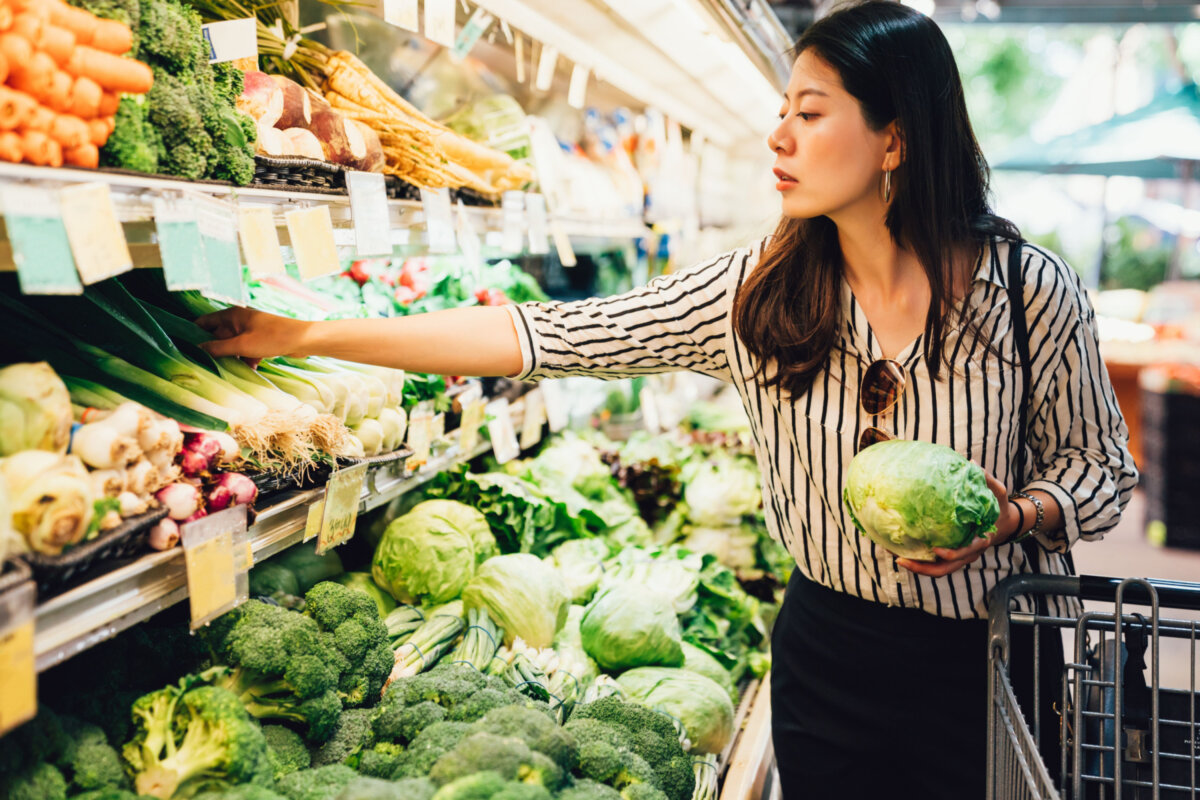
Organic foods are often deemed as the best food choice, but some experts say the label may not have the same value as it used to.
The Changing Meaning of Organic
Broadly speaking, organic food is food that has been grown or made without the use of certain herbicides, pesticides, and fertilizers. For animal-sourced foods, it typically means that products such as meat, fish, poultry, eggs, and dairy are free of synthetic hormones and genetically modified feed.
The organic movement began in the 1940s after farmers started to use synthetic fertilizers and pesticides during the Green Revolution to produce higher yields, rather than relying on the more traditional methodologies such as composting, crop rotation, cover cropping, and grazing animals on pasture, techniques that ensured soil health and vitality. As the concern over soil erosion and its adverse effects on the environment grew, so did the movement.
Some say that organic doesn’t hold the same meaning that it did when it was initially introduced into the food supply system.
Marion Nestle, a former professor of nutrition, food studies, and public health at New York University and former senior nutrition policy adviser at the Department of Health and Human Services, told The Epoch Times that the original meaning of organic more closely resembles what many today label regenerative agriculture—a way of farming that relies on the more traditional practices of farming to reinstate soil health, increase land resiliency, manage natural resources, and ensure biodiversity and farmer subsistence. She notes that what the U.S. Department of Agriculture (USDA) calls “organic” often does not guarantee these things.
“USDA’s organic standards restrict pesticides, genetic modification, and sewage sludge but do not require regenerative practices necessarily, although some organic farmers use them,” Ms. Nestle commented.
She says industrial organic can circumvent organic requirements, adding, “Industrial organic follows the organic rules to the extent it must, but cuts corners to reduce costs.”
The corner-cutting and economies of scale put larger industrial farms and what Ms. Nestle calls “Big Organic” at a significant advantage over smaller, family-owned farms. When asked if there were loopholes in the organic system that larger businesses could exploit, Ms. Nestle replied, “Yes. Every one they can.”
Is Organic Food More Nutritious?
There is still debate among the medical and scientific communities about whether organic is actually more nutritious than conventionally grown food.
“To date, there are no long-term clinical trials measuring the direct health outcomes from an organic diet,” Kerry Torrens, registered nutritionist and regular contributor to the BBC’s “Good Food” magazine and show, told The Epoch Times. Ms. Torrens pointed out the complexity of such comparisons while noting that there is little difference between the two on a macronutrient level.
“That said,” she continued, “observational research appears to be making some important findings that link the intake of organic food with health benefits.” Those benefits seem more about what’s not in organic food than what’s in them.
Ms. Torrens says consumers are right to be concerned about pesticide exposure, not only for their own health but that of future generations. Pesticides have been linked to ear infections in children, fertility issues, and allergies, among other concerns. “Current knowledge supports the toxicity of these chemicals, so it seems plausible that reducing exposure should translate to health benefits. In addition, the health of the soil is critical for the health of the planet and future populations,” Ms. Torrens added.
An observational study published in JAMA Internal Medicine in 2018 followed nearly 70,000 French adults and found that those with the highest consumption of organic foods had a 25 percent reduced risk of cancer over the seven years of the study. However, this type of study can’t prove cause and effect, so more research is needed.
Most nutritionists say that, particularly in the current food landscape with easy access to a wide variety of processed food, the emphasis should be on eating a whole-food diet rather than splitting hairs over organic labeling.
Making the Choice
With so much confusion around organic labeling, some are trying to make it easier for consumers to decide what to buy.
Advocacy groups, including the Environmental Working Group (EWG), have created tools to help consumers discern which organic produce is worth purchasing. A popular resource referred to as the “Dirty Dozen” lists fruits and vegetables that are more likely to be tainted by chemicals and have high levels of pesticides, usually because of their thin or nonexistent skin. The most recent version of the list includes berries, greens such as spinach and kale, apples, peaches, and green beans.
Alternatively, “The Clean Fifteen” lists non-organic fruits and vegetables that are relatively safe to eat due to lower levels of pesticide residues, according to EWG’s analysis of the most recent USDA data. Avocados, sweet corn, pineapple, and onions top that list.
The choice to eat organically or conventionally grown food can also be influenced by factors such as personal concerns, financial considerations, geographic location, and food availability. Big cities such as New York or Los Angeles have frequent farmers markets that offer produce and animal products from farms that operate just outside the cities. Those living in smaller, more remote areas may have to put more effort into resourcing organic options. In such areas, more emphasis can be placed on replacing processed foods with more fruits and vegetables. A better understanding of the food supply, how it affects health, and what options are available can help shoppers make educated decisions.