



To celebrate the last few days of the fall season, I thought an article on falls would be timely. Specifically, I want to focus on the vestibular aspect of falls.
The vestibular system provides our sense of balance and body position in space and helps us compensate in response to outside and deliberate forces or movements. The following are some of the exercises we use clinically to maximize balance related to the vestibular system.
Falls are a tremendous generator of new clients in the rehabilitation setting. They naturally become more likely as we age, and vestibular problems can further increase our chances of falling. Let’s start with a quick discussion of the different balance systems.
In a nutshell, you use the following three systems for balance:
- Sensation: Joint sensation and tactile feedback from your body—especially your feet—help you with balance and positional orientation.
- Vision: Your eyes provide a very real—and real-time—feedback mechanism.
- Inner Ear or Semicircular Canals: Fluid-filled canals help determine your head’s positional orientation in space and contribute to balance.
Let’s focus on the inner ear.
Practice Tips:
- These exercises can make you quite swimmy-headed at first, but you’ll soon get a handle on them and improve with practice. Since all the exercises are performed standing, consider being near a support point, such as a wall, counter, or chair.
- This exercise series focuses on general strengthening and fine-tuning your vestibular system, not specific diagnoses. Many factors can contribute to dizziness and instability, so if you are experiencing dizziness and feelings of instability or worry about falling when standing or walking, I highly recommend you speak with a medical professional.
- These exercises work well for my patients, but you might wish to speak with your medical professional to ensure they are right for you.
6 Exercises to Boost Balance
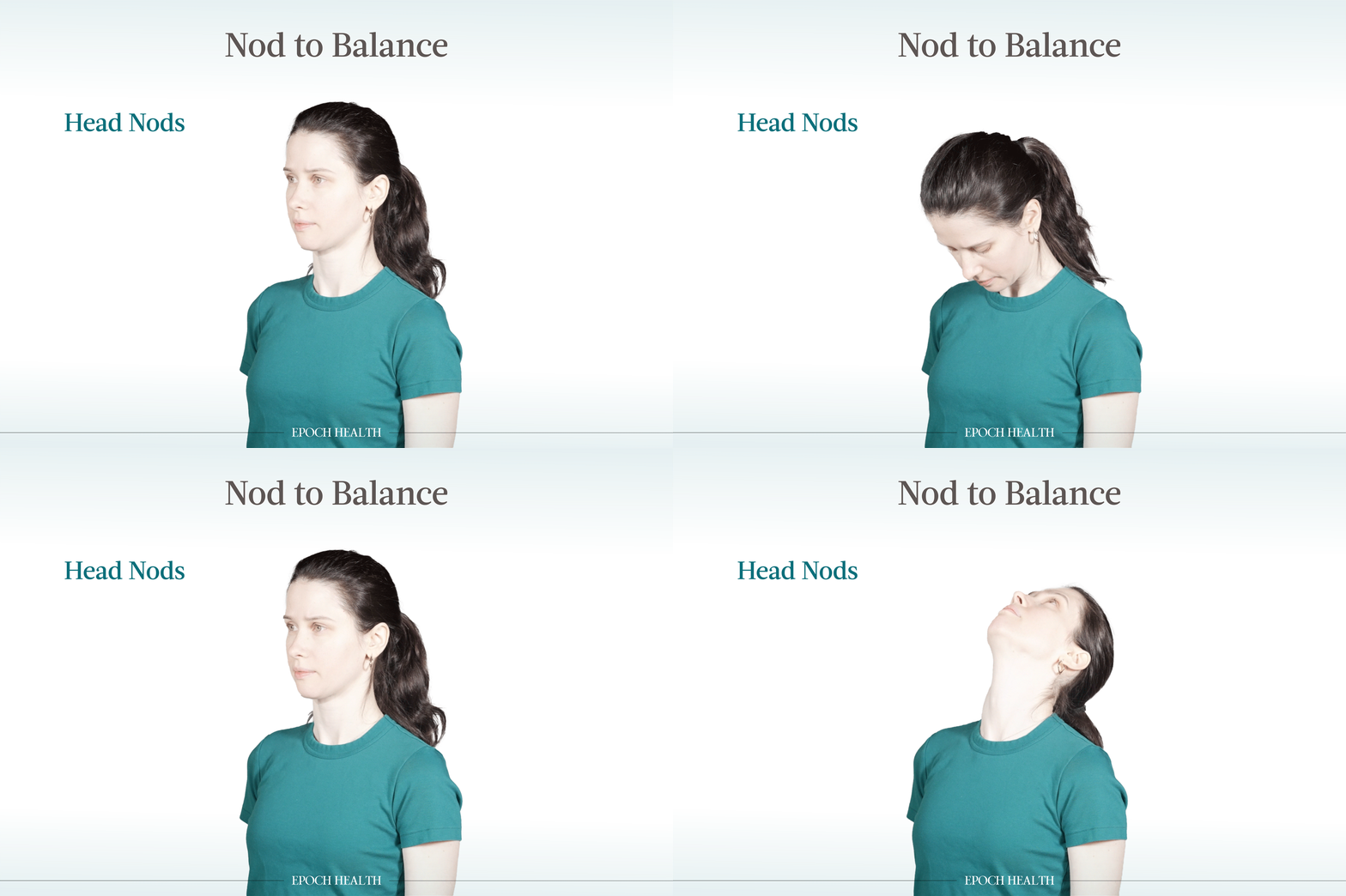
1. Head Nods
This exercise is easy, which makes it a good place to start. Head nods work on your head’s movement in space.
Tips:
- If you get dizzy, pause until your head clears.
- At first, don’t focus on anything in particular as you perform the movements. Once you feel comfortable doing that, retry the exercise while concentrating on a single spot on the wall in front of you. This is known as gaze stabilization and helps develop and preserve balance.
Step 1: Stand tall and tuck your chin toward the bottom of your neck.
Step 2: Raise your nose as high as possible toward the ceiling. Move slowly, taking approximately one second to transition between up and down.
Step 3: Moving your head down and up counts as one repetition. Try to perform two sets of 30 repetitions. Modify your sets and repetitions as needed.
2. Lateral Head Flexion
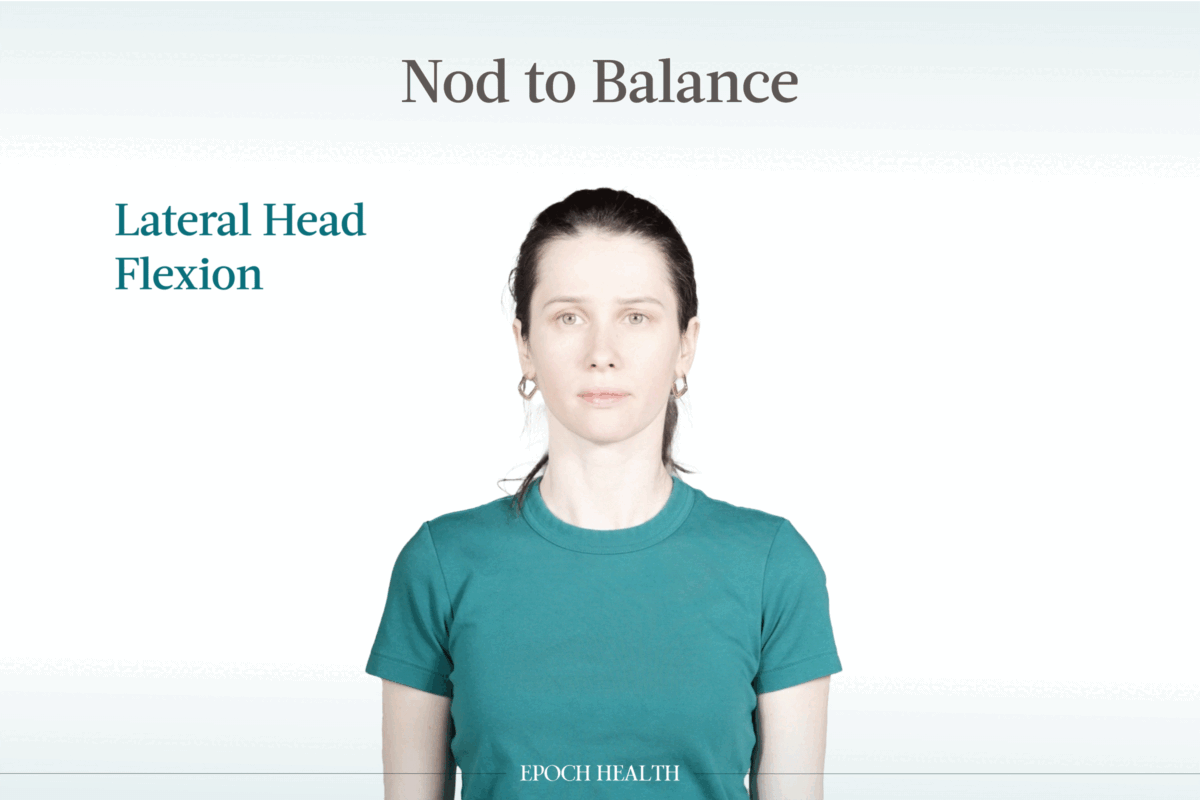
Now, let’s change the movement into a left and right lateral neck flexion.
Tip: Use the gaze stabilization tip mentioned in the first exercise.
Step 1: While standing, bring your right ear toward your right shoulder as far as you comfortably can, then move your head back up to the starting position. Pause for one second before moving to the right side.
Step 2: Moving your head to the right and then the left counts as one repetition. Try to perform two sets of 30 repetitions.
3. Left/Right Head Turning With Gaze Stabilization
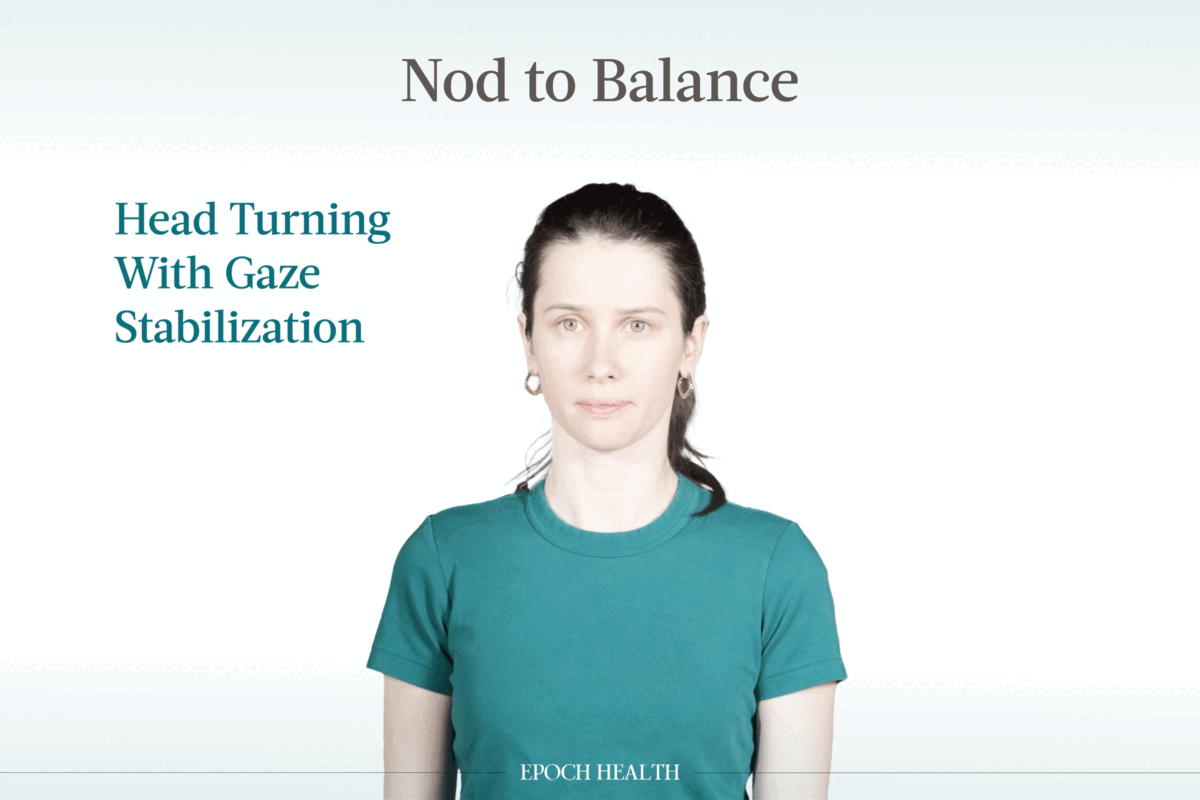
Next, we move into lateral head movements. After the first few rounds without a focused gaze, use the gaze stabilization technique.
Step 1: While standing, slowly turn your head to the right and then to the left. Take approximately one second to complete each movement.
Step 2: Moving your head to the right and then the left counts as one repetition. Try to perform two sets of 30 repetitions.
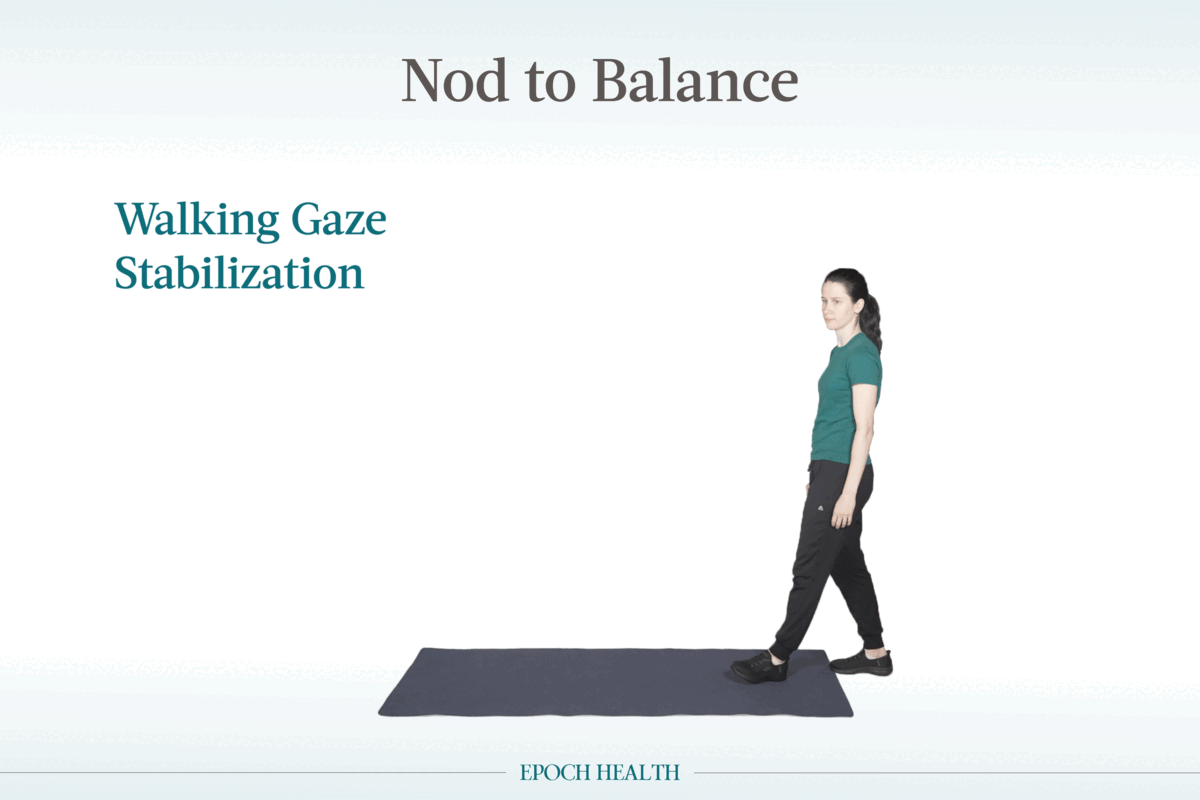
4. Walking Gaze Stabilization
The walking gaze stabilization exercise moves the vestibular training into dynamic mobility. Since it involves walking, you will need to make sure you have plenty of space to move.
Tip: Slow the activity down if needed and resist any impulse to speed up.
Step 1: Start by slowly walking, turning your head toward the foot stepping forward (if your right foot moves forward, turn your head to the right and then to the left as your left foot steps forward).
Step 2: Once comfortable with that, hold your right arm out in front of you with your thumb up like you’re hitchhiking and focus carefully on your fingernail. As you continue the walking pattern, turn your head with your footsteps while keeping your arm straight forward and your eyes focused on your thumbnail.
Modification: As you walk and turn your head, move your arm from side to side while keeping your eyes focused on your thumbnail. This teaches your brain, eyes, and inner ear to work together. The larger definition is somewhat complex, but the exercise is thankfully simple. And who knows, someone might stop and give you a ride.
5. Tandem Stance/Tightrope
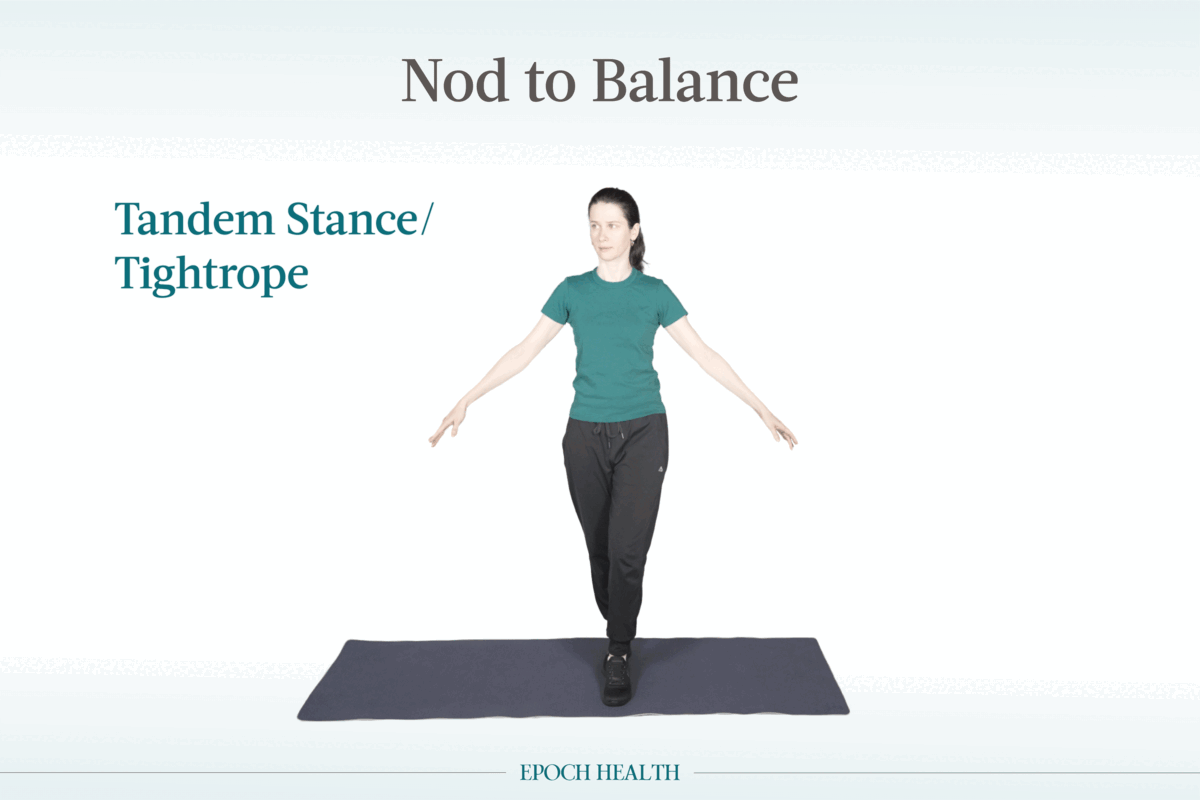
This practical exercise works on functional balance by forcing you to maintain standing in a balance-disadvantaged position. Adding head movements further increases the challenge.
Tip: Remember to do head turns slowly to control your movement and make maintaining your balance easier.
Step 1: While standing, place one foot directly in front of the other, with its heel touching the toe of the other foot. You can hold your arms straight out from your sides to help maintain your balance.
Step 2: Turn your head from left to right as you stand. Initially, don’t focus on anything specific to allow your body to become accustomed to the activity. Following this, use your thumb as a target to keep your eyes steadily focused (like you did in the walking gaze stabilization exercise).
Step 3: Performing this activity for one minute is considered one set. Try to perform three sets.
6. Pillow Stands
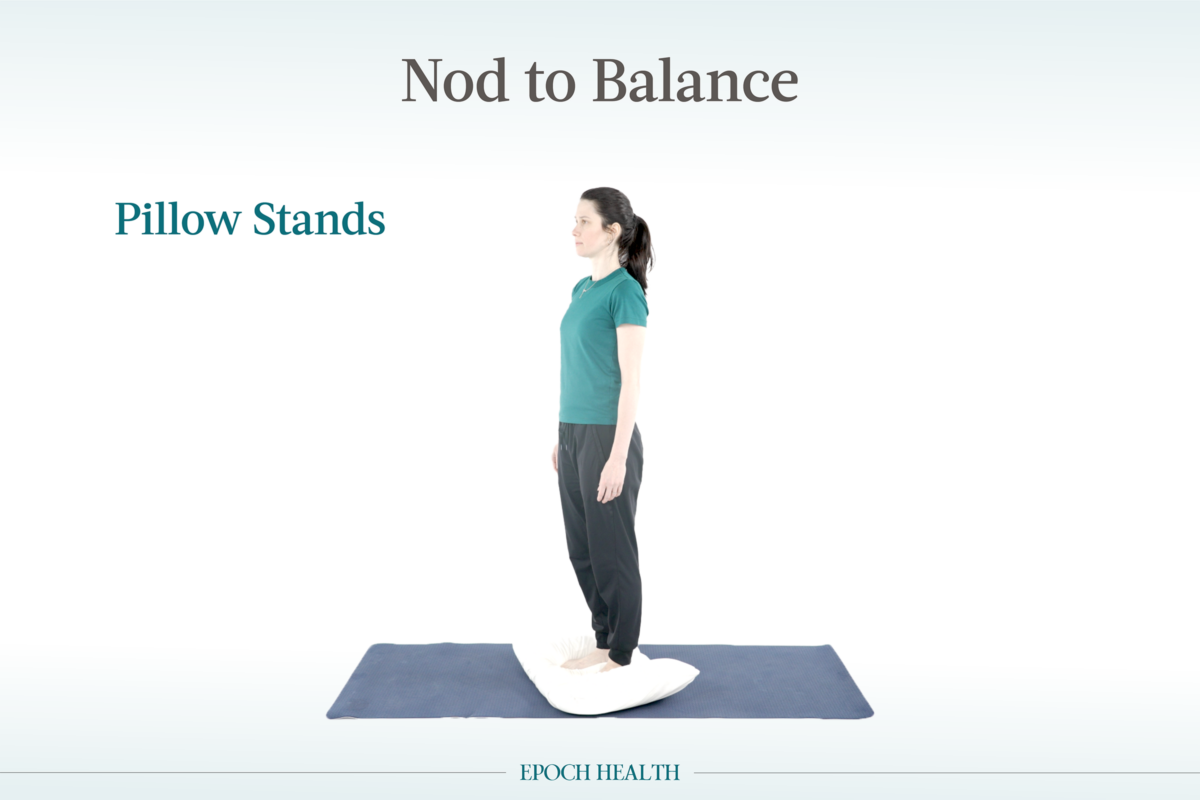
Pillow stands are excellent for building dynamic balance when the feet are placed in a disadvantaged position. By standing on a pillow, you’re decreasing your ability to use the sensation of your feet to assist with balance. Adding head rotations can add to the challenge.
Step 1: Stand on a firm pillow at least four inches thick. Place your feet approximately 1 foot apart to make balancing easier or side-by-side to increase difficulty.
Step 2: Standing on the pillow for one minute is considered one set. Try to complete three sets. If it seems simple, let me assure you that your body is having to do a lot of work. Standing on progressively thicker pillows can help increase the challenge.
Modification: You can increase the difficulty of this activity by incorporating lateral head flexion, turning, and nods. You can increase it even further by closing your eyes.
There are many approaches to strengthening your vestibular system and balance, and the exercises I’ve provided can help. I also wish to reiterate that many things can cause vestibular symptoms like dizziness and loss of balance, including falls. If you struggle with these symptoms, I suggest seeing your physician to explore potential causes and establish guided personal rehabilitation.
Views expressed in this article are the opinions of the author and do not necessarily reflect the views of The Epoch Times. Epoch Health welcomes professional discussion and friendly debate. To submit an opinion piece, please follow these guidelines and submit through our form here.