



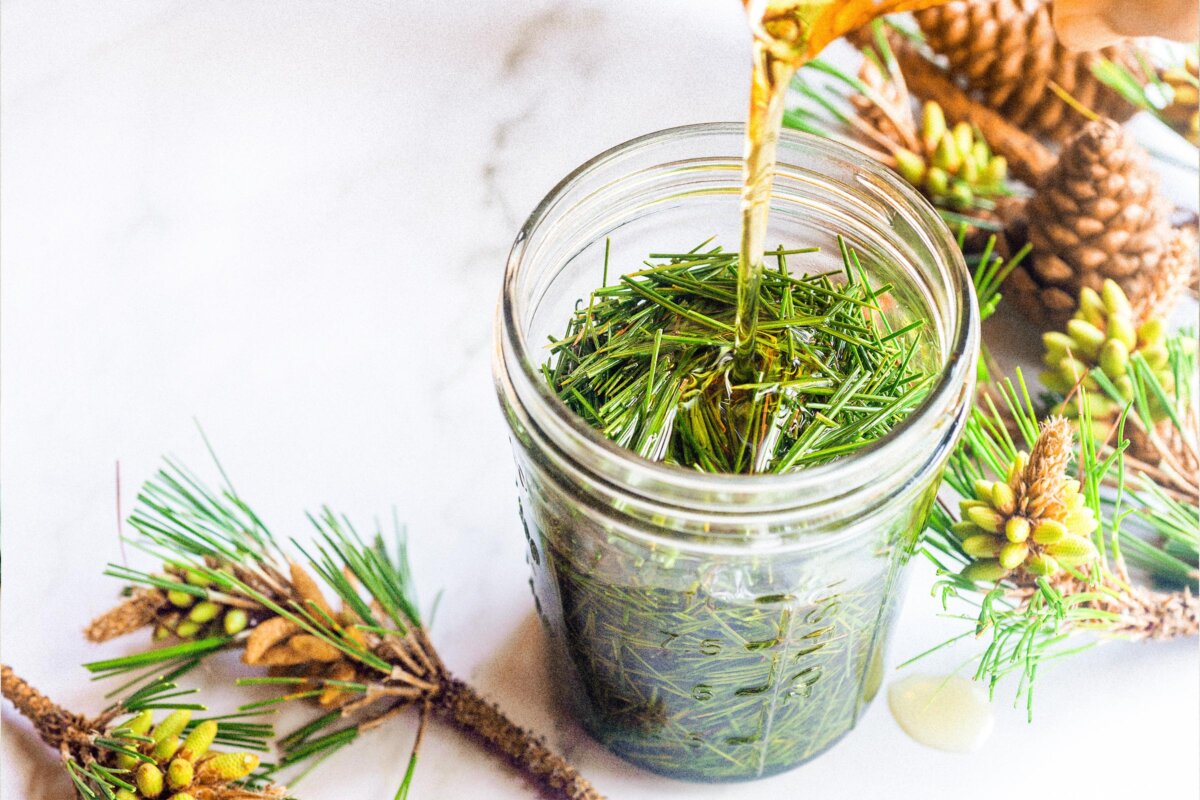
Before you haul your Christmas tree to the curb, you should know that those fragrant pine needles could become a healing chest rub, a moisturizer for winter-dried skin, or even a mood-lifting aromatherapy oil.
For herbalist Ashley Elenbaas, founder of Sky House Herbs and Apothecary, turning the family Christmas tree into medicinal oil has become an annual tradition—keeping the magic of Christmas going into the New Year and beyond.
“Pine-infused oil is one of my favorite winter remedies,” Elenbaas told The Epoch Times. “It’s deeply hydrating and nourishing for dry winter skin, and wonderful as a chest rub to help loosen congestion and mucus.”
The Science Behind Pine’s Healing Properties
The secret lies in alpha-pinene, a compound abundant in coniferous trees such as pines, firs, and spruces. This natural chemical gives these trees their characteristic scent and delivers impressive therapeutic benefits.
It acts as a bronchodilator, expectorant, and anti-inflammatory, making it especially effective for respiratory issues. Plants rich in the volatile oil alpha-pinene, such as pine, are often used in cough syrups or steam inhalations for alleviating congestion.
Research also shows alpha-pinene works as a natural anxiety reducer and mood enhancer.
Alpha-pinene is also found in herbs such as mint, rosemary, and sage, as well as in other plants like citrus fruit and eucalyptus, which contribute to their essential oils and distinctive aroma.
Pine is traditionally used to alleviate chest and nasal congestion, largely due to the antimicrobial, expectorant, and anti-inflammatory properties of alpha-pinene and its isomer, beta-pinene, which has the same chemical formula but a different structure.
Any tree from the pine, or Pinaceae family, will do. These include pines (Pinus), spruces (Picea), and firs (Abies). They all have similar volatile oil compounds and, therefore, similar properties, Elenbaas said.
“My favorite is Douglas fir, only just because of its very specific scent,” she said. She has made the oil with different tree types, including white pine, spruce, and Douglas fir—“and all of them have turned out wonderfully, each with their own unique fragrance,” she added.
Pine-Infused Oil Recipe
Elenbaas shared her simple, step-by-step instructions for making your own pine-infused oil at home.
“And my kids love it—they help me … break down the needles and chop them up and put them into the jar and pour the oil on,” she said.
Supplies
- Fresh pine branches and needles (enough to fill your jar)
- Glass jar with a tightly closing lid (½-quart to 1-quart mason jars work well)
- Sharp scissors or pruning shears
- Carrier oil of choice (jojoba, sunflower seed oil, or other skin-safe oil)
- Crockpot set to low or a pot for a warm water bath
- Thermometer (helpful but optional)
- Straining cloth, cheesecloth, or fine mesh strainer
- Clean bottles for storage (pump bottles or dropper bottles)
- Label and pen
Instructions
- Choose Your Jar: Select a glass jar appropriate for the amount of oil you’d like to make. A ½-quart to 1-quart mason jar with a tightly closing lid is ideal.
- Prepare the Pine: Cut fresh pine branches and needles using sharp scissors or shears. Chop them into smaller pieces and pack the jar as full as possible.
- Add the Oil: Pour your chosen carrier oil over the pine until everything is completely covered. Jojoba oil and sunflower seed oil both work beautifully, but any oil suitable for skin application will do.
- Seal the Jar: Cap the jar tightly.
- Create a Warm Water Bath: Place the sealed jar into a warm water bath. Use a crockpot set on low, or a pot on the stovetop.
- Infuse Gently: Keep the jar in the warm water bath for 24 to 48 hours. If using a stovetop, turn the heat off and on as needed, and always supervise the oil. Aim to keep the oil at a consistent temperature of approximately 150 to 180 F.
- Cool and Strain: After the infusion period, remove the jar from the heat and allow it to cool. Once cooled, strain the oil through a cloth or a fine-mesh strainer to remove plant material.
- Bottle the Oil: Transfer the strained oil into clean bottles. Hand-pump bottles are wonderful for daily use, though dropper bottles work well too.
- Label and Store: Label your oil with the contents and date. Keep it on your counter or shelf. Properly stored, it will last about one year.
How to Use Pine Oil
The oil does not need to be diluted and can be used directly on the skin.
- For Nasal and Chest Congestion and Cough: Rub 1/2 to 1 teaspoon on the chest and or upper back for congestion and coughing.
- As a Body or Hand Oil: Apply 10 to 15 drops into the hand (about 1/2 teaspoon) and apply where needed.
There are no contraindications to using the oil, but it’s a good idea to do a patch test first by applying a small amount to the skin to ensure you won’t have a reaction.
If you have concerns about allergies, sensitivities, or using the oil during pregnancy, consult with a health care provider.
A Gift That Keeps Giving
While many of us may not have grown up using plant medicines, many common herbs, spices, and plants we find in our backyards have health benefits and are often better tolerated and safer than pharmaceuticals for improving our health and well-being.
“You know, we rely on the plants—95 percent of our physiology is exactly like the physiology of a plant—and that’s why our bodies know what to do with them,” medical herbalist Geo Derick Giordano of Geo’s Joy, told The Epoch Times.
For Elenbaas and her family, it has become an annual tradition, and a gift that keeps on giving.
“You’ve got this wonderful oil that smells like your pine tree, and it carries the energy of your Christmas celebration with you the whole rest of the year.”