



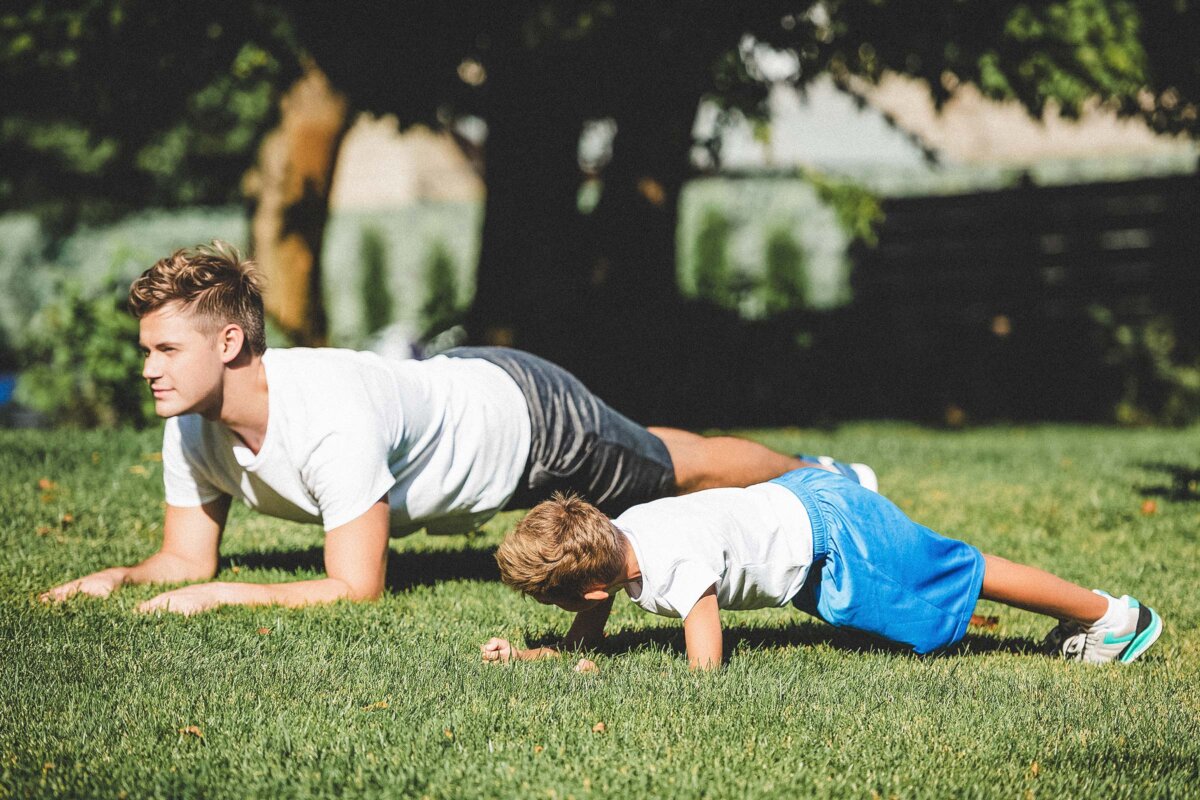
In the world of rehabilitation, we see many different personal attitudes toward exercise. Some people are highly motivated and aggressively pursue exercise. Some are less motivated but still enjoy the process once underway and how exercise makes them feel afterward.
Others have low motivation for exercise but understand its importance and benefits and pursue it as consistently as they can. Then there are what we generically refer to as the “exercise-averse.”
Being averse to exercise is a common presentation. While some people have enough aches and pains to make exercising off-putting, others do not like the feelings of weakness or inability that exercise can initially impart and seek to avoid them.
I have discovered that there are plenty of people who ardently dislike the very thought of exercising. They can list the benefits and understand the importance, but the thought of doing it is so repellent that they can rarely bring themselves to do so.
The approach we use for the exercise-averse is to provide exercises that they can tolerate, if not enjoy. I find that if we can get them exercising regularly, we can slowly and effectively start modifying their disposition toward exercise—perhaps not all of them, but it’s certainly worth the effort.
5 Convenient Exercises for the Exercise-Averse
The following exercises are easy but effective and work with you to provide an exercise set that you can live with at first and may actually grow to like as time goes on. They work well for my patients and have a high compatibility quotient, but I suggest that you speak with your medical provider to ensure that they are right for you.
1. Walking
Never underestimate the therapeutic properties of walking. It is vastly more effective than you might suspect. Walking is a universal medicine that provides fresh air, mobility for practically every joint in your body, and, frequently, an increased state of mental health.
Step 1: Start walking at a slow pace for about five minutes to warm up.
Step 2: After five minutes, transition to your normal walking pace for approximately 30 minutes. Listen to your body—feeling stiff or achy is acceptable, but do not push into pain. Also, set aside any grim-faced determination and allow it to be enjoyable and relaxing.
Step 3: Slow down and maintain your normal walking pace for five minutes as a cool-down.
Modifications: Feel free to speed up and slow down as much as you want to tailor the activity to your needs.
Why I Like It: Walking is therapeutic for your body and your mind, and is an exercise that does not usually feel like exercise at all.
2. Planks
The plank is a classic core-strengthening exercise that’s challenging and easy at the same time. Why? Because it does not require much movement or take long to perform.
Step 1: Lie on your stomach with your feet approximately 1 foot apart, your elbows bent, and your forearms on the floor, with your shoulders aligned over your elbows. Keep your body in a straight line, and engage your core muscles to lift your hips off the floor. Do not let yourself sag in the middle.
Step 2: Hold this position for one minute or as long as you can. Holding the position for one minute or longer counts as one repetition.
Step 3: Try three repetitions, allowing one minute of rest between each.
Modifications: If you cannot perform a plank with your knees off the ground, allow them to lightly touch the ground while maintaining a strong core.
Why I Like Them: Planks are challenging, but once you’re there, you do not have to move at all, decreasing the feeling of effort.
3. Chair Squats
The chair squat is a very straightforward movement that can be performed from any chair, couch, or loveseat that you may already be sitting on. Although chair squats ask very little from you in the way of movement, they provide a great postural and muscular workout.
Step 1: Sit at the front of your seat with your hands clasped together at chest level and your feet shoulder-width apart.
Step 2: Lean forward and slowly stand up. Keep your hands in position as you rise into standing.
Step 3: As soon as you stand up, move back toward sitting while keeping your hands in place. Be sure to move your hips to the rear as you sit so that your knees do not move out in front of your toes. Move slowly toward sitting and avoid plopping down, as that can put stress on your spine.
Step 4: Standing up and sitting back down counts as one repetition. Try to perform three sets of 12 repetitions.
Modifications: If you cannot go all the way up and down, it’s OK to abbreviate the movements to keep them within a range you can handle.
Why I Like Them: If you’re sitting somewhere and wondering whether you should exercise, all you need to do is stand up and sit back down to get started.
4. Standing Overhead Press
The overhead press is a smooth, controlled movement that combines cardiovascular exertion with shoulder strengthening. It’s a great exercise that doesn’t feel too difficult.
Step 1: Stand holding a weight in front of your chin with both hands.
Step 2: Slowly push the weight straight up toward the ceiling as far as you comfortably can before lowering it back down.
Step 3: Each overhead push and return to chin level counts as one repetition. Try to perform three sets of 12 repetitions.
Modifications: If standing overhead presses do not work for you, take a seat and do them seated at the front of your chair, keeping your back straight.
Why I Like Them: The overhead press is surprisingly effective. Pushing straight up against gravity and moving your hands overhead induces an unexpectedly delightful cardio component.
5. Standing Arm Swing
The standing arm swing is a static exercise for your legs but a dynamic one for your arms. Performed in a static standing position, it is stable and effective, and it will focus on your shoulders.
Step 1: Take one step forward with your right foot and stay there—keep one foot in front of the other throughout the exercise.
Step 2: With your elbows straight, slowly sweep your left arm up as high as you comfortably can while sweeping your right arm back as far as you can, turning your middle spine toward the rising arm. Move with caution to avoid stressing your shoulders until they warm up.
Step 3: Sweeping one arm up and the other back counts as one repetition. Try to perform three sets of 20 repetitions. Avoid speeding up as the activity progresses; maintain a consistent speed during the task. Feel free to alternate the forward leg between sets.
Modifications: If you cannot move your arms far, just move them as far as you can. If balance is a challenge, stand with your feet side by side, approximately hip-width apart. Also, feel free to place either your right or left foot forward during this exercise. You will likely find that one or the other works best for you.
Why I Like It: You can perform standing arm swings anywhere you may be standing. Also, you will be surprised at how good they make you feel—maybe not like “exercise” at all.
Some of us are averse to exercise all of the time, and the rest some of the time, and that is OK. The trick is to find something you can do within the space you find yourself in. Hopefully, these exercises can pave the way for success even when you do not want to exercise. I suggest performing them at least three times per week—ideally five—but remember: If you do not accomplish that, do not give up. Just do them as you can, and allow that to lead to greater health. Good luck!
About the Fitness Model: Aerowenn Hunter is a health editor and fitness model for The Epoch Times. She is an accredited yoga therapist with three decades of teaching experience.
Views expressed in this article are the opinions of the author and do not necessarily reflect the views of The Epoch Times. Epoch Health welcomes professional discussion and friendly debate. To submit an opinion piece, please follow these guidelines and submit through our form here.