



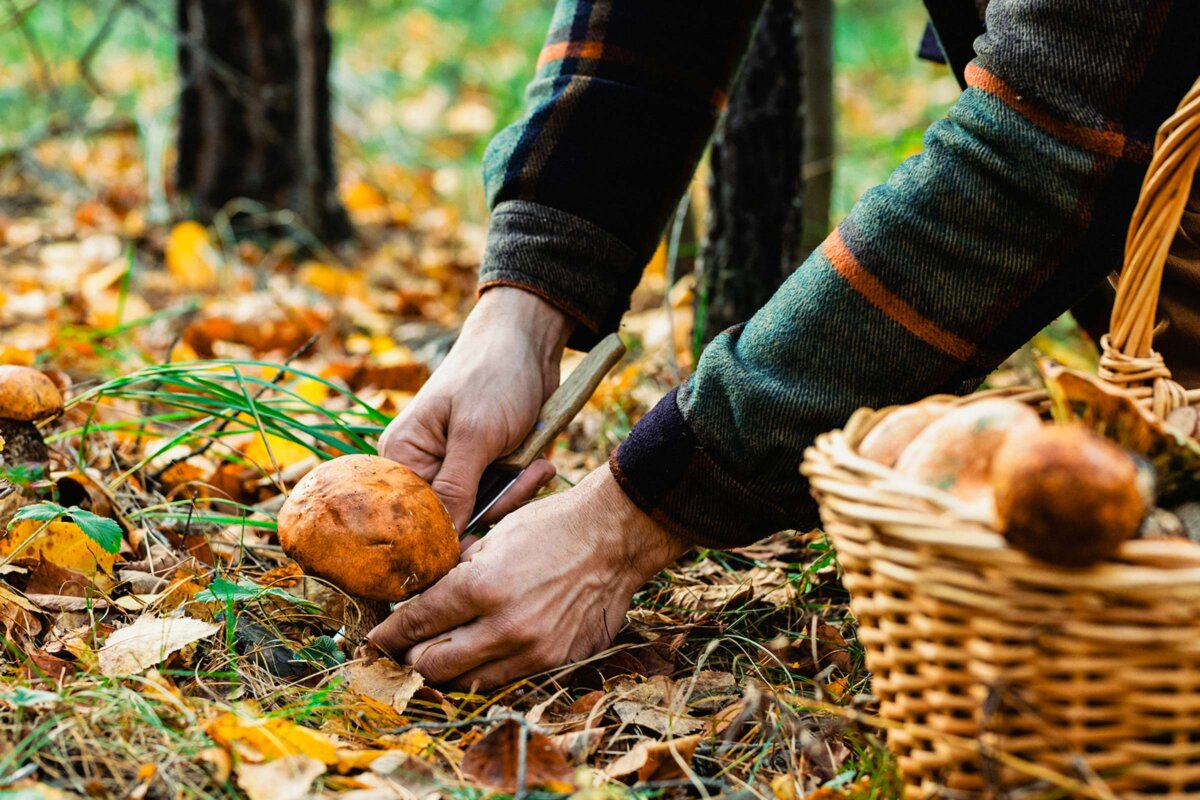
Somewhere between the supermarket and the screen, many have forgotten that food grows in the ground—something humans have known since the beginning of our species.
Knowing which plants were edible sustained our ancestors and helped them thrive. As food became easier to acquire, we gradually lost this knowledge and our connection to the land. The good news is that it can be rediscovered—and the ability to feed ourselves is just one of its many benefits.
For Robin Greenfield, an author and activist who has dedicated his life to living more sustainably, foraging is about something deeper than free food.
“What’s so powerful about foraging is that it’s a deep level of reconnection to the earth,” he told The Epoch Times.
In a time when feeling overwhelmed, anxious, and depressed is common, foraging offers real relief—a chance to move your body, breathe fresh air, and find meaning and purpose, he said.
Bruch Reed, chief operating officer of the North American Mycological Association, finds a similar pull in foraging.
“I love how looking for one group of organisms, usually fungi, leads to deeper seeing of the entire, humblingly complex system of a forest ecosystem,” he told The Epoch Times. “Most of all, I love gifting them to others who could not be in nature with me that day, but with whom I can later share the joy in fungal form.”
The Basic Rules
Foraging is the act of finding and gathering food that grows naturally in the wild—including greens, fruits and berries, nuts and seeds, mushrooms, roots, and medicinal herbs. If you are new to it, a few ground rules will help you forage safely and responsibly and get the most out of your experience.
- Know the Plant With 100 Percent Certainty Before Eating It: Never consume a plant unless you can identify it with complete confidence. This is especially critical with mushrooms, as many have toxic look-alikes, especially in the genus Amanita. Investing in a good field guide is highly recommended to help with identification.
- Avoid Polluted Areas: Always try to forage away from highways, industrial areas, or polluted waterways, as plants there are more likely to be sprayed with pesticides or exposed to exhaust from passing cars.
- Never Take the Only One: If there is only one plant, or it is a small patch, leave it. Foragers usually look for large, thriving patches of edible plants to ensure that they can forage sustainably without endangering the plants or wiping them out locally.
- Harvest With Care: Instead of pulling a plant out by the roots, foragers usually prefer to cut leaves or stems, harvest the outer leaves, and leave the roots intact whenever possible so the plant can continue growing.
- Only Take What You Will Use: Although it is exciting to find something delicious, only take what you will eat, cook, preserve, or share, to ensure the continuation of the earth’s cycle of giving.
What to Look For
You might assume that the best foraging happens deep in remote forests. However, some of the best foraging happens in urban areas affected by people, where soil has been disturbed and weeds tend to grow, such as public parks, front yards, backyards, schoolyards, and churchyards, Greenfield said.
[series_posts_list][/series_posts_list]
He pointed out some easy plants for beginners, noting that top choices will vary by season and where you live. The plants below can be found growing across the country:
- Dandelion: The whole plant can be eaten—flowers, stem, leaves, and root.
- Blackberries and Raspberries: In addition to berries, the leaves make good tea.
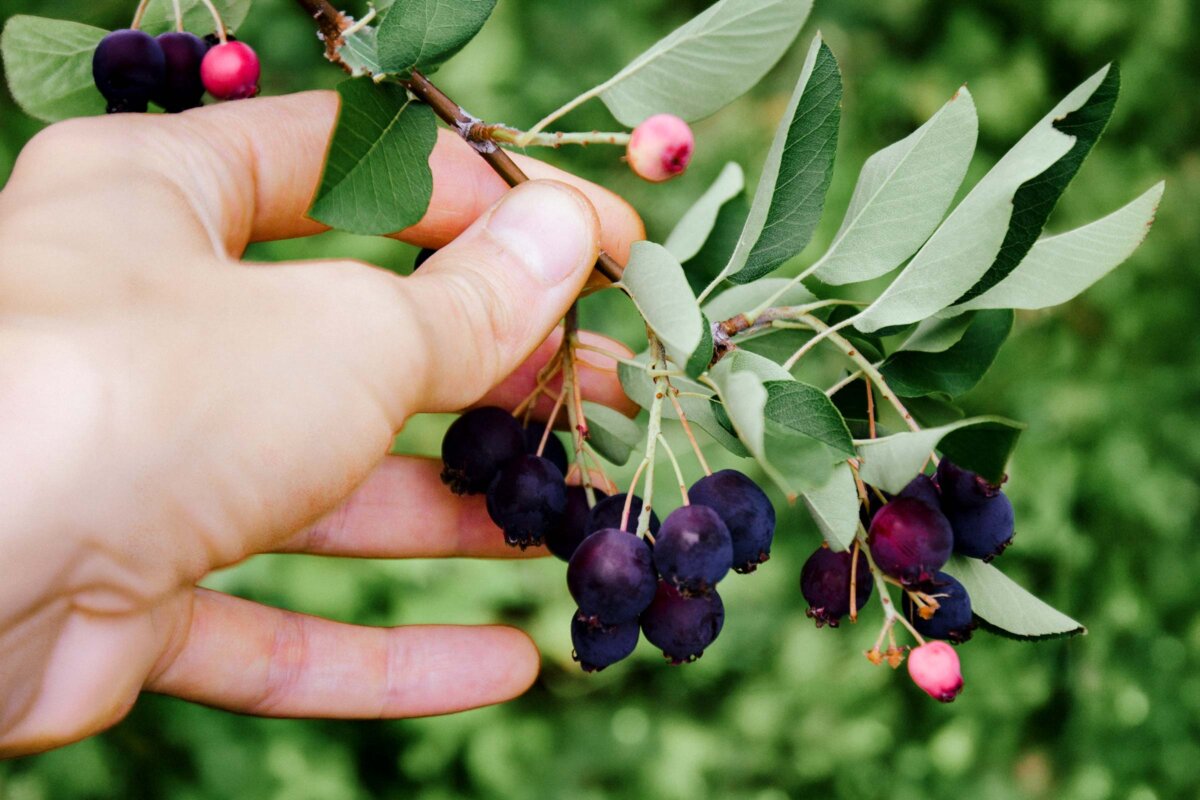
- Serviceberry: A small tree or shrub that produces clusters of sweet, blueberry-like fruit in early summer. In addition to being easy to find, serviceberry is growing in popularity.
- Mulberries: “Mulberry basically looks like a blackberry, but it’s on a tree instead of canes or stalks,” Greenfield said. “But what a lot of people don’t know is you can also eat the mulberry leaves when they’re tender in the springtime, and that they’re a wonderful food source.”
- Wild Mint: Easy to identify by its distinctive scent, and can be used fresh or dried.
- Wild Onions: Smell unmistakably of onion, which is a reliable confirmation of identity and can be used much like their cultivated cousins.
Foraging Safely and a Word on Mushrooms
One of the main reasons people avoid foraging is the fear of misidentifying plants—and the consequences that may result.
“A lot of people are afraid of foraging because they think if they go out and harvest a plant, that they’re going to die … but it couldn’t be further from the truth,” Greenfield said.
Although toxic plants do exist, he said, many beginner plants are easy to identify—such as dandelions, apples, plums, and pears—and have no toxic look-alikes.
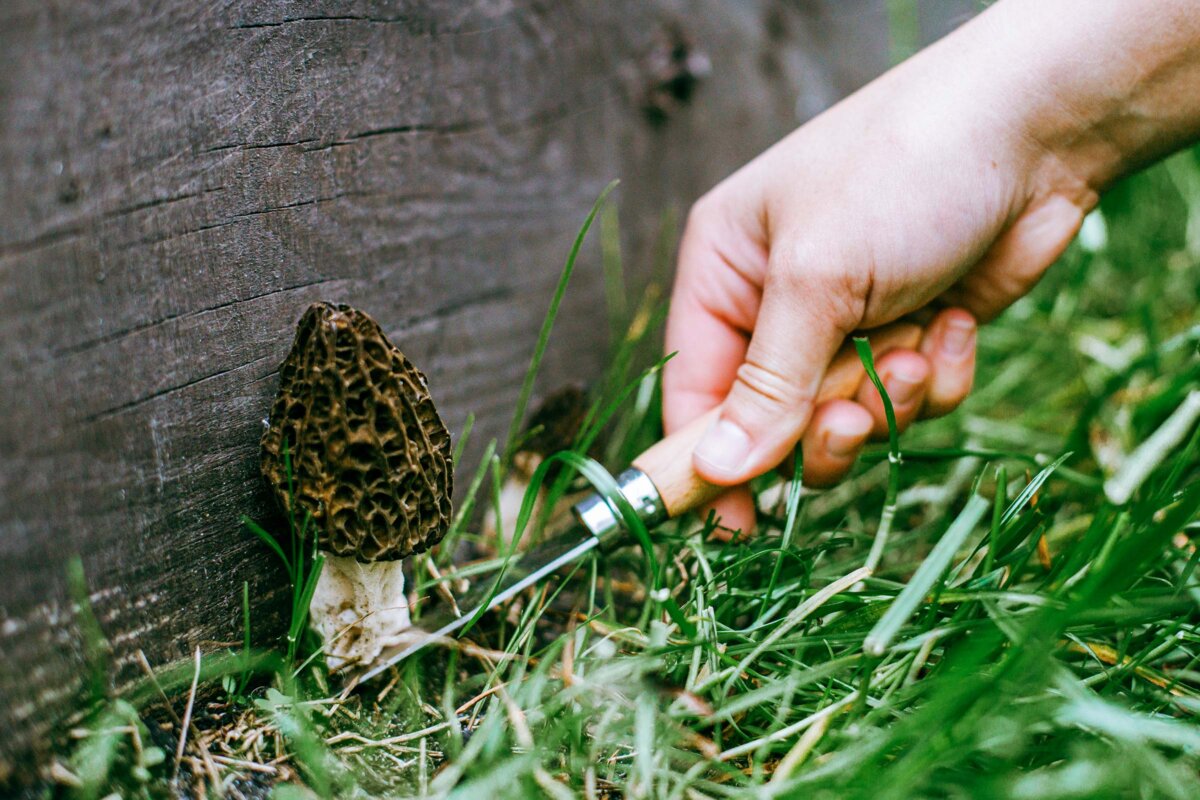
About a dozen mushrooms are commonly found across North America, including morels, chanterelles, black trumpets, oysters, hen of the woods, and porcini. Although these prized species are well worth learning, they must be foraged and prepared with care, Reed said.
Morels, one of the world’s most popular edible mushrooms, are responsible for many poisonings, usually when they are undercooked or eaten by those with digestive sensitivities. Like any mushroom, they should always be eaten fully cooked, and in moderation, he said.
More broadly, Reed is clear-eyed about the risks. There is a danger in foraging without accurate knowledge, and the few fungi that can make people seriously ill are relatively abundant in many places across North America at some point throughout the season. Although field guides are useful, hands-on education from experts is crucial, he added.
“The incomparably best way to gain essential mushroom knowledge for yourself is to join your local mushroom club and participate in its forays with attentive enthusiasm,” Reed said. The North American Mycological Association has 100 affiliated clubs across North America, and there is a map on its website to help you find one near you, he said.
How to Get Started
The sheer number of what’s out there can be daunting for the beginner forager. Greenfield’s advice is not to try to learn it all. Start with one plant per month. After a year, you would know 12 plants, and after five years, you would be proficient with 60 plants.
“For any average person to be able to go out and harvest a dozen or five dozen different plants, different foods, and medicine, that’s absolutely life-changing,” Greenfield said. “And that can be done. One plant, one month at a time.”
The best field guides, experts say, are those by Sam Thayer, an author, forager, and internationally renowned authority on edible wild plants. However, no book replaces a living teacher.
“There is no substitute for learning to forage safely from living people, live, who know what they are doing,” Reed said.
If formal instruction feels like a high bar, Greenfield suggested a gentler entry point.
“One thing that people can do is just eat one wild plant a day, and that can literally just mean one dandelion flower or one sprig of mint,” he said. “But if we just have one, even just one nibble of something wild every day, then we start to become more wild. We start to become more free, we start to become more healthy and happy. And it’s a really powerful way to do it, just a little bit at a time.”
Final Thoughts
For many of us, our slow drift from the natural world hasn’t made us happier or more fulfilled, and we are slowly realizing that we’re missing something we once had—a deep connection to the earth that has always sustained us.
And perhaps this is the greatest gift that foraging offers—help finding the way back.