Editor’s Note:
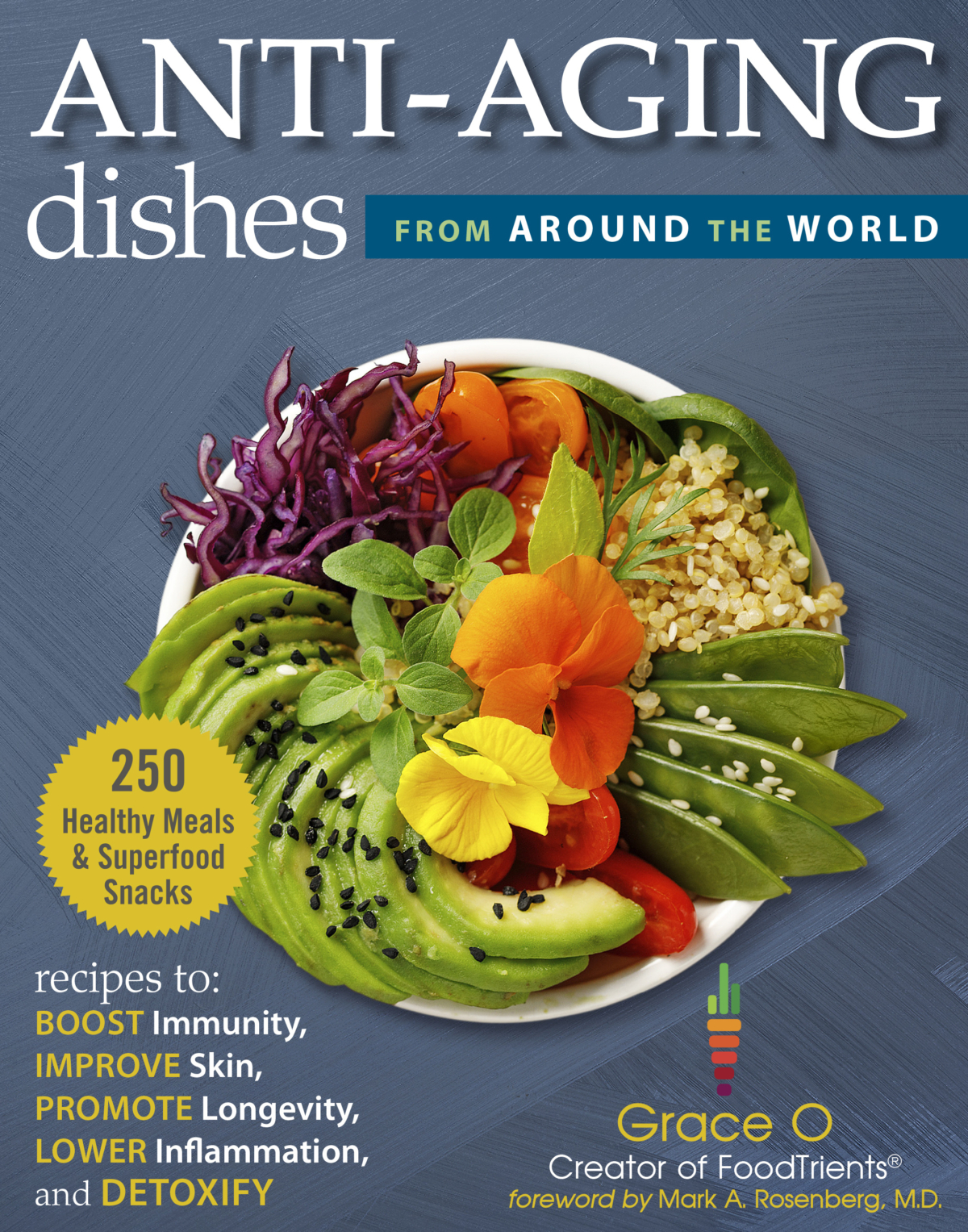
The following excerpt has been adapted from the book “Anti-Aging Dishes from Around the World: Recipes to Boost Immunity, Improve Skin, Promote Longevity, Lower Inflammation, and Detoxify,” by Grace O.
In this excerpt, Grace introduces us to her favorite tea—pu-erh—a fermented tea with numerous health benefits. Once offered as a tribute to the Emperor of China, pu-erh has been revered as a traditional medicinal tea for thousands of years.
Several years ago, I traveled to Yantai, China, with the FoodTrients team for the Gourmand World Cookbook Award Ceremonies to accept the Best in the World award for Innovation for my last cookbook, The Age Beautifully Cookbook. After the awards ceremony, we traveled to Beijing, where we celebrated my husband Rupert’s birthday with an afternoon tea party. This was my first introduction to one of China’s ancient, most treasured teas, pu-erh (pronounced poo-air) tea, which is a very special fermented brew grown in the Yunnan province in southwest China that provides a wealth of health benefits.
To appreciate the truly unique nature of pu-erh tea—and a growing number of Western tea drinkers are—it’s helpful to briefly review the tea production process. Tea leaves are first dried and then either oxidized or fermented, or sometimes both. The oxidation process changes the color of the leaves, turning them from green to black. The process is stopped by cooking the leaves through slight exposure to heat. While there are several different methods that tea producers use, most teas are oxidized for different specific periods of time.
Unlike white, green, and oolong tea, whose leaves are dried and exposed to the air to oxidize for specific periods of time, black tea leaves that are exposed to oxidation over time naturally begin to ferment, an action caused by yeast, bacteria, or mold.
The fermentation process for pu-erh tea is unique among black or dark teas. In their natural state, tea leaves will wilt if they are not dried. Pu-erh tea leaves are allowed to wilt, or wither, and are then stacked into piles. As bacteria grow, the fermentation process begins and is allowed to occur over a prolonged period of time. It is usually many years—sometimes twenty years or more!—before the tea is considered ready to drink. Though pu-erh teas’ aging process has been revered for centuries, in the 1970s some tea producers developed cooked and half-cooked methods for fermentation that reduce production time by mixing the withered leaves with a bacterial culture similar to their natural bacteria and then allowing them to oxidize.
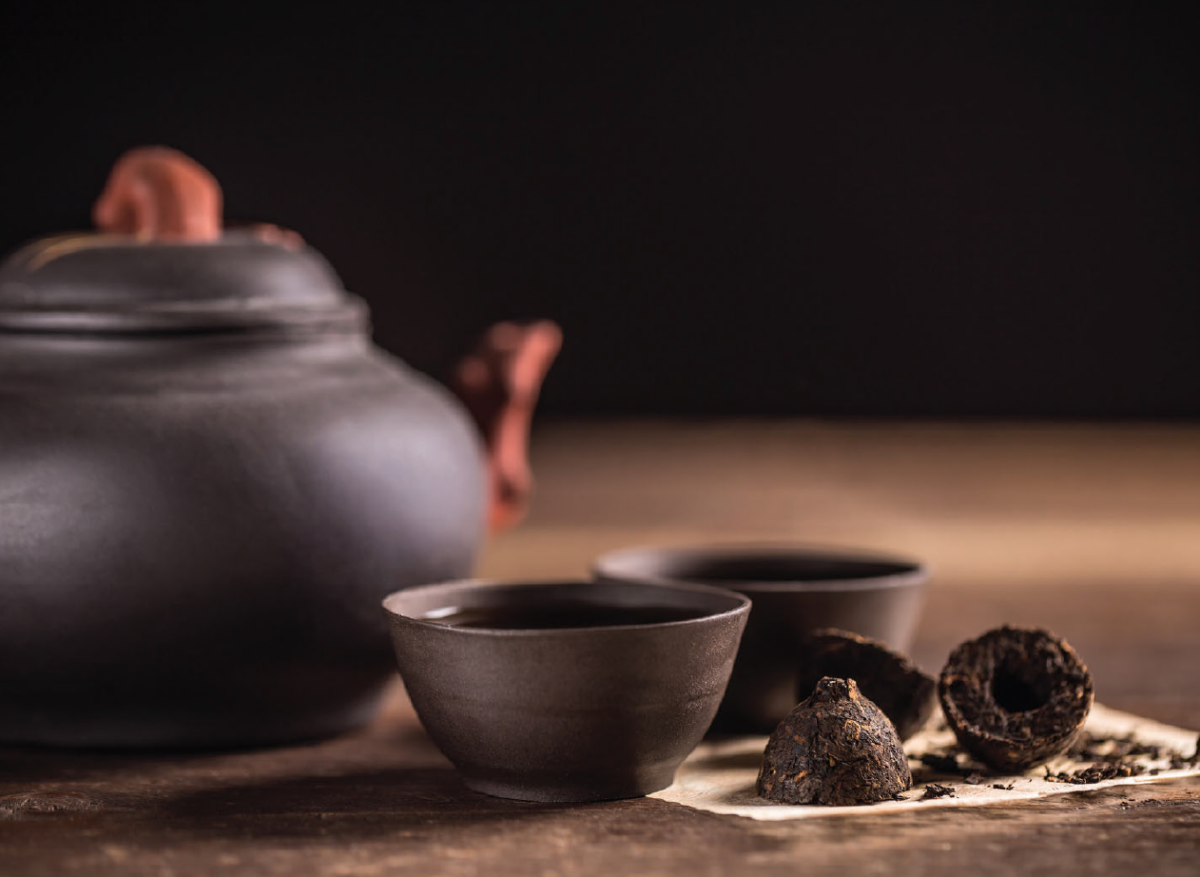
In addition to producing a tea with rich and complex flavor notes, the aging process also increases the tea’s value and medicinal benefits. Aging allows the leaves and the enzymes within to metabolize the carbohydrates and amino acids. The result is a tea that contains a high level of polyphenols that are known for their antioxidant activity.
The antioxidants in pu-erh tea help cells deal with stress, facilitate repair, and speed up metabolism. Pu-erh tea is also consumed in China to aid digestion. It is often served after heavy meals, and it’s reputed to cure hangovers. Some swear by it as a diet aid, but I don’t know if pu-erh tea makes you lose weight. Rather, it’s a satisfying beverage to sip and enjoy as part of a healthful diet.
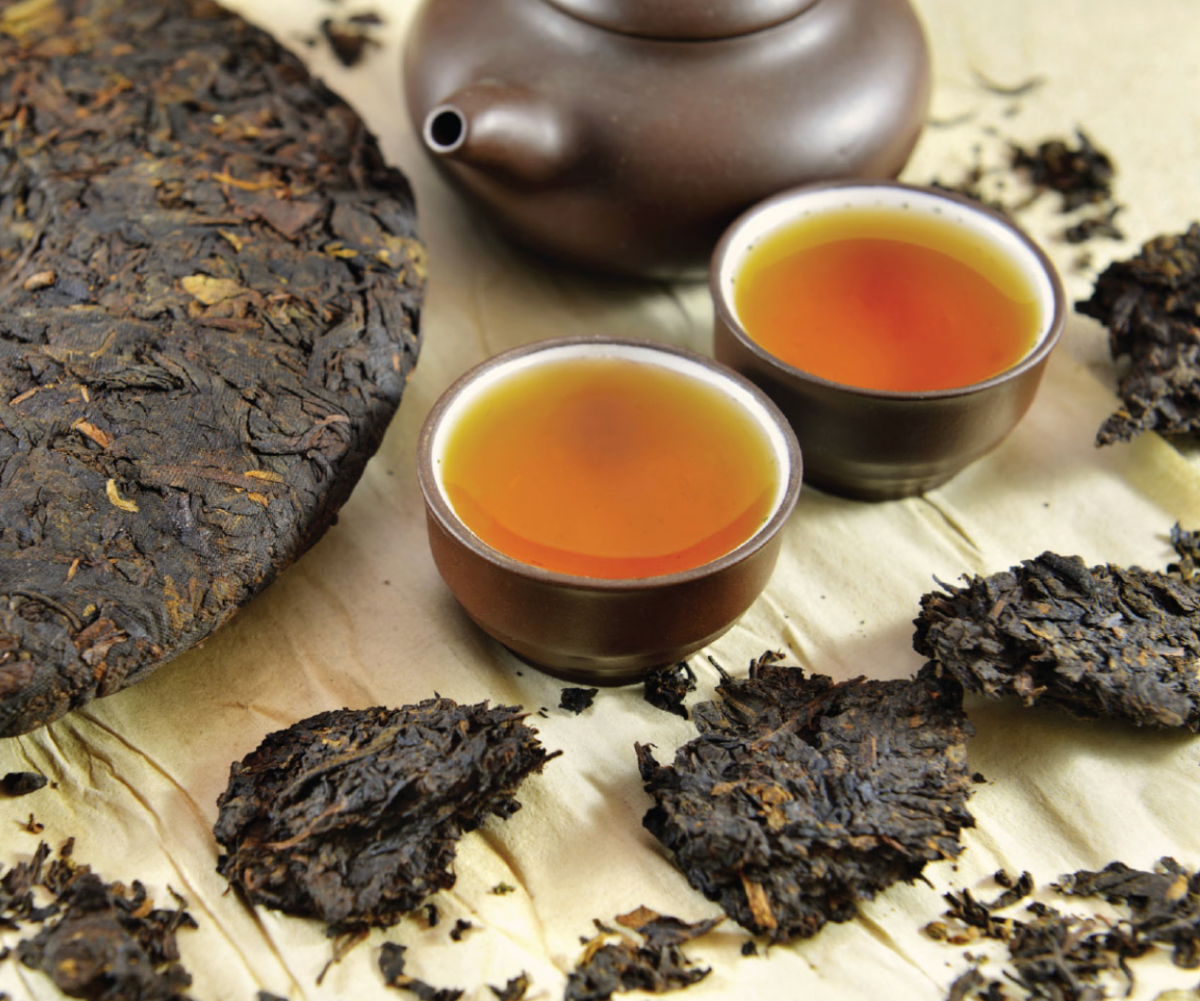
High-quality, aged pu-erh tea traditionally comes in compressed cakes, but it’s also sold as loose-leaf tea. To brew this tea, first break off or scoop about a teaspoon of leaves for each 4-ounce cup. Rinse the tea in a strainer—this helps clean and dust off leaves that have been aged for a long time and opens them up for optimal steeping. Place the rinsed leaves in a warmed teapot, pour in just-boiled water, and steep for just a minute or two. The tea will be dark, full-bodied, and have a slightly earthy aroma and taste—somewhat like mushrooms. If your tea tastes muddy or moldy, throw it away, because it is not of good quality.
Personally, I really enjoy pu-erh tea with desserts, especially rich desserts, like we had in Beijing. It’s a satisfying alternative to coffee and it’s also good by itself.
When I returned home from China, I couldn’t wait to find good quality pu-erh tea and share it with friends, but I wasn’t sure where to look. Then I discovered the Red Blossom Tea Company in San Francisco. For over thirty years, they have cultivated relationships with farmers and craftsmen in China to import the best sustainable tea they can find. The Art of Tea company in Los Angeles also sells an organic pu-erh tea. CEO and Founder Steve Schwartz began his extensive study in preventative medicine at the Ayurvedic Institute in New Mexico. Since then, Art of Tea has become a leading purveyor of organic and specialty teas.
This excerpt has been adapted from “Anti-Aging Dishes from Around the World: Recipes to Boost Immunity, Improve Skin, Promote Longevity, Lower Inflammation, and Detoxify” by Grace O. To buy this book, click here.
Grace O is the author of three award-winning cookbooks focusing on health, wellness, and longevity and the creator of FoodTrients. She enjoys crafting delicious recipes using an abundance of exotic spices from all around the world.