



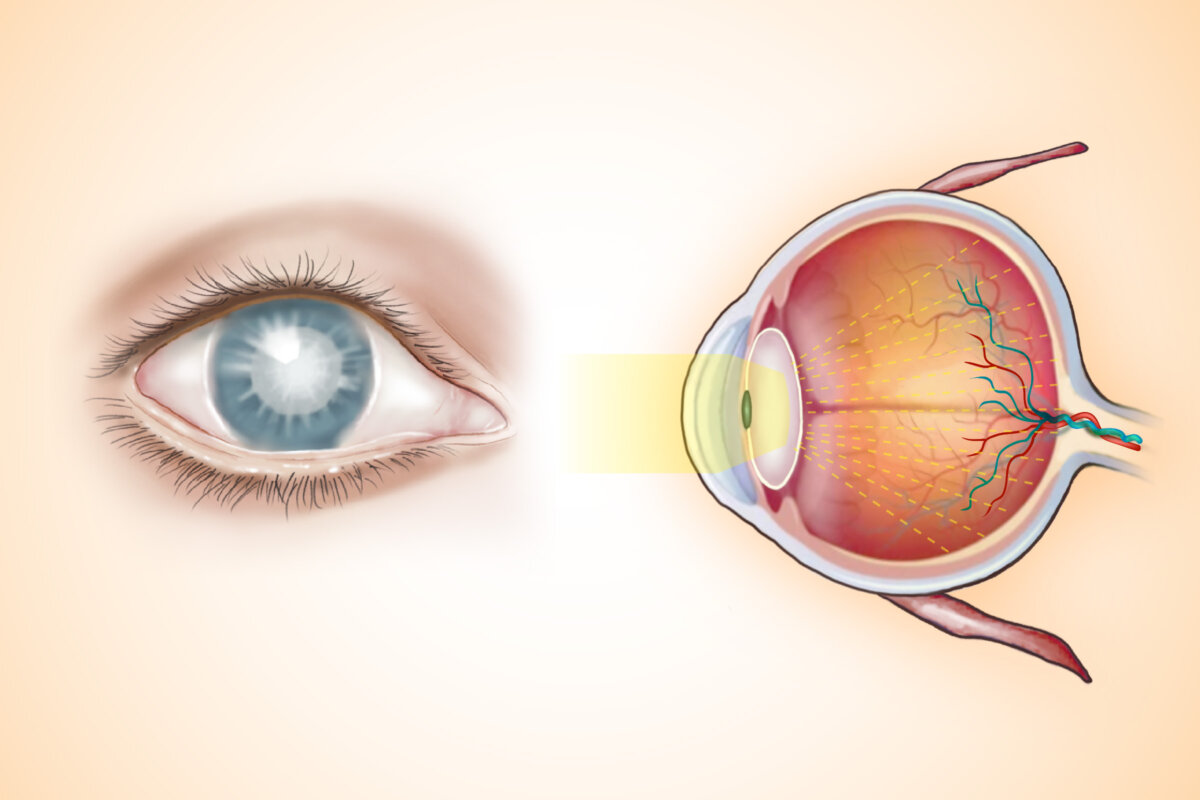
More than 20 million Americans aged 40 and older are affected by cataracts in one or both eyes. By age 75, nearly half of all Americans will develop the condition.
Cataracts are a gradual clouding of the eye’s natural lens—like looking through a foggy window that slowly becomes more blurred over time. This cloudiness blocks light from reaching the back of the eye, which is why vision becomes less clear.
It is the most common cause of blindness worldwide.
Surgery is the primary treatment for cataracts, though certain lifestyle approaches may help slow symptom progression.
[shortcut_anchor id=”anchor_1755299746323″ label=”Symptoms”]What Are the Symptoms and Early Signs of Cataracts?[/shortcut_anchor]
Although cataracts can form in one eye or both, there is no spreading from one eye to the other.
Early Signs
Cataracts often develop slowly, so early symptoms may go unnoticed until they begin to interfere with daily activities. Look out for these initial changes in vision:
- Colors appearing less vibrant than they used to
- Halos or starbursts around lights
- Increased need for brighter lighting when reading or doing close-up tasks
- Difficulty distinguishing between dark blue and black
Common Symptoms
Mild cataracts may not cause noticeable symptoms at first, but as they progress, vision changes can appear.
Symptoms can vary by person, including:
- Blurry or hazy vision: Feels like a film over the eye that doesn’t clear with blinking
- Poor night vision: Difficulty seeing in low light
- Double vision: Seeing multiple or ghosted images
- Increased nearsightedness: Sudden shift toward needing glasses for distance
- Visible cloudiness in the eye: A white or gray area may appear, although many cataracts are too deep to be seen
- “Second sight”: Temporary improvement in near vision, often without reading glasses
- Reduced detail perception: Trouble distinguishing fine features
- Impaired central vision: Difficulty seeing clearly in the center of your visual field
- Bright light sensitivity: Sunlight, headlights, or lamps seem overly intense
[shortcut_anchor id=”anchor_1755299753851″ label=”Causes”]What Causes Cataracts?[/shortcut_anchor]
Cataracts form when proteins in the eye’s normally clear lens clump together, causing a painless cloudiness that blocks light from reaching the retina. This leads to gradual vision loss, and over time, the clumps grow larger, worsening the impairment. The lens may also become yellow or brown, affecting how colors are seen.
Aging-related chemical changes can cause protein clumping in the lens. The natural lens changes starting as early as age 40. Other possible cataract causes or contributors include:
- Genetics: Disturbances during lens growth result in congenital cataracts, which are cataracts that are present at birth. About 25 percent of congenital cataracts are linked to genetic conditions like metabolic or chromosomal disorders, including Down syndrome. Another 25 percent are hereditary, meaning a parent also had childhood cataracts.
- Oxidative stress: Oxidative stress happens when harmful elements—often from ultraviolet light or radiation—damage the lens and lead to the clouding.
- Injuries: Traumatic cataracts, caused by eye injuries, can occur at any age and are the leading cause of cataracts affecting only one eye in young adults. Common causes of traumatic cataracts include blunt trauma, such as from a fist or ball, penetrating injuries from sharp objects, electric shock, and chemical exposure to substances like naphthalene.
- Certain cancer treatments: Radiation therapy can cause cataracts by damaging the dividing cells in the lens’s germinative zone, leading to abnormal fiber buildup. Chemotherapy can also contribute because the eye’s delicate tissues are highly sensitive to systemic toxins.
- Certain diseases: Conditions that can lead to secondary cataracts include chronic anterior uveitis—ongoing inflammation in the front of the eye (the most common), acute angle-closure glaucoma, high myopia, hereditary retinal disorders, diabetes, chronic kidney disease, celiac disease, and HIV infection.
Risk Factors
Several lifestyle and medical factors can increase your chances of developing cataracts.
1. Lifestyle factors:
- Alcohol: Higher lifetime alcohol intake is linked to an increased risk of cataract surgery in both men and women, with the risk rising significantly beyond 90 drink-years for men and 40 for women.
- Smoking: People who smoke cigarettes are two to three times more likely to develop cataracts than nonsmokers.
- Microwave exposure: Research suggests that cataract formation is directly linked to both the intensity and duration of microwave radiation exposure.
- High-salt diet: A study found that the participants with the highest salt intake were about twice as likely to develop one specific type of cataract compared to those with the lowest intake.
- Nutrient deficiency: Low levels of antioxidants such as vitamin C, vitamin E, and carotenoids may contribute to cataract development.
2. Medical factors:
- Eye surgeries: After cataract surgery, up to 40 percent of patients may develop a secondary cataract.
- Medications: Long-term use of glucocorticoids such as cortisone, hydrocortisone, prednisone, and prednisolone significantly increases the risk of developing cataracts.
- Hypertension: High blood pressure may raise cataract risk, possibly by contributing to systemic inflammation.
- Pregnancy: Congenital cataracts have been linked to maternal malnutrition, infections such as rubella, rubeola, and chickenpox, and reduced oxygen supply from placental hemorrhage.
- Obesity: Obesity is associated with increased systemic inflammation, including elevated C-reactive protein and proinflammatory cytokines, which can promote oxidative stress in the eye.
3. Other factors:
- European ancestry: A 2010 study found that cataracts were most common among white Americans (17 to 18 percent), followed by African Americans (13 percent) and Hispanics (about 12 percent).
- Chemical exposure: Exposure to certain chemicals may contribute to cataract formation. For example, studies in animals suggest that naphthalene can damage the lens by causing oxidative stress and disrupting proteins. More consistent evidence in humans links cadmium and lead exposure to a higher risk of cataracts.
[shortcut_anchor id=”anchor_1755299761148″ label=”Diagnosis”]How Are Cataracts Diagnosed?[/shortcut_anchor]
Cataract diagnosis starts with a thorough eye exam to assess vision and rule out other eye diseases that may cause similar symptoms.
1. Comprehensive Ophthalmic Exam
A thorough eye exam can confirm whether vision changes are due to cataracts and identify other conditions that may be affecting sight.
- Visual acuity test: Measures clarity of vision, often using a Snellen chart in general practice. Ophthalmologists may use other charts, which are preferred by the World Health Organization.
- Visual field test: Checks peripheral vision to detect any blind spots or vision loss unrelated to cataracts.
- Refraction: Determines whether glasses or contact lens adjustments are needed and helps plan vision correction.
- Fluid pressure test: Measures intraocular pressure to assess the risk of glaucoma, which can mimic or worsen cataract symptoms.
- Slit-lamp examination: Provides a detailed view of the eye’s structures—including the cornea, anterior chamber, lens, and retina (the light-sensitive tissue at the back of the eye)—to detect cataracts and other abnormalities.
2. Additional Tests
These specialized tests provide more detail about how cataracts affect your daily vision and help guide treatment decisions.
- Glare test: Simulates bright light (such as headlights) while reading to assess how glare affects vision.
- Contrast sensitivity test: Measures the ability to distinguish objects from their background, similar to real-life visual challenges.
- Color vision test: Evaluates color perception, which can be noticeably reduced by age-related cataracts.
Early detection matters—adults aged 60 and older benefit from a dilated eye exam every 1 to 2 years, even if they do not notice vision changes.
[shortcut_anchor id=”anchor_1755299768035″ label=”Treatments”]What Are the Treatments for Cataracts?[/shortcut_anchor]
For mild cataracts, your eye doctor might recommend a “wait and see” approach—monitoring changes over time while you follow lifestyle strategies discussed later.
If symptoms progress, treatment will be tailored to your age, health, medical history, vision needs, and preferences. Options include:
1. Long-Term Pupillary Dilation
In select cases, keeping the pupil dilated with 2.5 percent phenylephrine eye drops every 4 to 8 hours can help manage small, centrally located cataracts.
2. Surgery
When cataracts begin to limit daily activities, surgery is the most effective treatment—about 90 percent of U.S. patients regain improved vision afterward.
Modern cataract surgery is:
- Performed as an outpatient procedure
- Completed in 15 to 20 minutes
- Associated with minimal discomfort
- Highly successful with quick recovery times
Though rare, serious surgical risks include infection, bleeding, retinal detachment, dislocation of the artificial lens, and loss of vision.
Common lens extraction methods include:
- Intracapsular cataract extraction: Removes the entire lens and surrounding capsule in one piece; rarely performed today.
- Extracapsular cataract extraction: Removes the hard central lens core in one piece and then extracts the softer outer portions in smaller fragments.
- Small-incision cataract extraction (phacoemulsification): Uses a small corneal incision and ultrasound to break up and suction out the lens; preferred for faster healing and minimal invasiveness.
After removal, the lens is typically replaced with a clear plastic monofocal intraocular lens (IOL) placed within the lens capsule.
Although not always covered by insurance, newer IOL innovations include:
- Light‑adjustable lenses: Can be precisely customized after surgery using ultraviolet light to fine-tune vision.
- Extended depth-of-focus lenses: Provide a seamless range of vision, especially at intermediate distances, with minimal glare and halos—offering an advantage over traditional trifocals.
- Multifocal lenses: Deliver clear vision at near, intermediate, and far distances, reducing the need for glasses.
- Toric IOLs: Correct astigmatism by compensating for an uneven corneal shape.
If IOL placement is not possible due to other eye conditions such as pseudoexfoliation syndrome, vision can be corrected with contact lenses or eyeglasses instead.
Several other advanced surgical approaches include:
- Femtosecond laser-assisted cataract surgery: Uses a precise laser to create incisions, open the capsule, and soften the lens for greater accuracy and safety.
- YAG laser capsulotomy: Treats after-cataracts by creating a small opening in the cloudy membrane behind the lens to restore clear vision.
- Bilateral “dropless” surgery: Combines surgery on both eyes in one day with steroid injections, eliminating the need for postoperative eye drops and reducing follow-up visits.
[shortcut_anchor id=”anchor_1755299776219″ label=”Lifestyle Approaches”]What Are the Natural and Lifestyle Approaches to Cataracts?[/shortcut_anchor]
While natural and lifestyle measures cannot reverse cataracts, they can support eye health and help slow progression, especially in the early stages.
1. Home Care
Mild cataracts can often be managed at home for months or even years with practical strategies to help preserve functional vision, such as:
- Increase lighting in the home or workplace
- Wear anti-glare sunglasses or contact lenses
- Use magnifying lenses for reading and detailed work
- Use assistive technologies such as screen magnifiers or speech-to-text software for computer use
2. Antioxidant-Rich Diet
Eating a diet rich in antioxidants, vitamins, whole grains, and healthy fats can help prevent or slow cataract development and support overall eye health.
It should contain nutrients such as vitamin C and vitamin E from foods like nuts, seeds, and spinach, as well as omega-3 fatty acids.
On the other hand, processed foods, added sugars, and excessive salt promote inflammation and oxidative stress, increasing the risk of cataract development and progression.
Lutein and zeaxanthin: Nutrients found in the eye’s lens that help protect against cataracts by filtering harmful blue light and reducing oxidative damage; found in foods such as kale and egg yolks.
3. Eye Care Exercise
Dr. Kuo-Pin Wu, a traditional Chinese medicine (TCM) specialist, developed an eight-step eye care routine that combines TCM eye care methods with acupoint massage around the head and eyes. Wu also created a one-minute routine specifically for cataract patients.
4. N-Acetylcarnosine (NAC) Eye Drops
NAC eye drops are an over-the-counter supplement. A study found that a 1 percent NAC eye drop significantly improved vision and glare sensitivity in most users within six months, with sustained benefits over 24 months and no reported side effects. In contrast, vision worsened in the untreated group. However, NAC eye drops have not been approved by the FDA to treat cataracts.
[shortcut_anchor id=”anchor_1755299787117″ label=”Prevention”]How Can I Prevent Cataracts?[/shortcut_anchor]
While there is no guaranteed way to prevent cataracts, these measures may help delay or slow their progression:
- Wear protective eyewear: Sunglasses with 100 percent long-wave ultraviolet A and short-wave ultraviolet B protection; sports goggles or eye guards for sports; safety goggles for power tool use; blue light-filtering glasses to reduce exposure
- Maintain healthy eye oxygen levels: Support optimal circulation and oxygen delivery to the eyes, which can help slow lens damage
- Keep a healthy weight: Reduce obesity-related inflammation and oxidative stress that may contribute to cataract development
- Avoid alcohol use and smoking: Limit exposure to substances that can increase oxidative damage to the lens
- Engage in regular physical activity: Incorporate activities such as walking, running, or swimming to improve circulation and support overall eye health
[shortcut_anchor id=”anchor_1755299795101″ label=”Complications”]What Are the Complications of Cataracts?[/shortcut_anchor]
If left untreated, cataracts may lead to the following complications:
- Phacolytic glaucoma: A rare glaucoma caused by protein leakage from an advanced cataract, increasing eye pressure
- Subluxation of the lens: Partial displacement of the lens within its normal position in the eye
- Secondary glaucoma: Glaucoma resulting from increased eye pressure due to a known cause, risking optic nerve damage and vision loss
- Blindness: Complete loss of vision
- Progressive visual impairment: Gradual worsening of vision that interferes with daily activities such as reading, driving, and other tasks
- Increased fall risk: Poor vision can impair depth perception, leading to accidents and injuries
- Depression: Loss of independence and reduced participation in activities can trigger depression
- Cognitive decline: Limited visual input may contribute to cognitive decline
- Reduced quality of life: Decline in overall well-being due to loss of autonomy and reduced social engagement