



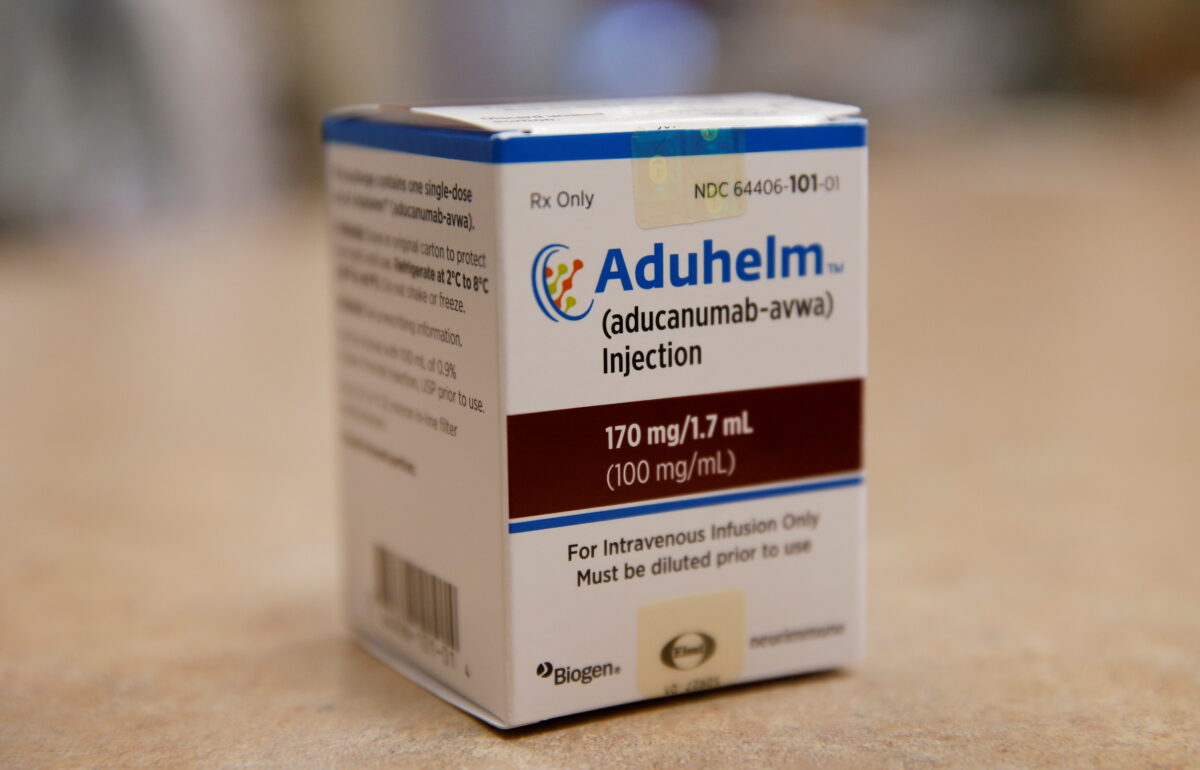
Aduhelm, once heralded as the first new medication to treat Alzheimer’s disease since 2003, has been discontinued by its maker, Biogen.
The drug was unable to overcome key obstacles, including questionable fast-tracking approval by the U.S. Food and Drug Administration despite poor trial data and inconsistent demonstrated benefits.
Mired in Controversy
On January 31, Biogen announced it would cease development and ongoing clinical trials for its Alzheimer’s drug Aduhelm (aducanumab). The FDA granted Aduhelm accelerated approval in 2021, despite concerns over limited benefits and risks to patients. This decision went against the advice of the agency’s own advisory panel.
Aduhelm has been controversial from the start. Clinical trials found the monoclonal antibody was intended to reduce amyloid plaque typical of Alzheimer’s disease, but showed inconsistent benefits. The ENGAGE Phase 3 trial showed no benefit over placebo.
In September 2022, a federal investigation was launched into the FDA’s accelerated approval process and potential improper relationships between the agency and Biogen that may have influenced Aduhelm’s rapid approval. Though some improprieties were found, the agency concluded the accelerated approval pathway is still necessary in certain cases.
Beyond unproven effectiveness, Aduhelm’s concerning side effects posed issues. In Phase 3 trials, around 40 percent of early Alzheimer’s patients experienced amyloid-related imaging abnormalities (ARIA) such as brain swelling and bleeding. Symptoms include malignant hypertension (very high blood pressure that comes suddenly) and epilepsy-like brain activity.
Roughly 26 percent of patients with ARIA also had related symptoms like headache, confusion, dizziness, and nausea, per an analysis of the EMERGE and ENGAGE late-stage trials in JAMA Neurology.
Coverage Denied by Insurance Companies
Insurance companies refused to cover Aduhelm’s high annual cost $56,000. Biogen later cut the price of a “maintenance dose” by half.
In 2021, the Centers for Medicare and Medicaid Services (CMS) initially declined Medicare coverage, although limited coverage was later approved in April 2022 for studies investigating potential benefits and side effects.
“We believe this [CMS refusal] contributed to limiting the number of people living with Alzheimer’s, a fatal disease, who could get access to the approved treatment, and created significant confusion for patients and doctors,” Maria C. Carrillo, the chief science officer of the Alzheimer’s Association, told The Epoch Times.
In August 2021, Excellus BlueCross BlueShield announced they would not cover Aduhelm due to lack of proven efficacy. Then Mount Sinai and Cleveland Clinic said they would not administer Aduhelm.
A financial review by Biogen conducted in January 2024 showed pursuing an additional trial for full FDA approval was no longer worthwhile given brighter prospects for their other Alzheimer’s drug, Lecanemab, according to a company press release.
Lecanemab is now fully FDA-approved, covered by Medicare under certain conditions, and available, Ms. Carrillo said. Other Alzheimer’s drugs like Donanemab are awaiting FDA decisions in coming months, indicating a “robust” treatment pipeline, she added.
“The Alzheimer’s Association recommends that people receiving Aduhelm through a clinical trial or by prescription, and their families, should connect with their study contact and/or their personal health care provider to talk through how these changes will impact their treatment and care,” Ms. Carrillo noted.
All Aduhelm-Like Drugs Carry Health Risks
“Certainly, ARIA is a risk for any of the anti-amyloid antibodies, including aducanumab, Lecanemab, and the drug which we’re hearing about from the FDA within the next couple of months called Donanemab,” Dr. Marc Gordon, chief of neurology at Zucker Hillside Hospital in New York, said.
While these drugs target amyloid plaques, their ARIA risk profiles differ. However, ARIA can be serious, even deadly, according to Dr. Gordon. “Part of which may be driven by the genetic makeup of the patients in the studies, because people who are carriers of the APOE-4 gene, are at substantially higher risk,” he added.
Patients can evaluate their own candidacy for these drugs by confirming:
- No prior MRI evidence of amyloid-related blood vessel problems that increase bleeding risk
- Not taking anticoagulant medications
- Lack of two APOE-4 gene copies
“Then I think you know somebody could make a decision as to whether those risks are offset by the benefits,” Dr. Gordon said.