



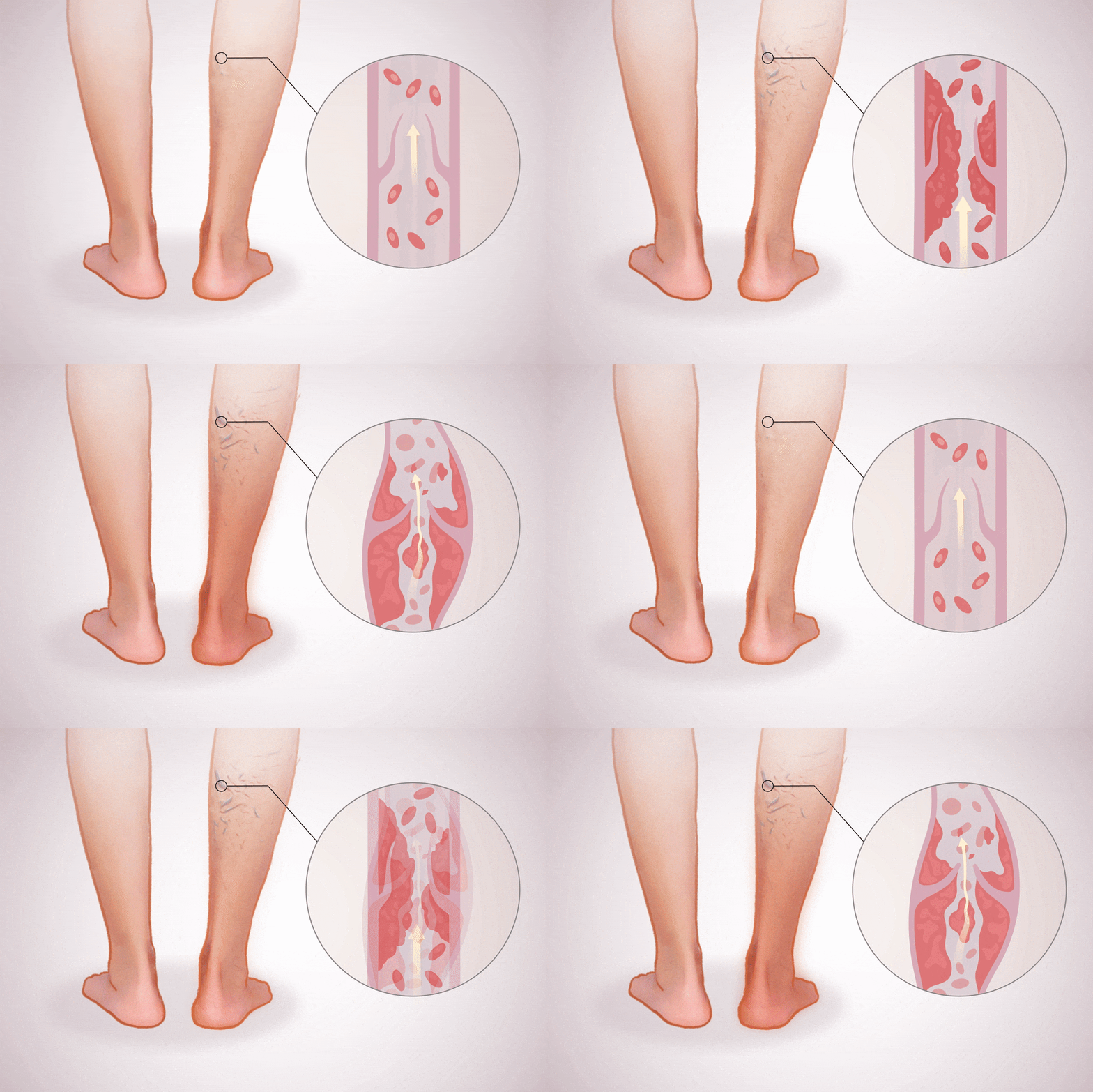
Deep vein thrombosis is a blood clot that forms in the deep veins—most commonly in the legs, but it can also occur in the arms or in the veins of the abdomen, pelvis, and brain.
Venous thromboembolism, which includes deep vein thrombosis and pulmonary embolism, is among the leading causes of cardiovascular death, after heart attack and stroke.
There are many risk factors for deep vein thrombosis, including lifestyle choices, medical conditions, and personal characteristics. Being aware of them can help you take steps to lower your risk of developing a clot.
[shortcut_anchor id=”anchor_1766627456818″ label=”Symptoms”]What Are the Symptoms of Deep Vein Thrombosis?[/shortcut_anchor]
Deep vein thrombosis is frequently “silent.” About half of all people with the condition experience no symptoms. Many cases are only discovered incidentally or during autopsy.
When symptoms do appear, they usually occur in the large veins, typically on one side of the body, and may include:
- Swelling: One leg or arm may become noticeably swollen or feel heavy.
- Pain or Tenderness: The affected area may ache, cramp, or feel sore, especially when touched or while walking.
- Warmth: The skin over the clot often feels warmer than the surrounding areas.
- Redness or Discoloration: The skin may appear red, bluish, or darker than usual.
- Prominent Veins: Superficial veins, which run close to the surface of the skin, may become more visible or bulge due to blocked deep veins.
The severity of deep vein thrombosis often depends on where the clot is located:
- Calf Veins (Distal Deep Vein Thrombosis): Usually milder and sometimes without symptoms.
- Thigh Veins (Femoropopliteal): Symptoms tend to be more noticeable.
- Pelvic and Upper Leg Veins (Iliofemoral): Considered more dangerous because it has a higher risk of breaking off and traveling to the lungs.
Additionally, although these symptoms could be signs of a blood clot, they can also be caused by other conditions.
[shortcut_anchor id=”anchor_1766627515186″ label=”Causes”]What Causes Deep Vein Thrombosis?[/shortcut_anchor]
Three main factors contribute to deep vein thrombosis: damage to the vein wall, slow or turbulent blood flow, and blood that clots too easily—a concept known as Virchow’s triad.
Normally, blood clotting is helpful as it stops bleeding and repairs damaged vessels. However, deep vein thrombosis often starts in areas of slow blood flow, such as behind the small valves in leg veins. When blood flow slows, clotting factors and platelets are not washed away efficiently, allowing them to accumulate and remain in prolonged contact with the vein wall. This process triggers clot formation, leading to fibrin—a sticky, insoluble protein that creates a mesh to hold the clot together.
Additionally, slow flow reduces oxygen delivery to the vein wall, damaging the inner lining of the blood vessel and impairing its normal function. This shifts the blood vessel to a clot-forming environment.
Furthermore, since deep vein thrombosis clots are usually larger than average clots, they are less likely to dissolve on their own.
Rather than having one direct cause, deep vein thrombosis usually develops when multiple factors combine to trigger a clot, which then interacts with the vein lining, causing inflammation and further clot growth.
Risk Factors
Certain factors increase the risk of deep vein thrombosis:
- Injury to a Vein: This may be caused by fractures, severe muscle injuries, or major surgery involving the abdomen, pelvis, hips, or legs, previous deep vein thrombosis, or injection drug use. These factors can damage blood vessels, slow blood flow, or increase blood clotting, making clots more likely to form.
- Slow Blood Flow: This often happens during bed rest, limited movement such as wearing a leg cast, long periods of sitting (especially with crossed legs), long flights, or paralysis.
- Hypercoagulability: The blood has an increased tendency to clot. Risk is increased by genetic factors, such as deficiencies in natural anticoagulants (protein C, protein S, antithrombin III) or the Factor V Leiden mutation; acquired factors, including cancer, infections, heart disease, autoimmune or inflammatory conditions, kidney problems, burns, estrogen use, smoking, high blood pressure, and diabetes; and a family history of deep vein thrombosis or pulmonary embolism, which may reflect inherited clotting disorders or shared lifestyle and health factors.
- Increased Estrogen Levels: This may result from using estrogen-containing birth control, hormone replacement therapy after menopause, or pregnancy and the three months following childbirth. Estrogens increase blood clot risk by acting on liver estrogen receptors to alter the production of multiple coagulation, anticoagulant, and fibrinolytic factors, ultimately shifting the balance toward a pro-coagulatory state.
- Smoking: Smoking greatly increases the risk of deep vein thrombosis by damaging blood vessels, thickening the blood, slowing circulation, and promoting inflammation—all of which contribute to clot formation.
- Dehydration: When you’re dehydrated, your blood thickens, and circulation slows, increasing clot risk.
- COVID-19 vaccines: Various cardiovascular adverse events have been reported after COVID-19 vaccination, including deep vein thrombosis. A 2024 study found that after the first dose of mRNA-based COVID-19 vaccines, the risk was about 13 percent higher, and after the second dose, about 23 percent higher than normal. Cases of deep vein thrombosis were reported to occur anywhere from several hours to several days after vaccination. An August study found that adenoviral vector vaccines, such as AstraZeneca and Johnson & Johnson, carry a much higher risk of serious blood clots than mRNA vaccines.
- Previous Clots: A prior clot leaves both a damaged vein and an underlying pro-clotting environment, making future deep vein thrombosis more likely.
- A Catheter Placed in a Central Vein: This increases the risk of deep vein thrombosis because it disrupts normal blood flow and irritates the vein wall, which promotes clot formation.
- Constitutional Factors: These are individual characteristics that predispose someone to deep vein thrombosis. Risk rises with age, with most cases occurring in people over 40. U.S. data suggest that African and white Americans have a higher rate of deep vein thrombosis and its complications compared with Hispanic and Asian populations.
- Obesity: Obesity raises levels of clot-promoting proteins and slows blood flow in the veins, especially in the legs.
- Cycling: In rare cases, extreme, prolonged cycling may increase deep vein thrombosis risk due to prolonged sitting during travel, dehydration, sustained exercise, and repetitive knee movements that can irritate the popliteal vein. Enlarged calf muscles may also compress the vein, and conditions such as popliteal vein entrapment syndrome can further contribute to vein obstruction and clot formation.
- Certain Chronic Medical Illnesses: These include heart disease, lung disease, cancer and its treatments, inflammatory bowel diseases such as Crohn’s disease and ulcerative colitis, and conditions that make the blood thicker, including polycythemia vera and high platelet levels.
[shortcut_anchor id=”anchor_1766627534996″ label=”Diagnosis”]How Is Deep Vein Thrombosis Diagnosed?[/shortcut_anchor]
A doctor will first evaluate your symptoms and physical exam findings to estimate how likely it is that you have deep vein thrombosis before running tests.
- Ultrasound: This is the main diagnostic tool. It checks blood flow in the veins and detects deep vein thrombosis by showing clots, revealing veins that don’t compress normally, or showing reduced blood flow. It is very accurate for clots in the thigh and behind the knee, but less reliable for clots in the pelvis or calf.
- D-Dimer: This measures a substance released when the body breaks down a blood clot. High levels can suggest a recent clot, but the test is very sensitive and not very specific, meaning it often shows elevated results for reasons other than deep vein thrombosis. The most accurate D-dimer tests, such as the ELISA test, detect elevated levels in about 95 percent of people who truly have a clot.
For patients with a high chance of deep vein thrombosis, doctors usually order an ultrasound along with a D-dimer test. A positive ultrasound confirms deep vein thrombosis, while a normal D-dimer plus a negative ultrasound helps rule it out. If the D-dimer is high but the ultrasound is negative, the ultrasound should be repeated, or other imaging—such as contrast-enhanced computed tomographic venography or magnetic resonance venography—may be needed. - Venography: This invasive diagnostic test was once considered the gold standard for deep vein thrombosis diagnosis, but is no longer the preferred method. It involves injecting a special X-ray dye directly into a vein in the foot or ankle. The dye travels up the leg, allowing the veins to be visualized on an X-ray screen and revealing the precise location and extent of any blood clots.
- Blood Tests: Blood tests may be performed to check for clotting issues and related problems.
[shortcut_anchor id=”anchor_1766627548561″ label=”Treatments”]What Are the Treatments for Deep Vein Thrombosis?[/shortcut_anchor]
Deep vein thrombosis treatment focuses on reducing symptoms, preventing pulmonary embolism, and lowering the risk of long-term complications.
1. Anticoagulants
Also known as blood thinners, these medications are the main treatment for deep vein thrombosis.
Unless compression ultrasound can be obtained promptly, patients with moderate-to-high suspicion of deep vein thrombosis —except those at high risk of bleeding—should begin anticoagulation before the diagnosis is confirmed.
Different types of anticoagulants are used for people with different conditions. For instance, cancer-related deep vein thrombosis is treated with specific heparins or factor Xa (an enzyme) inhibitors. Patients with liver disease often require low-molecular-weight heparin, while those with severe kidney disease usually need vitamin K antagonists. For pregnant women, low-molecular-weight heparin is the safest option. Vitamin K antagonists are often preferred for patients with a history of gastrointestinal bleeding or difficulty taking medications consistently.
Tell your doctor about all medications, supplements, and vitamins you are taking, as some can interact with anticoagulants.
All blood-thinning medications can increase the risk of bleeding, so people taking them need regular monitoring to prevent excessive or unusual bleeding.
2. Inferior Vena Cava Filter
If blood thinners cannot be used or are not effective, a small filter can be placed in the inferior vena cava—a large vein that carries blood to the heart—to catch any clots before they reach the lungs.
The placement procedure is minimally invasive: a doctor inserts the filter through a small incision in the neck or groin using a catheter.
3. Clot Busters
Thrombolytics, often called “clot busters,” dissolve blood clots. Because they can cause serious bleeding, including in the brain, they are used only in serious cases. Thrombolytics are typically reserved for patients with recent (under 14 days), severe deep vein thrombosis in the pelvic or upper leg veins who are otherwise healthy, have a life expectancy of at least one year, and a low risk of bleeding.
Thrombolytic therapy can be delivered either systemically through an IV or directly into the affected vein via catheter-directed thrombolysis, which allows targeted dosing and fewer side effects.
4. Thrombectomy
In rare cases, a surgical procedure called thrombectomy is performed to remove a clot from a vein in the leg. The surgeon makes a small incision near the clot and removes it using specialized instruments, restoring normal blood flow immediately.
5. Compression Stockings
Compression stockings can help relieve symptoms such as leg discomfort, achiness, and fatigue. It’s important to choose a pair suited to your situation: a prescription is usually required, and a specific compression level (low, medium, or high) should be determined.
Graduated compression stockings are firmest at the ankle and gradually loosen toward the calf and thigh, promoting blood flow from superficial veins into deeper veins.
6. Traditional Chinese Herbal Medicines
A 2022 meta-analysis of nine studies involving 730 patients compared treatment of lower-extremity deep vein thrombosis with rivaroxaban (a common blood thinner) alone versus rivaroxaban combined with traditional Chinese medicine (TCM). The combination therapy showed improved clinical efficacy and a better safety profile, including a lower risk of bleeding complications and other adverse effects.
One commonly used formula is Blood Stasis-Expelling Decoction. Originally named Xuefu Zhuyu Decoction, this formula is made from 11 herbs, including peach kernel, safflower, licorice, and Angelica. It is used to improve blood flow and has been shown to help people with deep vein thrombosis by reducing clot formation and inflammation in the veins. The formula may alleviate the condition by stopping platelets and certain white blood cells (neutrophils) from becoming active.
Some traditional Chinese herbal formulas can be used alongside conventional Western medicines to enhance treatment outcomes. Because more research is needed, consult a TCM practitioner before using these therapies.
[shortcut_anchor id=”anchor_1766627575490″ label=”Lifestyle Approaches”]What Are the Natural and Lifestyle Approaches to Deep Vein Thrombosis?[/shortcut_anchor]
These approaches cannot cure deep vein thrombosis, but they may improve symptoms. Deep vein thrombosis recurrences are common: about 5 percent to 30 percent of people who experience deep vein thrombosis will have a recurrence within five years of their first episode.
1. Home Care Tips
These measures may also help prevent deep vein thrombosis.
- When sitting for long periods, get up and walk every one to two hours and wear loose, comfortable clothing.
- While seated, keep your legs active by lifting your heels with your toes on the floor, lifting your toes with your heels on the floor, and tightening and relaxing your leg muscles.
- Avoid smoking and dehydration, which may worsen deep vein thrombosis.
2. Certain Foods
Studies find that eating foods with high anti-inflammatory potential may help reduce blood clots in veins, while eating ultra-processed foods increases the risk.
Vitamin E may have a mild blood-thinning effect. Some evidence suggests that taking 600 IU daily may help reduce the risk of deep vein thrombosis. Getting it from food is the best. Vitamin E is found in foods such as olive oil, spinach, broccoli, almonds, avocado, kiwi, and mango. These foods may act as natural blood thinners, although they are not a substitute for medical treatment. Some meat and seafood also provide vitamin E, although often in smaller amounts than plant-based sources; good options include oily fish as well as meat and poultry.
Other common foods that support vein health include berries, citrus fruits, leafy greens, beets, garlic and onions, and tomatoes.
Sweet clover contains coumarins, which convert into a natural anticoagulant called dicoumarol. It may improve circulation, thin the blood, aid wound healing, and reduce water retention. One coumarin derivative is the blood-thinning medication warfarin, a widely used prescription anticoagulant for treating deep vein thrombosis.
3. Walking
Walking is recommended for people with deep vein thrombosis to help improve blood flow in the legs. Computer simulations have shown that when the semimembranosus muscle in the leg stretches or contracts during movement, it can slightly reduce the pressure on the vein walls by up to 10 percent. However, changes in blood thickness or flow speed may have an even greater effect on circulation than muscle movement alone. Nevertheless, walking can still serve as a complementary therapy.
4. Lower- and Upper-Body Workouts
A 2024 study found that physical activity after a deep vein thrombosis diagnosis is safe and can reduce pain and lessen the severity of post-thrombotic syndrome.
Simple exercises like circling ankles, raising heels, extending legs, or lifting knees toward your chest can help reduce DVT risk.
Even upper-body exercise can boost blood flow in the legs in both healthy people and patients with acute deep vein thrombosis. Short, low-intensity bouts—three 30-second sessions—produce the greatest effect with minimal effort, making this a potential alternative or supplement therapy for deep vein thrombosis prevention in people who cannot walk.
[shortcut_anchor id=”anchor_1766627653620″ label=”Prevention”]How Can I Prevent Deep Vein Thrombosis?[/shortcut_anchor]
The following tips may help prevent or decrease your risk of developing deep vein thrombosis, as well as reduce the risk of recurrence.
- Stay Active: Move around as soon as you can after being stuck in bed, such as after surgery, an illness, or an injury. Maintain a healthy weight and avoid long periods of inactivity.
- Use Preventive Measures: If you’re at higher risk for deep vein thrombosis, talk with your doctor about wearing graduated compression stockings or taking blood-thinning medications to help prevent clots.
- Use Compression Devices: Sequential compression devices or intermittent pneumatic compression use special sleeves on the legs to apply gentle pressure and improve blood flow, helping prevent clots.
- Use Neuromuscular Electrical Stimulation: An October meta-analysis found that neuromuscular electrical stimulation markedly enhances venous blood flow—measured by peak venous velocity and ejected volume—suggesting it may help decrease blood stasis in the lower limbs, a key factor in preventing clots.
- Use TCM with Medical Guidance: Before using any TCM, talk with your health care provider. A 2018 study found many traditional Chinese herbal formulas effective in preventing deep venous thrombosis after surgery. A 2019 meta-analysis also found TCM combined with conventional Western medicine to be effective in preventing the condition.
[shortcut_anchor id=”anchor_1766627692553″ label=”Complications”]What Are the Possible Complications of Deep Vein Thrombosis?[/shortcut_anchor]
While some complications of deep vein thrombosis are chronic and not life-threatening, others can be serious and potentially fatal, including:
- Pulmonary Embolism: Deep vein thrombosis is the main cause of pulmonary embolism, one of its most common and serious complications. A piece of a clot can break off and travel to the lungs, blocking blood flow and potentially causing death. Pulmonary embolism is a medical emergency. Call 911 if you experience chest pain, difficulty breathing, coughing (possibly with blood), rapid heartbeat, sweating, or fainting.
- Recurrent Venous Thromboembolism: People who have had a deep vein thrombosis are at increased risk of developing another clot, either as a recurrent deep vein thrombosis or as a pulmonary embolism. Recurrence is more likely in people with ongoing risk factors, such as cancer, inherited clotting disorders, or prolonged immobility.
- Anticoagulant-Related Major Bleeding: Because deep vein thrombosis is commonly treated with blood-thinning medications, some people may experience serious bleeding complications. These can include gastrointestinal bleeding or, more rarely, bleeding in the brain, and the risk is higher in older people and those with certain medical conditions or taking interacting medications.
- Chronic Venous Insufficiency: This long-term condition can occur after a blood clot damages a leg vein, causing it to function poorly. Blood pools in the leg instead of returning to the heart, leading to leg pain and swelling.
- Post-Thrombotic Syndrome: This long-term complication can develop weeks or months after a leg deep vein thrombosis and causes chronic pain, swelling, and other persistent leg symptoms. Up to half of the people with deep vein thrombosis may develop this complication. It can also lead to ulcers or sores, making walking and daily activities difficult.
- Venous Gangrene: This rare but serious complication occurs when a clot completely blocks the veins in a limb, usually a leg. The blockage causes severe swelling, tissue damage, and reduced oxygen delivery, which can lead to tissue death (gangrene) if untreated.
- Venous Ulcers: These open sores typically develop on the lower legs as a result of poor blood flow in damaged veins.