



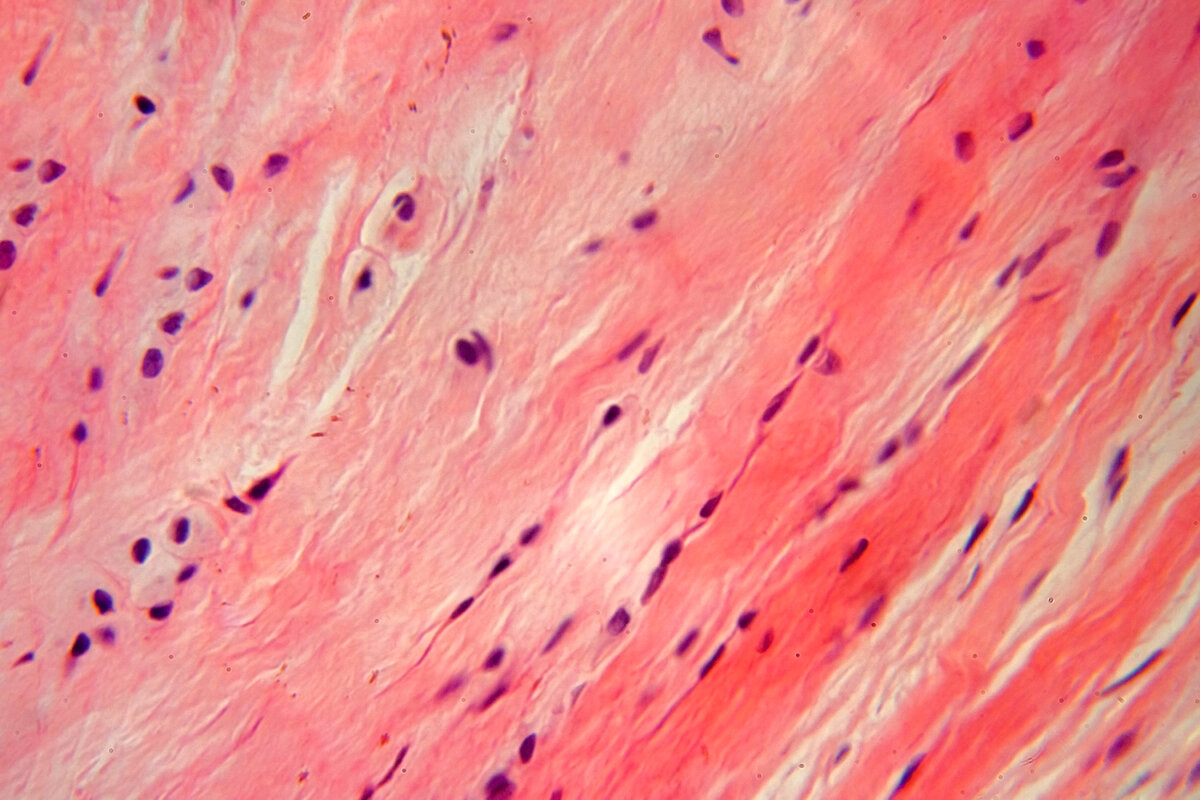
A new therapy is now available to treat painful, non-cancerous desmoid tumors that grow in connective tissue, typically in the abdomen, arms and legs. These rare fibrous growths, also called aggressive fibromatosis, can now be treated Ogsiveo (or nirogacestat)—the first of its kind tablet approved by the U.S. Food and Drug Administration for adults who need systemic treatment.
The approval is marking a breakthrough for patients with desmoid tumors seeking alternatives to surgery, according to Dr. Richard Pazdur, director of the FDA’s Oncology Center of Excellence.
Why Is a New Treatment Needed?
Desmoid tumors are benign growths that often invade surrounding tissue and organs. This leads to severe pain, impaired mobility, and reduced quality of life. In extreme cases, these tumors can cause nerve damage, bowel perforations, amputations, and other serious complications.
Anywhere between 1,000 and 1,650 people in the U.S. receive a desmoid tumor diagnosis every year, according to the National Institutes of Health. The condition primarily affects people in their 20s and 30s but can develop at any age. Those with the genetic disorder familial adenomatous polyposis face a particularly high risk; in such cases desmoid tumors may even be life-threatening.
Though surgery has long been the treatment of choice, tumors often return after removal. As noted in an FDA press release, additional health challenges frequently occur post-surgery as well. Additionally, the risk of becoming addicted to painkillers is high, according to the National Cancer Institute.
How Does the Tablet Work?
Ogsiveo works by inhibiting the enzyme gamma secretase, which activates a signaling protein thought to stimulate desmoid tumor growth, according to the results of the study evaluating the drug, published in March 2023 in the New England Journal of Medicine.
The study involved 142 adults (ages 18-76). Participants either had previously untreated desmoid tumors or tumors that had returned after one line of treatment such as chemotherapy, radiation, or surgery. They were randomly assigned to take either a placebo or Ogsiveo twice a day in 28-day cycles.
After 16 months, those treated with Ogsiveo were 71 percent less likely to have died or had their disease worsen. After two years, 76 percent of Ogsiveo recipients showed no tumor progression. Additionally, 41 percent experienced tumor shrinkage. The tumors in 7 percent of the participants taking the drug had eradicated.
Participants also reported less pain, improved physical function, and enhanced health-related quality of life while taking the drug.
However, side effects occurred in about a fifth of the participants, including nausea, diarrhea, rash, headache, abdominal pain, cough, respiratory infection, and fatigue. The only serious side effects were ovarian dysfunction and premature menopause—with both resolving after the participants stopped taking Ogsiveo.
FDA Fast-Tracks Drug, But Caution Remains
If Ogsiveo becomes the standard treatment, it may not suit every desmoid tumor patient, Dr. Mrinal M. Gounder, from Memorial Sloan Kettering Cancer Center and lead researcher of the Ogsiveo study, said in a statement in May 2023.
“For some whose tumors are stable and not causing pain or other problems, observation may be warranted,” he said. ” For others, sorafenib, chemotherapy, ablation, or surgery may be a better choice.”
Notably, Ogsiveo obtained Priority Review from the FDA, a designation expediting the approval process for drugs with significant improvements over existing therapies for serious conditions.
Ogsiveo also received Fast Track and Breakthrough Therapy as well as Orphan Drug designations. These highlight the medication’s potential to address unmet needs for those with desmoid tumors, while providing incentives to support development of treatments for rare diseases. Ogsiveo is made by SpringWorks Therapeutics, a Pfizer startup launched several years ago.