



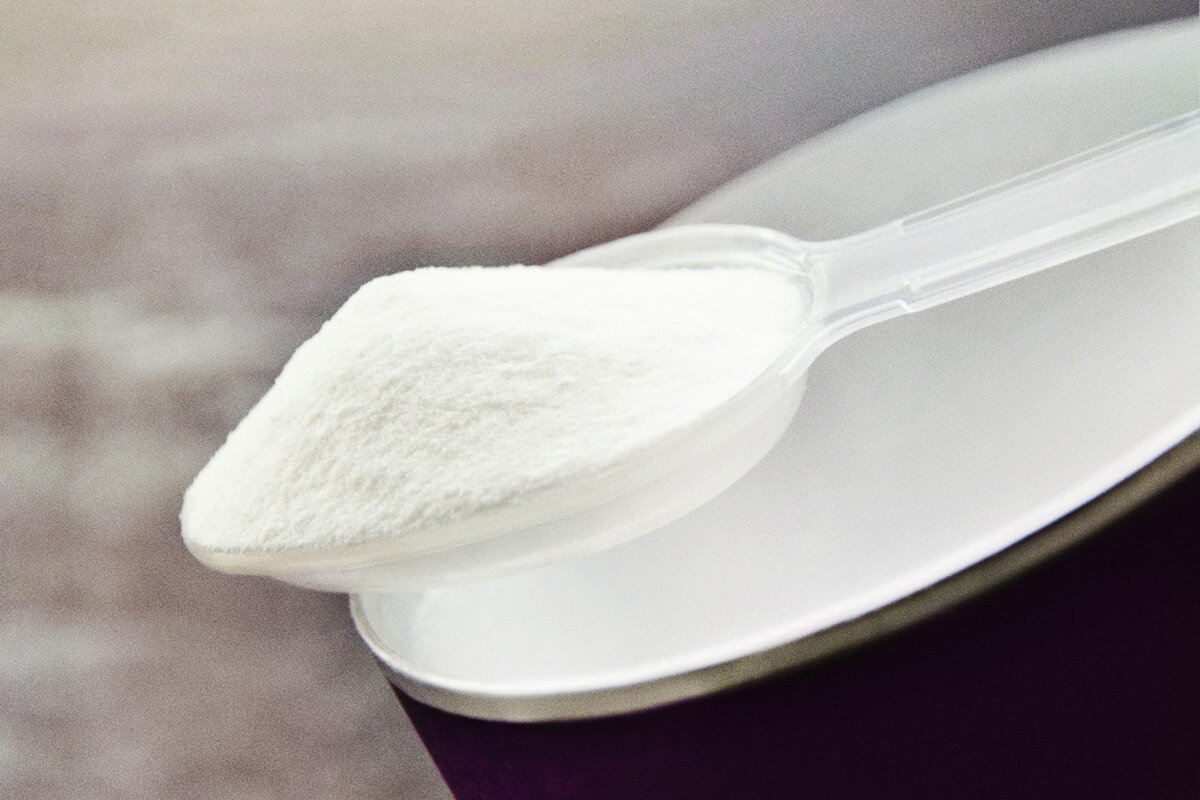
Hailed as a solution for Americans who don’t eat enough vegetables and fruit, refined inulin has quietly crept into nearly every category of processed foods—from cakes and candies to yogurt and baby formula. Some people even scoop a spoonful of this powder into their morning coffee.
The plant-based fiber has become increasingly popular in the food industry because it’s a prebiotic that feeds gut bacteria, making it ideal for functional foods.
However, a shadow now hangs over inulin’s health claims. Emerging evidence suggests this fiber isn’t universally beneficial and may even be linked to cancer in some people. This, combined with other studies continuing to find inulin to be a powerful ingredient, creates a confusing landscape for consumers.
“Using these prebiotic fibers could be a powerful means to improve health, but it needs to be done carefully,” Andrew Gewirtz, an inulin expert and Georgia State University researcher, told The Epoch Times. “It could have negative consequences, too.”
1 Man’s Story
Perhaps no one is more interested in finding answers than Lowell Parker, the unnamed patient in a case report linking metastatic colon cancer to inulin supplementation.
To increase his fiber intake and improve his heart health, the health-conscious retired chemistry researcher began adding a teaspoon of refined inulin powder to his morning drink every day. It made his stomach gurgle and gave him gas—signs Parker believed were positive indicators that he was diversifying the good bacteria in his gut and therefore improving his health.
Like other fiber sources, inulin feeds gut bacteria that produce beneficial compounds, which studies say can strengthen the intestinal barrier and potentially kill cancer cells.
Two years into Parker’s inulin experiment, a routine colonoscopy in 2021 detected a tumor—a Stage 3 cancer that had spread to one lymph node. He changed his tune on inulin—his only lifestyle change since his last clear colonoscopy, which was seven years earlier. His hypothesis that inulin caused his metastatic cancer was plausible enough that Gewirtz wrote about Parker’s case in a study published in Gastro Hep Advances.
The case builds on Gewirtz’s previous research connecting inulin and cancer in animals, which found that inulin can trigger chronic inflammation of the colon lining that could plausibly lead to cancer in some cases—particularly in animals with dysbiosis, or an imbalanced microbiome.
“I think we tend to overlook the fact that everyone’s biology is unique,” Parker said. “Just because it doesn’t cause problems for you does not mean that it doesn’t cause problems.”
Inulin’s mechanism troubled Parker: Could this fiber also feed harmful bacteria and cause them to proliferate, ultimately leading to cancer?
The Unexpected Animal Study Results
In 2018, Gewirtz and microbiome researcher Vishal Singh had anticipated positive results when they conducted their mouse study involving inulin supplementation. They believed that processed fiber could help reverse chronic metabolic diseases, such as fatty liver and Type 2 diabetes, in humans.
The results—published in Cell—were mixed. Although the study confirmed their hypothesis about metabolic benefits, it also revealed that certain mice with existing dysbiosis—an imbalance of good and bad microbes in the gut—developed liver cancer when given inulin.
“This outcome was a huge surprise,” Singh, a professor of nutritional physiology at Pennsylvania State University, told The Epoch Times.
Inulin helped mice that were eating a healthy diet—it improved their metabolism, prevented obesity, and fixed gut problems. However, mice eating processed foods developed an imbalanced gut, and these were the ones that got cancer.
Causes of dysbiosis in humans extend beyond diet and include antibiotics, other medications, environmental toxins, smoking, alcohol, and stress.
“Such findings should give pause to the common and increasing incorporation of such fibers into processed foods that might contribute to the recently defined association of consumption of ultra-processed foods with incidence of cancer,” the authors stated.
A Flawed Foundation
Inulin’s cancer safety largely hinges on one study from 1988, published in the Journal of the American College of Toxicology. Inulin manufacturers cited this study in 13 petitions to the U.S. Food and Drug Administration (FDA) over a 20-year period. The petitions sought status as a “generally recognized as safe,” or GRAS, product.
GRAS status provides an alternative to the premarket approval process for new foods. The onus is on businesses to petition the FDA with proof of their products’ safety.
The 1988 study evaluated the toxicity and carcinogenicity of an inulin product called Neosugar in rats. It concluded the product was safe “as expected,” with comparable tumor rates between rats taking inulin and the control group.
“When I read through the paper and looked at their statistical analyses, I had a suspicion that something was wrong,” said Parker, who once worked as a math and science tutor.
Statistical Errors With Major Consequences
Parker tracked down two statisticians familiar with the study’s methods, and both validated his concerns. He co-authored a reanalysis of the data with Markus Neuhauser, a statistician and mathematics professor at Germany’s Koblenz University.
There were two significant statistical errors in the original 1988 study, Neuhauser told The Epoch Times.
The first error was using the wrong type of statistical analysis. The researchers used a method meant for measuring things on a scale—such as how airfare increases with distance. However, their data were yes-or-no: either an animal had a tumor, or it didn’t. That required a different method entirely.
“The original researchers mingled these two methods—they applied a logistic regression model but incorrectly calculated significance as if it were a linear regression,” Neuhauser said. “As a consequence, some significant increases remained undetected.”
When Neuhauser reanalyzed the data using proper logistic regression, he detected a significant increase in tumors among rats taking inulin.
The second error was combining data from male and female rats, despite an upward tumor trend in male rats and a downward trend in female rats. Together, the data appeared to show no carcinogenic potential.
“Of course, that’s not correct,” Neuhauser said. “You cannot argue that in total there is no effect when half the population shows a significant effect.”
Although many scientists make errors, Neuhauser noted, errors rarely change a study’s conclusion.
“That is different here,” he said. “That’s a more substantial error than usual. There was a huge change in the outcome.”
The Hard-to-Find Researchers
Parker has had no luck tracking down the original study’s author, M.A. Clevenger. At the time the study was published, the authors worked at ENVIRON Corporation, a company that later filed GRAS petitions on behalf of food manufacturers making inulin products.
ENVIRON wrote a GRAS petition in 2000 on behalf of GTC Nutrition Company for Neosugar to be used in many products, including baby food, nutritional bars, baked goods, dairy products, candy, cereals, soups, and yogurt. ENVIRON was acquired by Denmark-based Ramboll in 2014.
According to a 1987 Washington Post article, Michael Ginevan—acknowledged in Clevenger’s study for assisting with statistical analyses—was a senior science adviser at ENVIRON.
Parker and Neuhauser initially tried to publish their reanalysis in the International Journal of Toxicology, the successor to the journal that published Clevenger’s study. Editors told them that the totality of inulin evidence matters, not one study.
After multiple failed publication attempts—including one toxicology journal that couldn’t find reviewers—they finally succeeded in getting their paper published in Communications in Statistics this year.
“It was a little bit astonishing,” Neuhauser said. “Now that it’s published, we’ll see whether it has any consequences.”
The FDA’s Response
Parker and Neuhauser’s ultimate aim is to alert the FDA and scientists that the foundational paper could be flawed, so that someone will initiate a thorough investigation or consider product warning labels.
The FDA said it is prioritizing the review of food additives and shared a database of products currently under review. At the time of publication, inulin wasn’t on the list to review. However, the FDA noted in an email to The Epoch Times that the reanalysis of the Clevenger study “is a signal for consideration under our systematic post-market assessment process.”
The agency also stated that it doesn’t rely on single studies for determining safety but considers many types of information, including multiple studies, consumption levels, and manufacturing processes.
Gewirtz doesn’t think inulin would receive FDA approval if it were entering the market today because there is new evidence and more recent studies that cast doubt on its universal safety.
Parker, who only recently learned about the FDA’s formal post-market review process, is planning to petition the agency for a formal evaluation of inulin’s safety. The FDA receives about 200 citizen petitions annually and states on its website that evaluation can take weeks or up to a year, though regulations require a response—approval, denial, dismissal, or tentative response requesting more information—within 180 days.
Inulin’s Nuance
A 2024 review in Gastroenterology Report highlighted just how nuanced inulin can be. Its effects depend on one’s starting microbiota, the length of time supplemented, the amount taken, and the type of inulin used.
Among positive benefits, short-term inulin supplementation during cancer treatment is associated with better responses to conventional therapies, relief of symptoms, faster recovery, and better healing after surgery.
“However, in clinical trials, there is limited evidence of the efficacy of inulin in preventing colorectal cancer,” the authors noted. “Moreover, recent data suggest that improper inulin consumption may even be harmful for gastro-intestinal health under certain circumstances.”
Though more research is needed on what constitutes improper inulin intake, the review noted that it might include people who have weakened inner colon linings—such as those with inflammatory bowel disease—use too much inulin or take it for a long period of time, and eat a diet high in fat, refined sugar, and processed foods that already puts them at risk of colorectal cancer.
In people with high levels of toxin-producing bacteria—particularly those with inflammatory bowel disease and existing colorectal cancer—inulin can worsen intestinal inflammation.
More studies are needed, the authors added, noting that the negative effects of inulin are associated with highly purified supplements and are unlikely to reverse damage from a processed food diet.
What’s a Consumer to Do?
Experts say inulin doesn’t have to be all or nothing, but one thing is certain: The inulin naturally present in food is a safer option.
“My advice would just be that if you’re doing this to promote your health, I don’t think it’s a great idea,” Gewirtz said, adding that occasionally eating a product with inulin in it isn’t dangerous.
Inulin is found in bananas, leeks, onions, asparagus, garlic, chicory root, and Jerusalem artichokes—foods with natural sweetness and thickness that have made refined inulin appealing as a concentrated powder.
Occasional exposure to products containing inulin isn’t worth worrying about, Gewirtz noted. He advises against taking the powder as a supplement to promote health, however.
Focus on obtaining inulin naturally through food sources. Although the supplement appears most problematic for people with existing gut issues, the research remains inconsistent, and the science unsettled—making naturally occurring inulin from whole foods the wisest choice.