



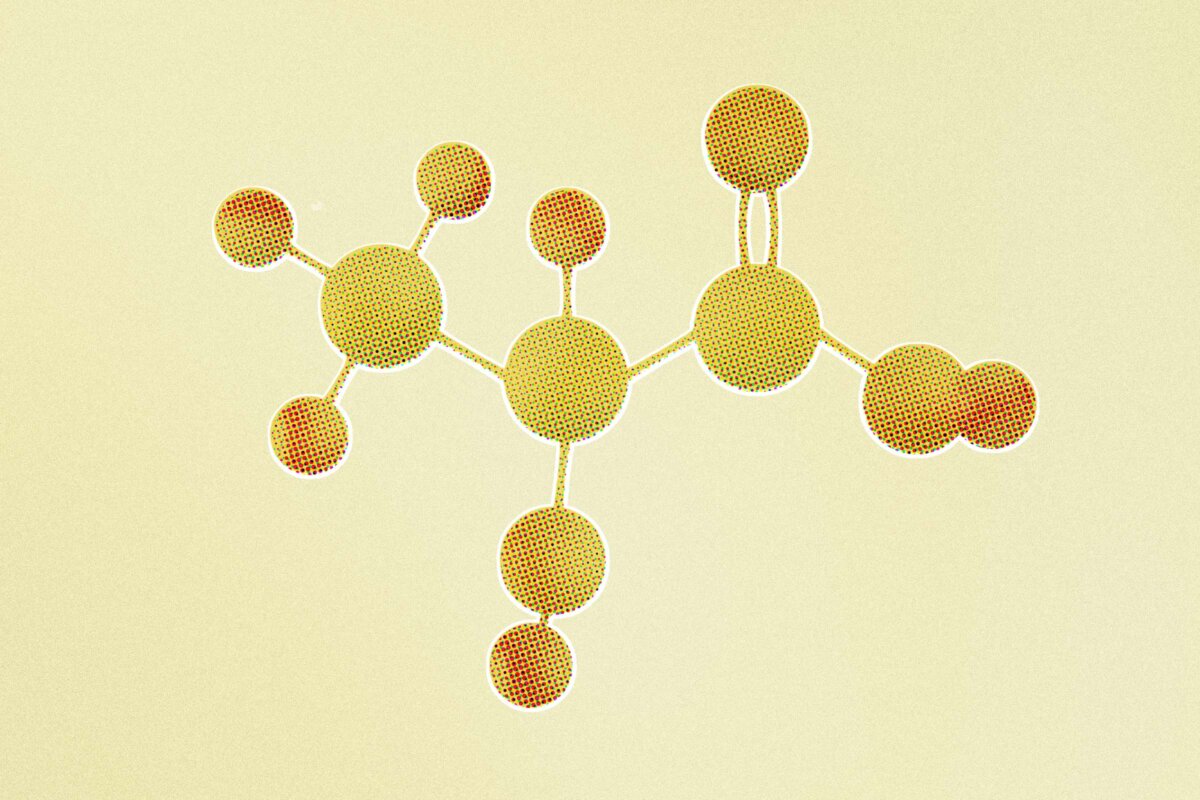
Lactate is being redefined as more than a metabolic waste product.
Far from being something to flush out, lactate can be used by neurons as an alternative energy source. In conditions such as Alzheimer’s disease, in which the brain struggles to use glucose efficiently, lactate could help fill that gap—like ketones do—giving brain cells another way to stay fueled.
An Alternative Fuel
During a hard workout, your body generates lactate. Lactate is often associated with muscle soreness and fatigue. However, these symptoms are only part of the story.
Despite accounting for just 2 percent of body weight, the brain uses about 20 percent of the body’s glucose-based energy, making it the most glucose-hungry organ relative to its size. Yet it cannot store much glucose, which means that it depends on a constant supply from the blood crossing into the brain.
Enter lactate: It adds an extra, locally available fuel that helps meet fast or fluctuating energy demands.
When lactate levels rise—during exercise, for instance—the brain starts to use more lactate and less glucose, a process called lactate oxidation.
“Lactate oxidation helps the brain spare glucose during times when energy demand is high,” Dr. Tamara Hew-Butler, adjunct professor in nutrition and food science at Wayne State University, told The Epoch Times.
The spared glucose isn’t wasted. It gets redirected to other critical brain functions, including making neurotransmitters (which help brain cells communicate), producing antioxidants such as glutathione (which protects the brain from oxidative damage), and helping control inflammation and regulate the brain’s immune defense system.
Lactate also helps increase brain-derived neurotrophic factor, a protein that supports the growth and survival of brain cells, plays a role in memory and brain repair, and helps strengthen connections between neurons.
When the Brain Declines
Lactate’s role as an alternative fuel for the brain becomes especially important for people whose brains struggle to process glucose efficiently, including those with brain injury, neurodegenerative disease, or insulin resistance.
“As we age, we seem to lose our brain’s ability to access glucose,” Dr. Austin Perlmutter, a physician specializing in brain health, said at a recent integrative health event in New York City.
“But especially in conditions like mild cognitive impairment and Alzheimer’s disease, you see a notable drop in the brain’s utilization of glucose.”
In Alzheimer’s disease, reduced glucose metabolism in the brain is linked to memory and thinking problems. At the same time, better preservation of normal brain energy use seems to offer some protection against Alzheimer’s changes. Several studies have identified this metabolic gap as a potential target for intervention, with lactate among the candidates being explored to help fill it.
“Lactate will be a potential way to bypass the brain’s inability to use glucose,” Perlmutter said.
Lactate Versus Ketones
Ketones are already well established as an alternative brain fuel. During periods of low glucose availability, the brain can use ketone bodies for energy, and ketogenic diets have long been used to exploit this.
However, ketones have limitations. Reaching therapeutic ketone levels through a strict ketogenic diet can take three to five days, a timeline that makes them impractical in acute care settings in which the brain needs support quickly.
“Ketones appear to be the fuel of last resort,” Hew-Butler said. It’s linked to starvation or low-carbohydrate intake—something the body turns to when glucose runs critically low, rather than a readily available backup.
Research in newborns illustrates this gap. It has been shown that babies with low blood sugar in the first 48 hours after birth are unlikely to get adequate brain protection from ketones alone. In these cases, lactate steps in as the more immediate alternative fuel.
Lactate is produced much faster than ketones because the body first needs to shift into fat-burning mode before ketone levels rise. Lactate is also constantly available in the body. Your muscles, red blood cells, and other tissues produce it throughout the day, even at rest. During exercise, lactate levels increase further, giving the brain rapid access to an additional fuel.
Research such as this is one reason interest in lactate is growing quickly in brain health. The shift in thinking is reflected in comments from some researchers in the field.
“Lactate is going to be the new ketone,” Perlmutter said.
How to Raise Your Lactate Levels
The most accessible way to produce more lactate is also the most straightforward: Exercise harder. Lactate can be produced inside the body (endogenously) by working muscles.
“The harder your muscles work, the more lactate your body produces,” Hew-Butler said. “So, feeling the burn during maximal exercise is a sign that high levels of lactate are being produced and used by the body.”
Sprinting, high-intensity interval training, heavy weightlifting, and fast-paced circuit training all push the body into an anaerobic state, triggering lactate production. When muscles are forced to produce energy quickly, lactate builds up. There is no clearly defined optimal lactate level for brain health. What seems to matter more is regularly reaching the hard exercise zone, in which breathing becomes heavy and lactate rises quickly.
Lactate can also be administered from outside the body (exogenously). Some fermented foods naturally contain lactate (specifically lactic acid and lactate salts) because they are produced by lactic acid bacteria during fermentation—such as yogurt, kefir, sauerkraut, kimchi, and some pickled vegetables. The amounts of lactate obtained from food are relatively small and are not thought to replicate the same metabolic effects seen with exercise-induced lactate production.
There are also oral products, although most of the research is still experimental, Hew-Butler said. For most people, exercise remains the most practical and well-studied way to naturally raise lactate levels.