




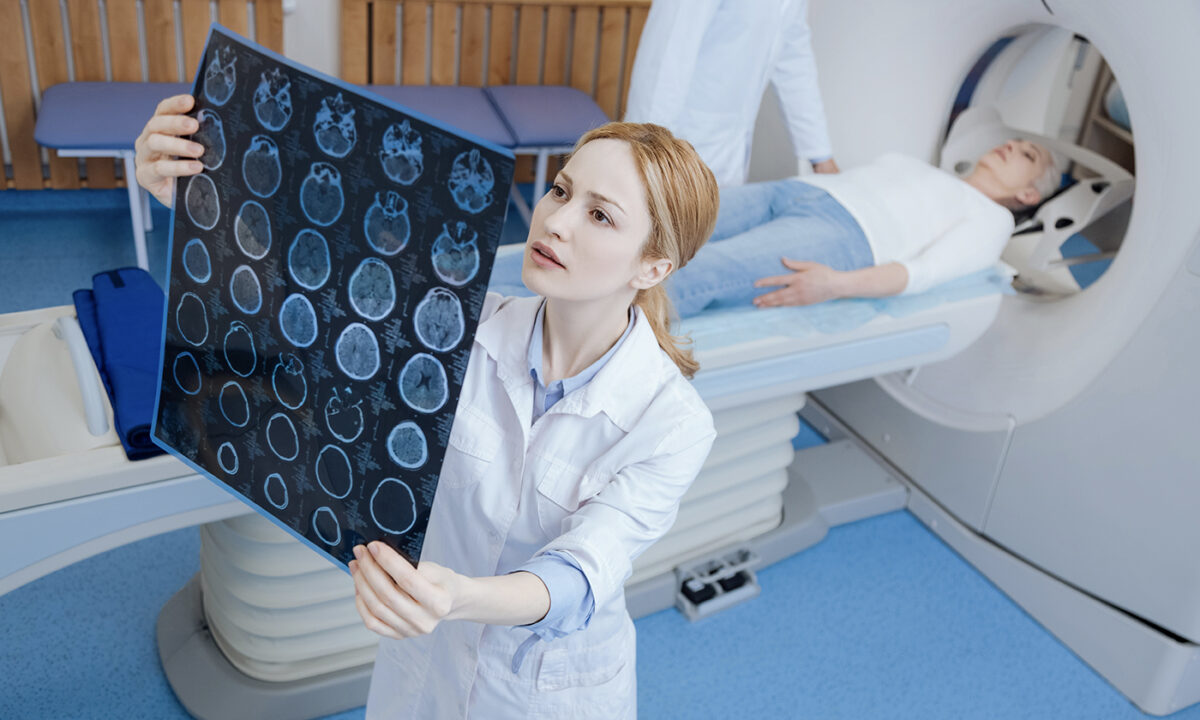
A new study conducted by National Health Research Institutes (NHRI) and Taichung Veterans General Hospital found that the contrast medium (CM) used on patients during radiological examinations may significantly increase the risk of vascular dementia.
Doctors use contrast media to increase the visibility of organs, blood vessels, and tissues when performing computed tomography or magnetic resonance imaging scans on patients. It has been found that some contrast media can cause renal failure, acute kidney injury, and death because the contrast medium can cause toxicity to the renal tubular epithelial cells directly, leading to renal dysfunction or even necrosis (death of tissue), and microvascular problems in the kidney indirectly.
Chih-Cheng Hsu, deputy director of the Institute of Population Health Science of the NHRI, said that since some contrast media have been proven to damage the kidneys. The brain and kidneys are covered with many blood vessels, so it was speculated that contrast medium might also affect the brain and cause dementia.
Dementia is further divided into common Alzheimer’s disease (AD) and vascular dementia (VD). The worldwide incidence rate of VD has grown rapidly in recent years, and the age group is getting younger, which has attracted the attention of the public and the medical industry.
The research team of the NHRI reviewed the previous Taiwan National Health Insurance (NHI) database to compare and study the etiology of dementia patients. They selected the records of nearly three million people with dementia, half of whom had used a contrast medium and the other half had never used it.
To avoid loss of reporting accurately, they excluded those patients who suffered from dementia or stroke before using the contrast medium while controlling the variables such as age, diabetes, high blood pressure, chronic respiratory disease, depression, and cancer of patients in the study.
The study showed that among patients who had never used a contrast medium, the risk of developing Alzheimer’s disease was 0.01 percent between the ages of 30 and 49, 0.98 percent between the ages of 50 and 64, and 3.29 percent between the ages of 65 and 74. The percentages of those exposed to a contrast medium were 0.07 percent, 3.66 percent, and 11.55 percent, respectively.
While for vascular dementia, among those who had never used a contrast medium, the attack rate was 0.01 percent between the ages of 30 and 49, 0.2 percent between the ages of 50 and 64, and 0.85 percent between the ages of 65 and 74; The percentage of those who had been exposed to a contrast medium were 0.09 percent, 1.32 percent, and 4.55 percent, respectively.
Although the incidence rate is not high, the risk of dementia for those who have used a contrast medium within 10 years is 2.09 times higher than for those who have not. And the incidence of vascular dementia is four times higher. People with diabetes and depression are generally considered to be at high risk of dementia.
The so-called vascular dementia is rapid damage to the brain caused by reduced blood flow to the brain.
In addition, the report shows that intra-arterial injection (into an artery) of the contrast medium easily allows the contrast medium to enter the blood circulation of the brain, which may affect the brain, then the risk of dementia caused by arterial injection is greater than that of intravenous injection. These research results were published in the international journal Biomedicines in mid-August.
Hsu also mentioned in the press conference that because the contrast medium can pass through the blood-brain barrier and cause chronic inflammation of the blood vessels in the brain, the risk of vascular dementia is higher. The study also found that the more injections of contrast agents, the greater the chance of developing vascular dementia in the future.
He emphasized that the identification of tumors, kidney stones, and the placement of cardiovascular stents requires the help of a contrast medium. The aim of this study is not to prevent the public from checking with contrast medium but to use it only when necessary.
So how to avoid the risks posed by the contrast medium? Hsu suggested that, in general, the intravenous injection should be used rather than inter-arterial, the dose should be lowered, and repeated use should be avoided. And drinking plenty of water before the use of a contrast medium can reduce the residual time of the contrast medium in the body, thereby the risk is reduced.
After the press conference, Taiwan’s NHRI mentioned that the study still has some limitations. The results of the study only confirm that the use of contrast medium is highly “correlated” with an increased risk of dementia, but further research is needed to show whether it has a “cause and effect relationship” because data on the patients’ dietary habits and the dose of contrast medium used at the time are absent.