



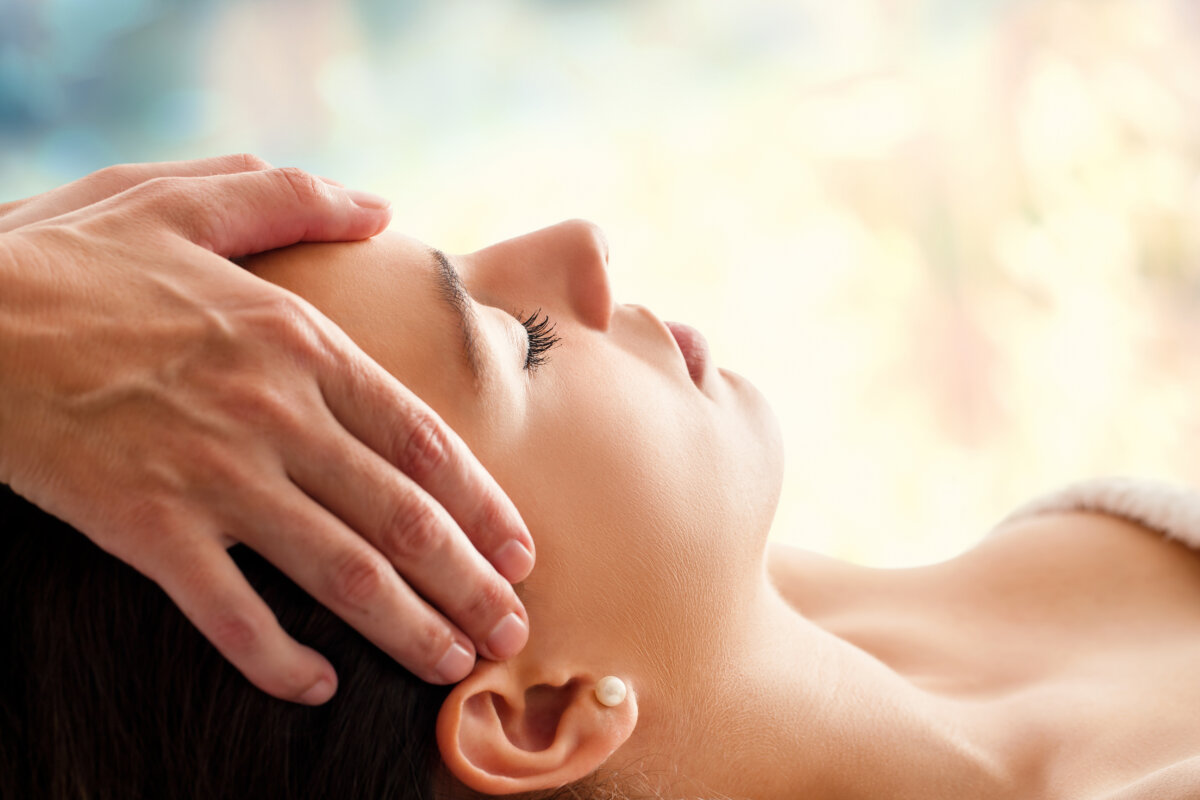
Cranial sacral therapy is a non-invasive treatment that may ease the symptoms of some neurological disorders.
Migraine headaches and tinnitus (ringing in the ears) can occur when bones of the skull or their associated fascia are under tension. Cranial sacral therapy may be an option for relief.
There are twenty-two cranial bones in the human skull. Two temporal bones hug the brain on the right and left sides, and tension in this area is a focus for manual therapists when addressing complaints of tinnitus and migraines. Gentle pressure applied to the cranial bones and connecting tissues may help ease temporal tension and provide relief for tinnitus and migraines.
What Is Cranial Sacral Therapy?
Cranial sacral therapy is a non-invasive treatment combining massage and osteopathic techniques. Light fascial-release maneuvers reduce activation of the sympathetic nervous system, which is responsible for the body’s “fight or flight” response, and treat the bones and tissues of the cranium.
Balancing the Autonomic Nervous System With Cranial Sacral Therapy
Gentle, indirect force applied by a craniosacral therapy practitioner to the bones of the skull reaches the dura membrane (one of the layers of connective tissue around the brain) through the surrounding skull and is thought to affect the rhythmic flow of the cranial system. This creates a therapeutic effect by engaging the famous parasympathetic rescue response responsible for calming the body after periods of stress.
Migraines and tinnitus are two conditions that are related to the imbalance of the autonomic nervous system, which regulates automatic functions like breathing and blood circulation. That imbalance can either be a cause or a consequence of the parasympathetic nervous response (“rest and relaxation”) becoming overpowered by the sympathetic nervous system (“fight or flight”).
Looking at cranial sacral therapy from an autonomic nervous system perspective, we know that overactive sympathetic nerve activity means physiological and psychological stress and inflammation that, if prolonged, could result in pain and other maladies.
Systems affected by the parasympathetic activation of the central nervous system can contribute to chronic pain. These systems include the musculoskeletal, vascular, lymphatic, endocrine, and respiratory systems.
The nervous system can get stuck in a high-alert state due to physical or chemical trauma. A sympathetic system left running is a common suspect in many mysterious chronic pain cases.
The good news is, release of tissue tension triggers the opposing, parasympathetic nerve activity, dampening the sympathetic response.. Cranial sacral therapy is designed to adjust and balance autonomic rhythms and to promote a healthy nervous response in order to minimize pain and other reactive physiological symptoms.
Migraine Headache
Migraines are classified as a neurologic disorder with a complex network that recruits multiple brain regions.
Serious head pain is a serious matter. Beyond headaches, migraines are a collection of cognitive, gastrointestinal, musculoskeletal, and vestibular disturbances.
One factor that contributes to migraines is stress. Stress affects the autonomic nervous system and results in a dominant sympathetic nervous system, which causes muscle tension and inflammation throughout the body.
Cranial Sacral Therapy for Migraine Headache
Studies have suggested using manual techniques can be effective in treating people with migraines, specifically on the intensity of the pain and their duration, but how does manual therapy help with a nervous system disorder?
Migraines can be a case of referred pain, which is when an injury in one part of the body causes pain in another part of the body. Migraines often occur from tension in the musculoskeletal systems of the head, shoulder, and neck regions.
Cranial sacral therapy for the treatment of migraines consists of non-invasive techniques performed between the skull and the sacrum to relax the muscle tissues around the skull. This minimizes sympathetic nerve reaction and activates the parasympathetic nervous system discussed above.
The brain does not feel pain, but pain sensations are registered by the nervous system. Cranial sacral therapy can work on the neck and facial muscles that cause headaches. One area of focus is the temporal region (the bones above the ears), which is associated with the nerves often implicated in migraine pain. Relieving tightness in the skull and cranial tissues could explain the relief of migraine symptoms following cranial sacral treatment.
Tinnitus
Tinnitus is the experience of ringing or other sounds heard in one or both ears. These sounds are not generated externally but heard only by the person with tinnitus. Currently, there is no known cure. Two possible causes of tinnitus are physical trauma to the ear or misfiring of the brain circuitry that processes sound. One explanation for tinnitus is the autonomic nervous system becoming overly activated. Because of this, a person might become extremely sensitive to sounds or even begin to perceive sounds that do not exist in the environment.
With improved circulation in the cranium, tinnitus may lessen or improve as nerve function is brought back to a balanced state.
Cranial Sacral Therapy for Tinnitus
Cranial sacral therapy aims to enhance blood flow and circulation in the head, thereby aiding normal nerve function. A study with two participants designed to assess the effectiveness of manual therapy on the cranial bones to reduce somatic tinnitus showed an improvement in both participants. Manual therapy was used to realign the cranial bones, including temporal bones, along with a muscle tension release technique. The participants both reported a reduction in their tinnitus one year later. These results suggest that cranial sacral therapy could be a promising treatment for tinnitus.
Science Behind Cranial Sacral Therapy
The main purpose of the cranial sacral therapy technique is to bring the bones of the skull into an optimized position. Physical correction of cranial alignment will, in this theory, decrease the tension, stress, pressure, and inflammation in the head and face. A positive effect on the cranial system will also lead to positive changes in sensory sensitivities directly impacted by the autonomic nervous system.
Cranial sacral therapy has been adopted by many professionals who recognize that addressing the skull bones can lead to pain relief for those suffering from headaches and associated symptoms.
Get Ahead of Head Pain
In addition to possibly helping with head pain and ringing in the years, cranial sacral therapy is regarded as safe when performed by a trained professional.
Cranial sacral therapy is offered by certified massage therapists, osteopaths, chiropractors, and other trained specialized health care practitioners. It is a complementary treatment because it is recommended in conjunction with other therapies.
Any pain in the head or face can be a warning sign of a more serious health problem. If head pain is severe, sudden, or comes with more alarming symptoms than the average headache, it is best to seek immediate medical care.