



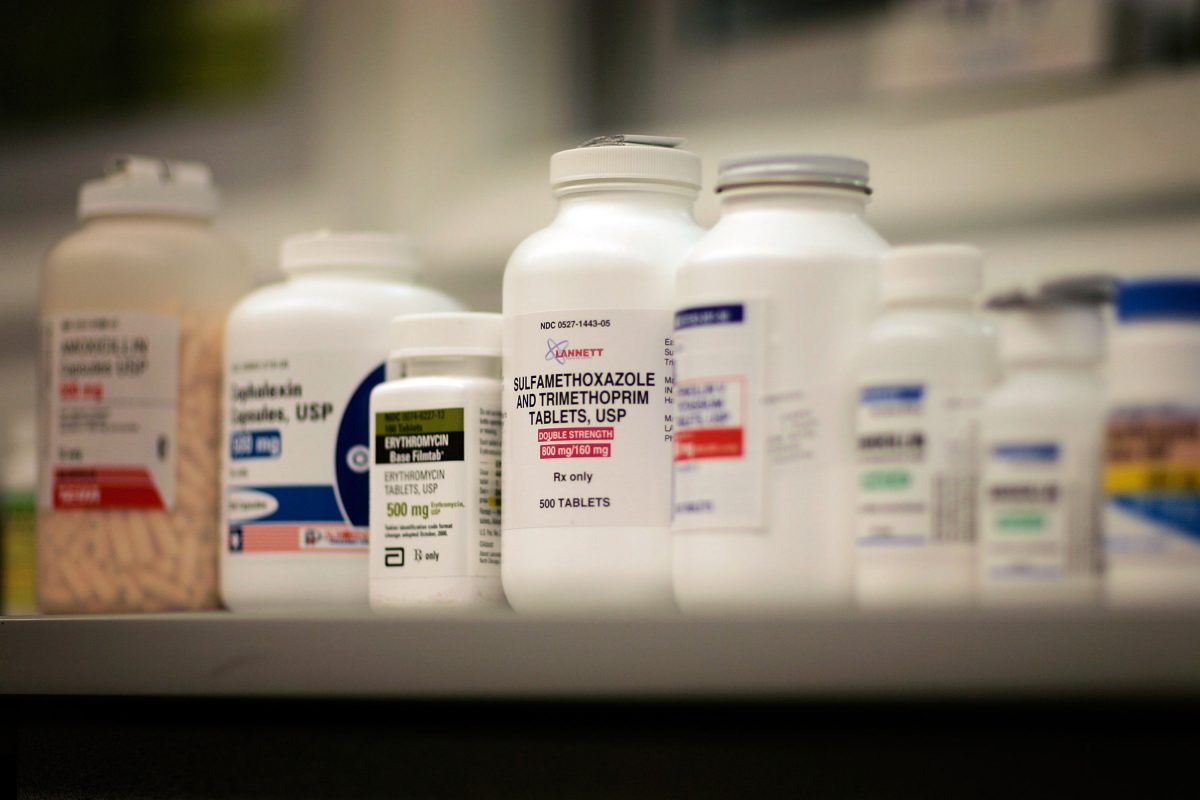
The rise of antibiotic resistance presents a serious global health challenge. A thoughtful, collaborative approach is needed to promote the judicious use of current and new antibiotics, according to experts.
This requires moving beyond an adversarial mindset toward bacteria and considering the complex factors driving resistance. With strategic changes to policy, medical practice, and public awareness, doctors can curtail antibiotic overuse to preserve these life-saving drugs while continuing the search for new solutions.
Antibiotic Consumption Skyrocketing Worldwide
Data from the U.S. Centers for Disease Control and Prevention (CDC) show that global human consumption of antibiotics rose by 65 percent between 2000 and 2015. Use in livestock is projected to increase by nearly 12 percent between 2017 and 2030. Without intervention, the CDC predicts that worldwide antibiotic consumption could surge by 200 percent between 2015 and 2030.
Alarmingly, bacteria resistant to multiple drugs have become more widespread each decade since antibiotics were first introduced.
The CDC has labeled antimicrobial resistance (AMR) an “urgent global public health threat.” It contributes to more than 1.27 million deaths worldwide annually and was linked to nearly 5 million deaths in 2019 alone. In the United States, approximately 3 million AMR infections occur every year.
Superbugs Adapt Faster Than Medicine Can Keep Up
Antibiotic-resistant pathogens, also called superbugs, adapt to evade even our most potent drugs. Some experts argue that it’s time to fundamentally shift the current approach and rely less on new technological breakthroughs.
In a recent peer-reviewed article published in Perspectives on Politics, researchers at York University’s Global Strategy Lab proposed reconceptualizing AMR as a socio-ecological challenge stemming from natural evolutionary processes.
They concluded that we cannot defeat pathogens outright and instead must change to coexist with them. Otherwise, the researchers warn, traditional global health governance will continue to fail against AMR.
Antimicrobial Resistance Is Everywhere: Expert
Overreliance or misuse of antibiotics and antimicrobials in medical settings and the livestock industry are key accelerants for AMR.
The greatest overuse and misuse of antibiotics occurs outside of the hospital setting, according to Dr. Priya Nori, chair of the Antimicrobial Stewardship Committee of The Society for Healthcare Epidemiology of America and deputy editor of Antimicrobial Stewardship and Healthcare Epidemiology. This includes outpatient practices, urgent care centers, and even dental clinics.
There is also the worry that antibiotic residues generated during manufacturing may be released into the environment. Similarly, antimicrobial resistance genes from both human and animal waste have the potential to contaminate our surroundings, according to Dr. Nori.
“Therefore, antimicrobial resistance is everywhere and requires a holistic approach to address on a large scale,” she said, noting that she disagrees with the militaristic framing of the issue in the article, which described the problem as a “war on superbugs.”
“Using these frightening terms has not gotten us any further in terms of raising public awareness on the harms of AMR,” Dr. Nori said. “As the authors state, AMR is a ‘social problem,’ but our existing approach has been to frame it as primarily a health care problem.”
While we cannot eliminate all pathogenic microbes, using antibiotics only when they work can help curb unnecessary prescriptions. Focusing use on appropriate bacterial infections is key to slowing resistance, according to Dr. Nori.
“Hospital programs like antimicrobial stewardship and infection prevention aim to do just that,” she said.
There’s No Single Solution
Newer antibiotics are only “half of the right answer,” Dr. Sharon Nachman, chief of the Division of Pediatric Infectious Diseases at Stony Brook Children’s Hospital, told The Epoch Times.
Patients with resistant bacteria still must be treated.
“We can’t just close our eyes and pretend they’re not there,” she said.
Thus, we must continue developing new drugs to treat them.
The other half of the answer is identifying the drivers of resistance. For example, studies show that antibiotic exposure turns even insects such as flies that feed on cattle into carriers of 100 percent antibiotic-resistant bacteria.
“We need to take a step back and say, on a ground level, how much abuse of antibiotics is occurring, and how are we gonna stop that?” Dr. Nachman said. “Part of the discussion is: Should we be using antibiotics in our food sources?”
Overprescription in outpatient settings such as urgent care centers also negates hospital stewardship efforts, she said. Despite knowing that patients are suffering from viral infections, clinicians often prescribe antibiotics “just in case” because of patient demand. This prescribing practice must change, according to Dr. Nachman.
Combating resistance requires examining all factors that promote it—environmental, agricultural, and clinical. No single solution exists, but a holistic approach targeting antibiotic misuse can make a difference, she said.
“It’s all of us together that have to fix it,” Dr. Nachman said.