



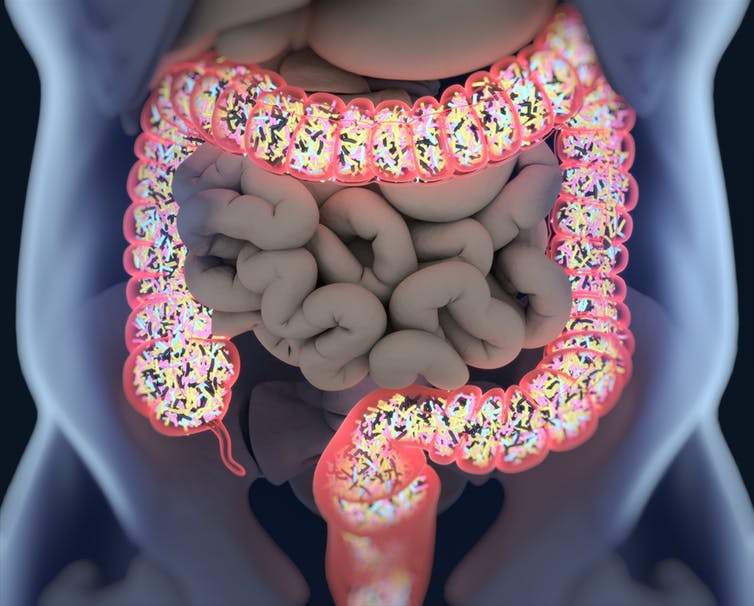
New hope for those suffering from inflammatory bowel disease (IBD) may come from the counselor’s couch. Research has uncovered significant evidence that psychological interventions such as cognitive behavioral therapy can reduce inflammation levels in people living with IBD.
The research provides a ray of light for the more than 3 million Americans afflicted with these painful gastrointestinal conditions, which include Crohn’s disease and ulcerative colitis.
New Hope for IBD Sufferers
Symptoms of IBD include diarrhea, abdominal pain, nausea, appetite loss, and rectal bleeding. The condition severely affects patients’ mental health and quality of life. More than 720 new cases per 100,000 people—that’s nearly one in 100—are diagnosed a year.
The King’s College London study was a systematic review and meta-analysis of research involving more than 1,700 participants across 28 randomized controlled trials. It examined the effect of mood interventions on inflammatory biomarkers such as C-reactive protein, a protein made by the liver, and fecal protein calprotectin, which both indicate IBD activity.
The findings show psychological therapies such as cognitive behavioral therapy, acceptance and commitment therapy, and mindfulness-based stress reduction reduced inflammation better than antidepressants and exercise. The benefits were most pronounced with talk therapy approaches that lifted mood.
“Our study showed that interventions that treat mental health reduce levels of inflammation in the body,” Natasha Seaton, lead author of the study and a doctoral candidate at King’s College London, said in a statement. “This indicates that mood interventions could be a valuable tool in our approach to help those with IBD.”
The authors noted therapy’s financial edge over expensive drugs such as infliximab, which can cost upward of $15,000 per year, depending on coverage, and has serious side effects.
While medications are standard, there are alternative interventions, such as acupuncture, exercise, sleep, and therapy, Dr. Andrew Boxer, a gastroenterologist at Gastroenterology Associates of New Jersey, told The Epoch Times.
“As seen in this study, I agree that psychotherapy is very effective in control of IBD symptoms,” he said.
Therapy Helps Patients Break Thought Cycles Tied to Symptoms
While stress “certainly” plays a role in worsening symptoms, the opposite is true as well, since worsening symptoms of IBD can affect stress levels, according to Esther Stein, a gastropsychologist at the Susan and Leonard Feinstein IBD Clinical Center at Mount Sinai Hospital.
“This relationship can be bi-directional,” she said. “Much of what gastropsychologists do in clinical practice is modify this arousal response and improve coping and stress management so that symptoms can be better managed, and remission can be maintained.”
Cognitive behavioral therapy (CBT)—focusing on thoughts, feelings, and behaviors—is a primary psychological treatment used to improve IBD symptoms, Ms. Stein said.
IBD patients often develop unhelpful thought patterns, and CBT retrains them to think and act differently in response to symptoms.
CBT Tools to Use in Daily Life
While CBT often involves working with a professional, the following techniques can be adapted for daily life:
- Cognitive restructuring: This technique helps change thoughts by replacing stress-inducing ones with more balanced perspectives. It starts with identifying a stressful situation and associated thoughts and feelings. These thoughts are then examined to determine what’s true or not. Then, a more balanced thought model is created to provide relief.
- Journaling to deal with negative thoughts: Journaling involves writing down thoughts and feelings to understand them better. For those struggling with negative emotions, it can help them gain control and improve mental health.
- Relaxing: Relaxation can help with stress relief. Ms. Stein recommends strategies such as diaphragmatic breathing, mindfulness exercises, and gut-directed hypnotherapy.
“When patient’s mental health/stress is well managed, they are better able to manage their disease,” she said.