



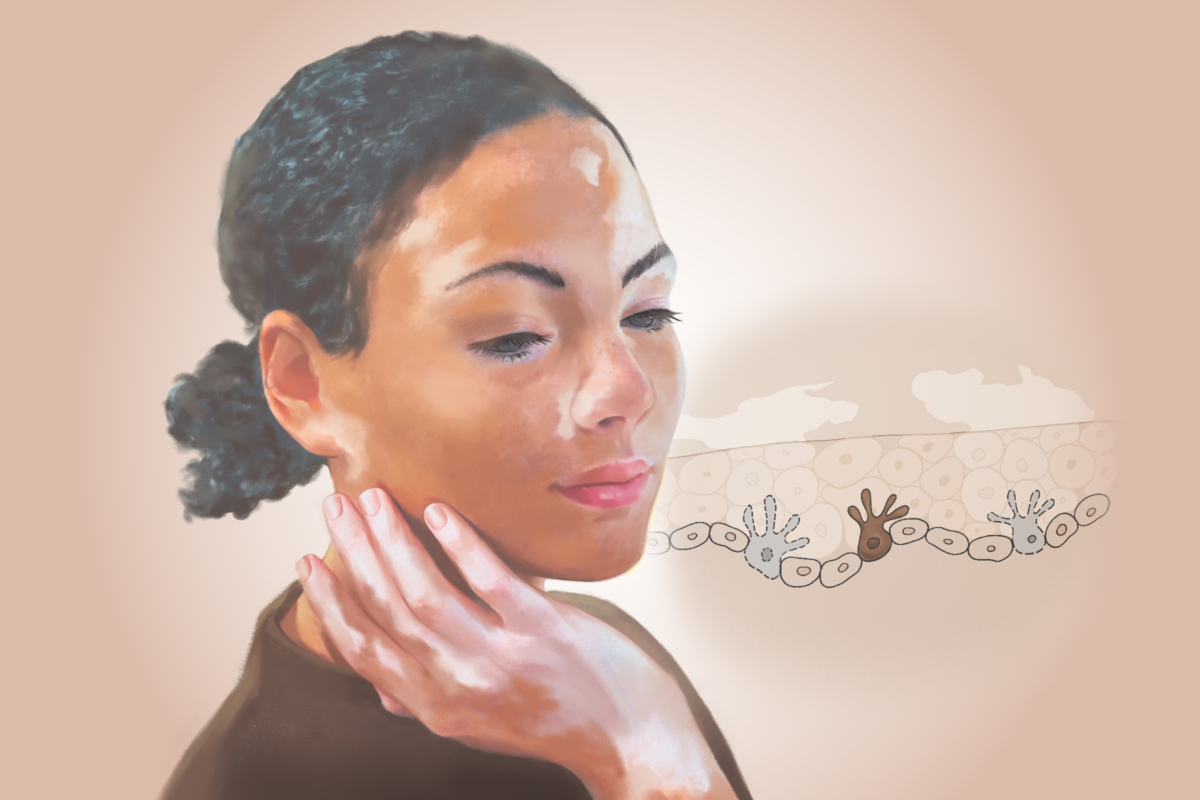
Vitiligo is a common autoimmune disease in which the immune system mistakenly attacks and destroys melanocytes, the cells that give skin its color, causing patches of skin to turn white or noticeably lighter than the surrounding area.
Worldwide, vitiligo affects men, women, and children, and researchers estimate that about 1 in 109 people will develop vitiligo by age 80, though the real number is likely higher, since many cases are never formally diagnosed.
The hardest part of vitiligo isn’t what shows up on their skin. It is what the condition does to one’s confidence and daily life. Those living with vitiligo face higher rates of depression and sleep problems.
Recognizing the early signs can help people seek solutions sooner.
[shortcut_anchor id=”anchor_1774046590652″ label=”Symptoms”]What Are the Symptoms and Early Signs of Vitiligo?[/shortcut_anchor]
Vitiligo is almost always first noticed visually. The condition usually does not cause pain or itching, though in some people, when vitiligo is actively spreading, areas of lighter skin can feel mildly itchy or tingly.
The most recognizable signs of vitiligo are one or more patches of silver, gray, or white hair or smooth white or lighter-than-normal skin. The skin patches often begin as small, pale, or chalky‑white spots that can be round, oval, or streak‑like. Over time, these spots may slowly enlarge and merge into larger, more irregular patches, remain stable, or, in some cases, regain color.
Early patches most commonly appear on the hands, forearms, feet, and face, particularly around the eyes and mouth. From there, they may grow larger, remain stable, or, in some cases, regain color. Patches may also spread to other areas of the body over time.
Because melanocytes are also found in the hair, eyes, and certain moist surfaces like the inside of the mouth and nose, vitiligo can cause changes in these areas too, leading to signs such as:
- Premature whitening or graying of hair on the scalp, eyebrows, eyelashes, or beard
- Loss of color inside the mouth or nose
- Pigment changes to the retina (back of the eye) and uvea (middle, pigmented layer) of the eye
- New white patches appearing after skin injury, friction, or sunburn—a pattern known as the Koebner phenomenon
[shortcut_anchor id=”anchor_1774046584696″ label=”Types”]What Are the Types of Vitiligo?[/shortcut_anchor]
Vitiligo is classified by how the patches appear on the body. The three types include:
1. Nonsegmental Vitiligo
The most common form, where patches appear on both sides of the body in a roughly symmetrical pattern and may gradually spread over time. There are various subtypes based on where patches appear on the body.
- Acrofacial: Affects the face, hands, and feet
- Mucosal: Affects more than one site of mucous membranes
- Generalized: Affects several body areas, such as both knees or elbows
- Universal: Affects 80 percent to 90 percent of the body surface
2. Segmental Vitiligo
Patches appear on only one side of the body, often following a band-like or localized pattern that does not cross the midline. It is more common in children and often associated with patches of white hair. This form typically spreads rapidly for six to 24 months before stabilizing and may respond less well to treatment.
3. Unclassified or Focal Vitiligo
One or a few isolated patches that do not clearly follow a symmetrical or segmental pattern. These include:
- Mucosal: Affects one site of mucous membranes
- Focal: Affects one or a few isolated patches
Beyond location, clinicians may also describe how the patches look. One example is trichrome vitiligo, where a patch forms a three‑color “bullseye”: a white center, a surrounding lighter ring, and natural skin color at the edge. This pattern is considered a clinical marker of active disease.
[shortcut_anchor id=”anchor_1774046576877″ label=”Causes”]What Causes Vitiligo?[/shortcut_anchor]
Researchers agree that vitiligo does not have a single cause. Instead, it appears when several factors converge: a genetic predisposition, environmental and internal triggers, and an inappropriate immune response.
1. Genetic Factors
Scientists have identified close to 60 gene variants that increase the risk of vitiligo, and more than 90 percent of them are involved in immune responses. While having these genetic variants does not mean someone will develop vitiligo, it does increase susceptibility, especially when combined with other triggers.
2. Immune System Involvement
Vitiligo is considered an autoimmune condition, meaning the immune system mistakenly targets the body’s own cells—in this case, melanocytes. Certain “killer” T cells (CD8+ T cells) can recognize melanocytes as targets and help drive their destruction.
Another subset of immune cells, called Th17 cells, also plays a role by releasing inflammatory signaling molecules known as interleukin-17 (IL-17). Studies have found higher levels of both Th17 cells and IL-17 in people with vitiligo, particularly when the disease is active or widespread.
This pattern, sometimes described as Th17 dominance, suggests that in many people with vitiligo, the immune system is not “weak,” but misdirected and overactive in specific pathways. This distinction becomes important when evaluating natural approaches that claim to “boost” the immune system.
A variation or subset of the CD8+ T cell known as a tissue-resident memory T cell (TRM) appears to keep vitiligo active after the initial immune attack. Research shows that these cells can remain in the skin for years, which helps explain why vitiligo often returns in the same areas even after successful treatment.
3. Oxidative Stress
One of the most studied factors in vitiligo is oxidative stress—a cellular imbalance between free radicals and the antioxidants that neutralize them. Melanocytes are particularly vulnerable because free radicals are naturally produced during melanin production, and ultraviolet (UV) radiation and certain chemicals can add to this damage. In people with vitiligo, melanocytes appear more fragile and less able to withstand these stressors.
4. Metabolic Health
Growing evidence links metabolic problems like insulin resistance and cholesterol imbalances to vitiligo. These metabolic changes share underlying drivers with vitiligo, especially chronic low‑grade inflammation and oxidative stress, and may contribute to its development in susceptible people.
5. Vitamin D
Cells in the skin—including melanocytes and many immune cells—have a vitamin D receptor. This means they can “listen” to signals from vitamin D. Active vitamin D helps melanocytes make pigment, increases the activity of the main pigment enzyme (tyrosinase), and helps protect these cells from damage caused by UV light. Low vitamin D levels are common in many autoimmune conditions, and several studies suggest that vitamin D deficiency may be another trigger in people already prone to vitiligo.
Vitamin D also helps regulate the immune system by lowering pro‑inflammatory signals and supporting more calming, anti‑inflammatory ones. Certain variations in the vitamin D receptor gene have been associated with a higher risk of vitiligo in some populations, possibly by making vitamin D signaling less effective.
6. Environmental Chemicals and Toxicants
Some industrial and household chemicals can trigger or worsen vitiligo in genetically vulnerable people. These include certain phenolic compounds used in rubber, plastics, dyes, leather work, adhesives, and some cleaning products. In some workers, contact with phenolic chemicals such as monobenzone has led to loss of pigment, known as “chemical vitiligo,” which is distinct from autoimmune vitiligo. These chemicals can harm melanocytes by increasing oxidative stress and by setting off stress signals inside the cell that lead to local inflammation.
7. Skin Trauma and Sunburn
Vitiligo often appears at sites of skin injury. Studies show that burns, cuts, friction, and sunburns are commonly reported just before new patches develop. These injuries can create oxidative stress and immune activation in the skin, which may trigger pigment loss in people who are genetically prone to vitiligo.
8. The Gut-Skin Connection
Emerging research suggests that imbalances in the gut and skin microbiomes, characterized by reduced bacterial diversity and a shift toward harmful bacteria, are associated with vitiligo. In the gut, imbalances can weaken the gut lining and increase oxidative stress and inflammatory signaling in the body, potentially contributing to the immune over‑activation seen in vitiligo.
9. Psychological Stress
Psychological stress—such as major life events, work or financial strain, or grief—has also been reported as a trigger before vitiligo first appears or flares. Stress does not cause vitiligo by itself, but it may add to other triggers in people who are already at higher risk.
Risk Factors
Several factors can increase a person’s likelihood of developing vitiligo:
- Age: Vitiligo can develop at any age, but it most commonly appears between ages 11 and 29. In half of those affected, it appears by age 20, and in one-quarter of affected children, by age 10.
- Sex: Females have a slightly higher incidence of vitiligo.
- Family History: Studies estimate that 30 percent to 40 percent of people with vitiligo have a close family member with the condition.
- Ethnicity: Research suggests that people of Asian descent may be up to five times more likely to develop vitiligo than those of European descent.
- Other Autoimmune Conditions: Vitiligo shares immune pathways and genetic risk factors with several other autoimmune diseases. People with autoimmune thyroid disease (especially Hashimoto’s thyroiditis), Type 1 diabetes, rheumatoid arthritis, alopecia areata, Addison’s disease, and pernicious anemia have a higher risk of also developing vitiligo.
[shortcut_anchor id=”anchor_1774054442418″ label=”Diagnosis”]How Is Vitiligo Diagnosed?[/shortcut_anchor]
A diagnosis of vitiligo is usually based on a visual examination of the skin, along with a review of personal and family medical history. Because white patches can resemble other skin conditions, clinicians use a few additional tools to confirm the diagnosis and assess how active or stable the condition is:
- Wood Lamp Examination: A special ultraviolet (black) light that makes vitiligo patches appear bright white, helping distinguish them from other causes of light‑colored skin and sometimes revealing areas not easily seen under normal light.
- Dermoscopy: A handheld, lighted magnifying device that lets the dermatologist examine pigment patterns and patch borders in more detail, which can help confirm vitiligo and give clues about whether it is stable or still spreading.
- Skin Biopsy: A small sample of skin is examined under a microscope to confirm the loss of melanocytes when the diagnosis is uncertain.
Newer technologies are also emerging. Artificial intelligence and machine learning models are being trained on skin and dermoscopy images of vitiligo to help identify lesions, reduce misdiagnosis, and objectively measure how extensive and active the disease is.
Because vitiligo is associated with other autoimmune conditions—particularly thyroid disease—health care providers often also check thyroid function after confirming the diagnosis.
Functional Medicine Tests
A functional medicine approach to vitiligo looks beyond the skin to identify underlying contributors that may be driving or sustaining the immune response. The following tests may be used:
- Thyroid Panel With Antibodies: Screens more comprehensively than TSH alone for common autoimmune thyroid comorbidity in vitiligo.
- Autoimmune Panel (e.g., ANA): Assesses for associated autoimmune conditions.
- Nutritional Evaluation: Checks levels of key nutrients, including vitamin D, B12, folate, zinc, copper, and selenium.
- Oxidative Stress Markers: Gauges oxidative damage.
- Comprehensive Stool Analysis: Evaluates possible gut dysbiosis and guides probiotic strain and prebiotic choices.
- Heavy Metal/Toxin Screen: Assesses body burden that may increase oxidative stress.
- Intestinal Permeability Screen: Assesses for increased gut permeability that may contribute to immune activation.
- Food Sensitivity Test: Identifies delayed immune reactions to foods that may promote inflammation.
[shortcut_anchor id=”anchor_1774054650983″ label=”Treatments”]What Are the Treatments for Vitiligo?[/shortcut_anchor]
While no single treatment works for everyone, a range of medical options can help restore pigment to affected areas or slow the spread of the condition.
1. Pharmaceuticals
Applied directly to the skin, these are typically the first line of treatment for limited vitiligo:
- Topical Corticosteroids: Anti‑inflammatory creams or ointments may stop pigment loss in unstable vitiligo, mainly on the body rather than the face. They work best when started early but can slow collagen production and, with long‑term use, may cause skin thinning (atrophy).
- Calcineurin Inhibitors: Nonsteroid creams such as tacrolimus and pimecrolimus that suppress the local immune response in the skin. They are often preferred for sensitive areas like the face and neck, and have a lower risk of skin thinning than steroids.
- Vitamin-D Analogs: Topical vitamin D-based creams, such as calcipotriol and tacalcitol, can support repigmentation by helping melanocytes make more pigment and calming local immune signals that damage them. They are often used together with light‑based therapies to enhance results.
- Janus Kinase (JAK) Inhibitor: Ruxolitinib cream is a newer treatment for nonsegmental vitiligo in adults and adolescents that blocks an inflammatory pathway in the skin (JAK signaling) that drives immune attack on melanocytes. In the clinical trials, about 30 percent of participants using the cream had at least 75 percent repigmentation of facial vitiligo after 24 weeks, with further improvement by week 52. Over half of users experienced side effects, including acne, cold-like symptoms, and itching at the application site.
Oral systemic corticosteroid may be used in rare cases of widespread, rapidly progressing vitiligo to try to quickly calm immune activity.
2. Phototherapy
Phototherapy is often used to enhance topical treatment or combined with other therapies. It uses controlled doses of ultraviolet light to encourage repigmentation.
- Narrowband Ultraviolet B (NB-UVB): The main light‑based treatment for vitiligo, NB-UVB calms local immune activity and stimulates melanocyte stem cells to grow and migrate. It is most effective on the face and trunk. Treatments are usually done two to three times per week in a dermatology office or with a prescribed home unit.
- Psoralen Plus Ultraviolet A (PUVA): A form of photochemotherapy that involves ultraviolet A exposure after taking a drug called a psoralen to increase the skin’s light sensitivity. Because it carries higher risks—such as nausea, eye and skin sensitivity, photoaging, and an increased risk of skin cancer—it is now used less often than narrowband UVB.
- Targeted Phototherapy and Medical‑Grade Lasers: Devices such as the 308‑nanometer excimer laser deliver focused UVB to small, treatment-resistant patches while sparing surrounding skin. They are typically used for localized or treatment‑resistant spots and are often combined with topical therapies to improve repigmentation.
Even after successful treatment, vitiligo recurs in nearly half of repigmented patches. To help reduce this risk, dermatologists may recommend periodic maintenance treatments, such as intermittent topical therapy or occasional narrowband UVB sessions.
3. Cosmetic Treatment Options
Cosmetic treatment options focus on appearance rather than the underlying disease and are often considered when medical treatments are not effective, not desired, or only partly helpful.
- Micropigmentation (Tattooing): Permanently colors depigmented patches to match the surrounding skin. Sunscreen may be needed to prevent tanning and seasonal skin color changes.
- Depigmentation: Permanently lightens remaining normal-colored skin to match the depigmented patches. This is most often done by damaging melanocytes with a prescription cream, such as monobenzone or other strong depigmenting agents, and in some cases with lasers or cryotherapy. Without pigment, the skin becomes very sensitive to sunlight.
- Camouflage: Hides depigmented patches with cosmetic makeup, camouflage creams, self-tanners, or skin dyes.
4. Surgical Options
For stable vitiligo—with no new or enlarging patches for at least one to two years—that has not responded to medical treatment, surgery may be considered.
- Skin Grafting: Transplants thin pieces of normally pigmented skin into depigmented areas.
- Cellular Grafting: Takes melanocytes and other skin cells from a small sample of normal skin and transplants them over larger vitiligo patches.
Narrowband ultraviolet B is often used alongside these procedures to speed and support repigmentation.
5. Traditional Chinese Medicine
Some traditional Chinese herbal formulas have shown encouraging results for vitiligo in small, short-term clinical trials, both alone and in combination with light‑based treatments. Study quality is generally low, and different formulas were tested across studies, so this is best viewed as a potential complementary option under the guidance of a qualified traditional Chinese medicine (TCM) practitioner.
[shortcut_anchor id=”anchor_1774054845449″ label=”Lifestyle Approaches”]What Are the Natural and Lifestyle Approaches to Vitiligo?[/shortcut_anchor]
Natural approaches can meaningfully support the body’s ability to regulate inflammation, reduce oxidative stress, and promote immune balance.
1. Diet
An anti-inflammatory diet rich in polyphenols—the plant compounds that give fruits and vegetables their deep colors—may help reduce oxidative stress that damages melanocytes. Following these practical dietary habits is recommended:
- Eat Colorful Vegetables and Fruits: Particularly berries, leafy greens, and orange and yellow produce.
- Choose Healthy Fats: Good sources include olive oil, avocado, and fatty fish.
- Include Fermented Foods With Live Probiotics: Yogurt, kefir, kimchi, and sauerkraut, and fiber-rich prebiotic foods, such as fruits, vegetables, whole gluten-free grains, legumes, nuts, and seeds, support beneficial gut bacteria and gut lining integrity.
- Limit Ultra-Processed Foods: Refined sugars, seed oils, and heavily charred meats can promote inflammation and increase exposure to free radicals.
- Avoid Gluten: It may increase intestinal permeability and inflammation that can trigger immune activation.
2. Key Nutrients and Supplements
Several nutrients and supplements have supportive evidence for use in vitiligo, but decisions about taking them should be made with a knowledgeable practitioner.
- Vitamin D: Supports immune regulation and may help protect melanocytes from immune attack.
- Vitamin B12 and Folate: Correcting deficiencies can help lower homocysteine, an amino acid that can contribute to oxidative stress.
- Zinc and Selenium: Antioxidants involved in immune function and protection against oxidative stress; some studies have found reduced levels in people with vitiligo. Zinc also has anti-inflammatory properties and supports the skin’s barrier function.
- Ginkgo Biloba: Small studies suggest this extract may slow the progression of vitiligo and promote repigmentation, likely due to its antioxidant and immune-modulating properties.
- Polypodium Leucotomos: A fern-derived antioxidant supplement sometimes used alongside narrowband UVB phototherapy to improve repigmentation. Studies suggest it may reduce certain activated T cells and help protect against sunburn and skin cancer associated with repeated UV exposure.
- L-Phenylalanine: An amino acid that is a precursor to melanin. Some studies suggest phenylalanine may support repigmentation when combined with UVA or sunlight exposure.
Other, more limited research supports additional supplements—often used in combination and alongside phototherapy— for reducing oxidative stress or supporting melanocyte resilience. These include vitamins C and E, copper, alpha-lipoic acid, coenzyme Q10 (CoQ10), curcumin, and Phyllanthus emblica (Indian gooseberry).
Because vitiligo involves an overactive immune system—specifically Th17 dominance—supplements marketed as “immune boosters” should be approached with caution. Products such as elderberry, medicinal mushrooms, and beta‑glucan blends may stimulate the immune activity that drives vitiligo. These should only be used under the guidance of a knowledgeable clinician.
3. Sun Exposure
Controlled, gradual sun exposure can help stimulate melanocyte precursors from hair follicles to migrate into the skin and resume pigment production, similar to how UVB phototherapy works. Building tolerance slowly, without burning, may support repigmentation in some people with stable vitiligo.
4. Stress Management
The relationship between psychological stress and vitiligo appears to be bidirectional: stress can precede or worsen vitiligo, and living with a visible skin condition can itself be a major source of ongoing stress. Studies report that people with vitiligo have higher rates of depression, anxiety, and social withdrawal than the general population, and in some cohorts, more than half of patients meet criteria for at least moderate depressive symptoms.
Addressing mental health is therefore an important part of vitiligo care. Approaches such as cognitive behavioral therapy, acceptance and commitment therapy, mindfulness-based programs, and condition-specific patient education can improve quality of life and help people cope more effectively with vitiligo.
Daily practices such as mindfulness or prayerful reflection, regular movement, good sleep, and strong social support are associated with lower stress levels and more balanced immune responses, which may help reduce the triggers that contribute to flares.
[shortcut_anchor id=”anchor_1774055078570″ label=”Mindset”]How Does Mindset Affect Vitiligo?[/shortcut_anchor]
Research suggests that the way a person thinks about vitiligo—how serious and controllable it feels, and what it means for their identity—can change how much it disrupts daily life and how likely they are to pursue treatment.
People who view vitiligo as completely out of their control or as disfiguring tend to report more distress and social withdrawal. Those who develop more acceptance and a sense of urgency over their condition often report a better quality of life, even with similar levels of skin involvement.
Mindset also influences treatment decisions. Some people decide that the time, cost, or side effects of medical treatments are worth it; others decide that living with visible spots and focusing on comfort, coverage, or camouflage better fits their values.
[shortcut_anchor id=”anchor_1774055096660″ label=”Prevention”]How Can I Prevent Vitiligo?[/shortcut_anchor]
Because vitiligo involves a complex interplay of genetics, immune function, and environmental factors, it cannot always be prevented. However, for those who are genetically predisposed, several steps may lower the risk of developing it:
- Avoid exposure to phenol-containing chemicals found in some rubber, plastics, dyes, and cleaning products.
- Protect the skin from trauma, friction, and sunburn.
- Minimize inflammation and oxidative stress through diet and lifestyle.
- Optimize metabolic and gut health.
- Maintain adequate levels of key nutrients.
- Address stress proactively.
- Manage co-occurring autoimmune conditions.
[shortcut_anchor id=”anchor_1774055115590″ label=”Complications”]What Are Possible Complications of Vitiligo?[/shortcut_anchor]
Contrary to longstanding assumptions, vitiligo itself is associated with a lower risk of both melanoma and nonmelanoma skin cancer, possibly because the same immune activity that attacks melanocytes may also target precancerous ones. The elevated cancer risk some patients have been warned about is more accurately attributed to certain treatments—particularly older ultraviolet-based therapies like PUVA—not the disease itself.
That said, vitiligo is associated with several complications worth monitoring:
- Autoimmune Comorbidities: Studies show that people with vitiligo are significantly more likely to develop other autoimmune conditions, most commonly thyroid disorders, psoriasis, and rheumatoid arthritis. Alopecia areata (hair loss) is also associated, and pernicious anemia (an autoimmune condition associated with vitamin B12 deficiency) becomes more likely with greater vitiligo extent, making periodic screening important.
- Psychological and Social Complications: The visible nature of vitiligo, particularly in people with darker skin or when it affects exposed areas like the face and hands, can affect self-esteem, social interactions, and professional life, leading to anxiety or depression.
- Sunburn and Photodamage: Depigmented patches are more prone to sunburn and local inflammation, which may trigger new patches through the Koebner response.
- Ocular Changes: People with vitiligo have an increased risk of dry eye disease, likely because the autoimmune inflammation affects tear production and quality.
- Hearing Changes: Some people with vitiligo develop mild high‑frequency sensorineural hearing loss.