



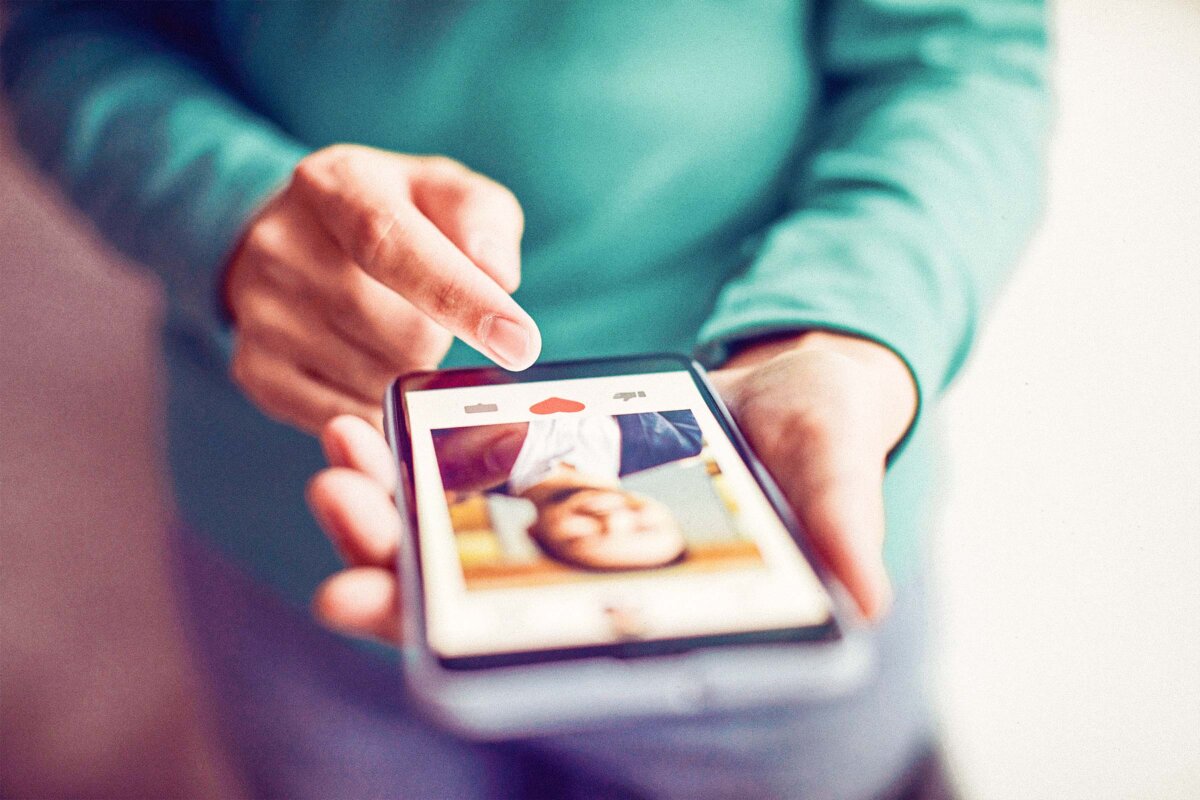
Cheyenne Goodrich downloaded her first dating app at 18, looking for love. A decade later, she was convinced the apps did more damage than good.
“There’s a lack of meaningful engagement and compatibility,” Goodrich, 30, told The Epoch Times. “What made the experience particularly frustrating wasn’t the difference in dating goals but rather the lack of transparency. Many men misrepresented their intentions in order to pursue something physical, which eroded my trust over time.”
She eventually stepped away from the apps in January 2025, as the interactions made them feel less like spaces for genuine connection and more like places where she was reduced to stereotypes, leaving her emotionally drained and discouraged about dating altogether.
Her experience reflects a growing concern around dating apps. Although they promise connection, many users have walked away feeling frustrated, disillusioned, or emotionally drained.
A recent study published in Computers in Human Behavior analyzing dating apps and mental health found that users often experience significantly worse mental health effects than nonusers.
The Research
The study reviewed 23 previous studies conducted over the past 17 years, drawing on a combined sample of 26,068 participants. Researchers found that dating app users reported significantly worse psychological health across several measures, including depression, anxiety, difficulty managing emotions, loneliness, and psychological distress. The findings point to an association rather than a direct cause-and-effect relationship.
The authors noted that the findings may not apply to everyone, as most participants were Western, heterosexual, and single, and that mental health effects can vary depending on factors such as age, usage patterns, and dating goals, with young people being potentially more vulnerable.
Generally, dating apps may contribute to different emotional experiences on the platforms.
A 2025 study published in JMIR Formative Research found that women using dating apps often sought validation, gratification, and a boost in self-worth—but were overwhelmed by the volume of matches. According to the Pew Research Center, they tended to receive far more matches and messages than men, which may seem like an advantage at first.
However, in reality, the high volume of attention can create its own set of challenges, leaving many women feeling overwhelmed by constant messages, unwanted interactions, and conversations that don’t lead to meaningful connections.
“Reviewing large numbers of messages and profiles can also lead to mental fatigue, and in some cases avoidance—which can generate even more stress,” Don Grant, a psychologist and fellow at the American Psychological Association, told The Epoch Times. “Despite having many suitable matches, women may struggle with body image issues, feel objectified, or face pressure to maintain a flawless profile throughout ongoing interactions.”
The constant evaluation loop can distort self-worth, similar to the well-established negative effects of social media comparison.
In contrast, men often experience the opposite problem. Many men reported receiving very few matches or responses, which can lead to feelings of rejection, discouragement, and lowered self-esteem, Grant said.
Prosper Chiu, a 23-year-old content creator, said he believes that the dynamics of dating apps can leave many men feeling inadequate.
“I think men feel like they aren’t enough for the women because they’re constantly seeking their approval on these dating apps,” Chiu told The Epoch Times. “Women have so many options. It can make men feel like they can’t find love and that something is wrong with them.”
When men receive fewer matches than they expect, it can make them feel undesirable or invisible, especially when they notice women getting far more attention, Grant said. These patterns can fuel loneliness, insecurity, and declining self-confidence, sometimes discouraging men from dating offline and leading some to withdraw from dating entirely.
Why Dating Apps Can Affect Mental Health
A 2025 review published in Computers in Human Behavior found that dating apps can take a toll on body image. In 86 percent of studies reviewed, people who used dating apps were more likely to feel unhappy or insecure about their appearance.
“Dating apps can significantly take a toll on body image and appearance due to constant social comparison, an unreasonable pressure to fit narrow beauty ideals (often enhanced by filters), self-objectification (seeing oneself as a product), and the cycle of rejection,” Grant said. “While dating apps can offer opportunities for connection, their appearance-focused, curated environment often creates a toxic cycle.”
Additionally, Goali Saedi Bocci, a licensed clinical psychologist, has seen that the greatest distress comes from ghosting.
“Ghosting leaves singles in a major state of confusion, feeling rejected and even worse about themselves,” she told The Epoch Times. “Then if they start to internalize this behavior as ‘normal,’ they begin to ghost others, and the toxic cycle continues.”
When connection is reduced to swipes, matches, and response times, it becomes easy to internalize rejection and begin questioning your own worth.
The process can feel impersonal and discouraging over time, according to relationship therapist Rebecca Marcus.
In some ways, dating apps can affect our brains in a similar way to gambling. Dating apps trigger biological processes that increase anxiety and depression, Grant said.
“The combination of dopamine, driven reward loops, stress hormones (including cortisol, adrenaline, and norepinephrine) activation can deregulate mood over time,” Grant said.
Dopamine reinforces behaviors that bring pleasure, so getting a match can make you want to swipe or check the app even more. Because the outcomes are unpredictable—sometimes you get a match, sometimes you don’t—users can find themselves swiping compulsively. The combination of dopamine hits and anticipation creates a reinforcement loop, making users return to the app again and again.
Can Dating Apps Be Used in a Healthier Way?
Dating apps are not inherently harmful. They offer benefits—especially for people with limited social opportunities, such as those who have demanding work schedules or who live in rural areas or marginalized communities and may have fewer organic paths to connection.
“If dating is not working organically, then you can go online or turn to apps,” Bocci said. “Turning to apps vastly can widen your dating prospects if you live a prescribed life where you are simply not encountering new people.”
However, how people use dating apps matters—experts suggest that setting clear boundaries is one of the most effective ways to protect your emotional well-being.
“If you notice you feel worse about yourself after using apps, that is an important signal,” Marcus told The Epoch Times. “Feeling more self-critical, drained, or disconnected from yourself are also signs it may be time to pause. Taking a break can be supportive, not a failure.”
Grant recommends practical limits.
“Boundaries can include limiting your daily app time engagement, for example, 15 to 20 minutes, to avoid burnout, using the block/mute features liberally, and deciding on response times—for example: not during work hours,” he said.
Using dating apps with intention, rather than as a source of constant validation, can make the experience feel meaningfully different. The healthiest approach, Marcus suggested, is a balanced one.
“Dating apps can be one way of meeting when used intentionally and with boundaries,” Marcus said. “However, keep in mind that they are just one channel where your person can come from—not the only one.”