



A 16-year-old boy began running to the bathroom more than a dozen times a day—suddenly, inexplicably, and relentlessly. His family feared a serious urinary disorder. Yet every medical test came back normal: Urine analysis, kidney function panels, even ultrasound scans showed nothing wrong.
The mystery deepened—until one overlooked factor emerged: fear.
The boy was a patient examined by Grace Zhang, a traditional Chinese medicine (TCM) practitioner and acupuncturist at New York’s Northern Medical Center. At first glance, the teen appeared pale and slightly tense. During pulse diagnosis—a standard TCM assessment—Zhang placed three fingers on his wrist, evaluating different functional systems of the body.
The pulse under her ring finger—associated with kidney function in TCM—felt short, rapid, slippery, and forceful. This pattern often indicates emotional shock disturbing kidney energy.
When Zhang asked about recent stressors, the boy recalled a specific incident: a deafening, unexpected noise that had frightened him badly. His heart raced, his body froze—and soon after, the frequent urination began.
Following a short course of acupuncture and Chinese herbal medicine, the boy’s symptoms resolved completely.
Zhang described the case as a textbook example of “fear affecting the kidneys,” a concept in TCM that links emotional shock with urinary and nervous-system disturbances.
Root of Innate Constitution
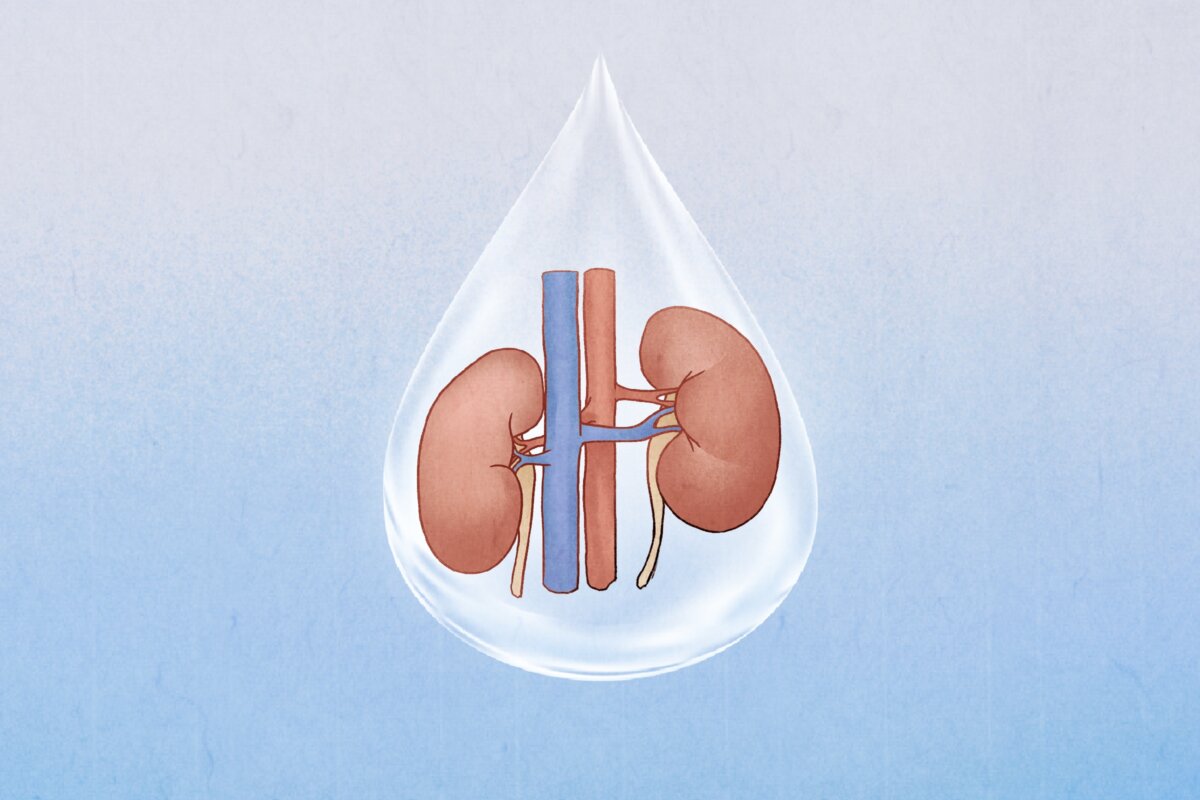
In modern medicine, the kidneys are part of the urinary system. Their main functions are to filter the blood, remove waste from the body through urine, and maintain fluid balance.
In TCM, the “kidney” refers to a broader functional system.
The kidneys are considered the “root of innate constitution.” They store jing, often translated as “essence”—the foundational energy you are born with that governs growth, development, fertility, bone strength, brain function, and aging. You can think of jing as your biological “reserve account.”
The kidneys also regulate fluids and provide deep, stabilizing support for both physical and emotional resilience. When the kidney system is strong, the body feels grounded and secure. When it is disrupted, control and containment weaken.
Additionally, TCM links the kidney with bone and brain health.
The Water Element
In TCM’s five-elements theory, each organ system corresponds to a natural element, a season, and an emotion. The kidneys correspond to the water element, which reflects qualities of storage, depth, adaptability, and containment.
Water reflects the kidney system’s function in several key ways. Water emphasizes storage rather than dispersion, just as the kidneys are said in TCM to store essence—the body’s foundational reserves that support growth, reproduction, and long-term vitality. It must be properly contained: When it is held, stability is maintained; when containment fails, regulation is lost.
Water is also adaptable, maintaining its nature across changing conditions, reflecting the kidneys’ role in preserving internal balance.
In the five-element cycle, the kidney corresponds to the emotion of fear. From a physiological perspective, fear triggers the fight-or-flight response, activating stress hormones and the autonomic nervous system. In TCM terms, sudden fright causes kidney energy to lose its ability to “hold” and stabilize the body—leading to symptoms such as frequent urination, bed-wetting (especially in children), palpitations, insomnia, or lower-back weakness.
The 16-year-old boy’s experience fits this pattern precisely. An intense fright disrupted his autonomic regulation. The kidney system—responsible for stability, containment, and fluid control—was overwhelmed, leading to frequent urination despite normal lab results.
The kidney (water element) supports and stabilizes other systems, particularly the nervous system and bladder. When fear causes water to become unstable, regulation fails. Acupuncture and herbal treatment aim to restore water’s capacity to store, anchor, and contain.
Once that balance returned, his symptoms resolved naturally.
How to Assess Kidney Health
According to Li Yingda, a TCM practitioner, weakened kidney health often reveals itself externally. Common signs include soreness and weakness in the lower back and knees, reduced stamina, cold hands and feet, a dull complexion, dark circles, tinnitus, hair loss, premature graying, and loose teeth.
Kidney weakness also affects reproduction and the endocrine system. For men, it manifests as nocturnal emissions, premature ejaculation, and infertility. For women, it manifests as irregular menstruation, premature ovarian failure, and infertility.
“When assessing kidney health,” Li said, “it involves more than checking for structural damage—it requires evaluating whether its overall function is adequate.”
How to Nourish the Kidney
The kidneys correspond to the winter season, and that is the ideal season to nourish it. As the cold deepens and nature enters a period of quiet retreat, the body’s yang qi—the warming, active energy—naturally turns inward to conserve and store vitality.
Winter health preservation focuses on staying warm, resting adequately, and avoiding overexertion.
The ancient TCM classic “The Yellow Emperor’s Inner Canon” (“Huangdi Neijing”) offers timeless advice: “If one fails to store essence in winter, one will fall ill with warm diseases in spring.” This highlights how properly protecting the kidneys during winter lays the foundation for good health throughout the coming year.
According to the five-elements theory, the kidneys are associated with the salty flavor and the color black. Foods with a natural salty taste, such as seaweed, can gently tonify the kidneys—although moderation is key, as excessive salt can harm rather than help. Similarly, black-colored foods are considered particularly beneficial for kidney health, such as black beans, black rice, black sesame seeds, wood ear mushrooms, and black-bone chicken (silky fowl).
Li also often recommends the TCM formula “youth-restoring pill” (qing’e wan) for people with kidney deficiency. The formula is simple yet powerful.
The history of the youth-restoring pill dates back to the Tang dynasty, more than 1,200 years ago. A prime minister surnamed Zheng was sent to a place in southern China, where the hot, humid climate worsened his underlying kidney deficiency. He grew frail and frequently ill, plagued by soreness and weakness in his lower back and knees.
Later, an overseas shipowner named Li Mohe presented him with a special herbal recipe featuring psoralea fruit—a black seed used in TCM as an herb, linked to kidney function—and walnuts as the main ingredients. After the prime minister took it, his symptoms improved markedly, and with continued use, his vitality was fully restored. Upon returning to the capital, he helped popularize the formula, and many patients who took it were said to benefit from strengthened kidney function, a stronger lower back, darker hair, and increased longevity.
The name “qing’e” beautifully captures the formula’s effects. It means “youthful beauty” or “graceful young woman,” evoking vibrant black hair like that of a young girl—symbolizing how the pill helps restore vitality and turn back the signs of aging.
Youth-Restoring Pill is a simple yet well-known formula composed of four ingredients, traditionally prepared in a 2:2:1:1 ratio:
- Psoralea fruit (bu gu zhi)
- Walnuts
- Eucommia bark (du zhong)
- Garlic
In classical practice, the herbs are dried, powdered, and formed into small honey pills.
For people who are unable to readily obtain the herbs, Li suggests eating walnuts instead. Walnuts are considered a warming food that replenishes kidney essence and nourishes its function.
The kidneys govern fear in TCM—not just momentary fright, but also chronic insecurity, anxiety, and unresolved shock.
Li noted that bed-wetting in children often stems from emotional factors such as fear of the dark, nightmares, exam stress, or a timid temperament. In adults, unresolved fear may manifest as frequent urination, insomnia, palpitations, tinnitus, or chronic lower-back weakness.
Caring for kidney health, therefore, means caring for emotional safety and nervous-system balance, in addition to diet and supplements.