



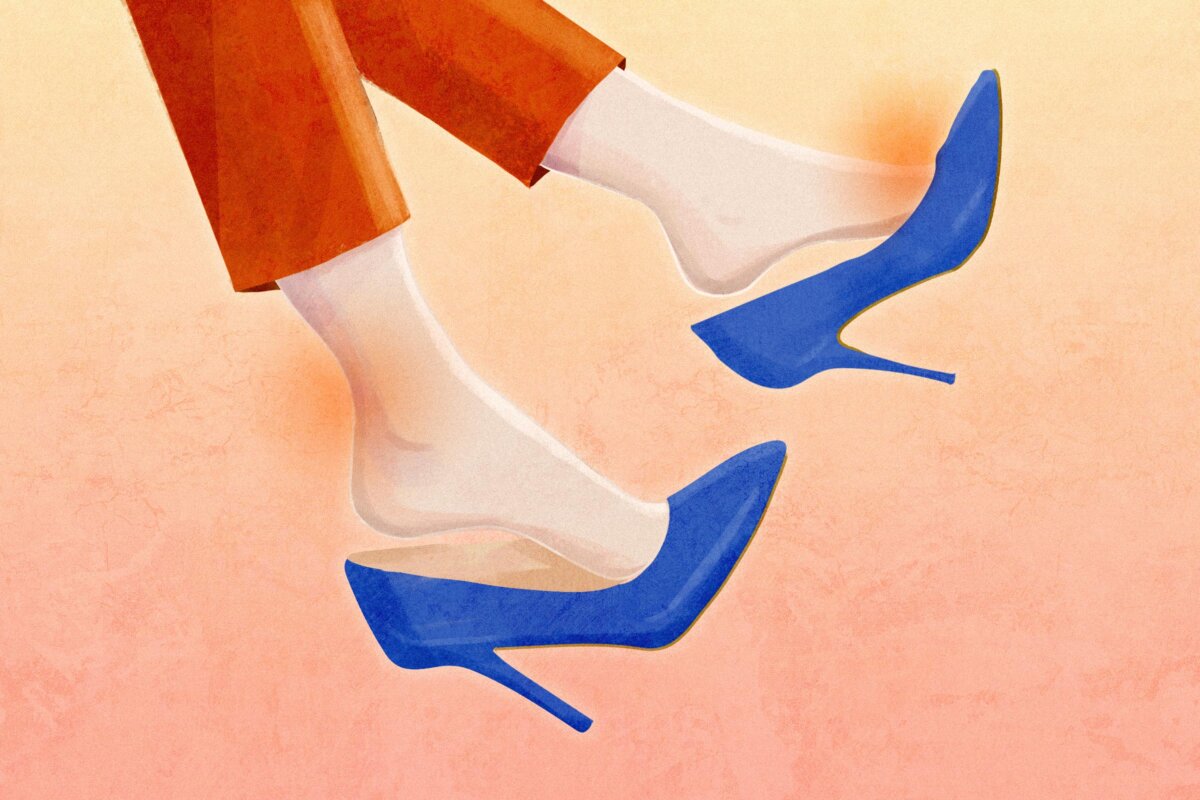
For decades, British fashion designer Victoria Beckham was rarely seen without heels. Then, in 2015, she made a statement that shocked the fashion world: She started wearing flats. It wasn’t a trend or a reckoning. It was years of stilettos that had reshaped her feet and finally taken a toll on her body.
The moment stood out because high heels are widely accepted, despite the pain they can cause. Sore feet are expected, and tight calves are brushed off as the “price of beauty.” However, your body, and especially your feet, don’t always see it that way.
The real issue isn’t a single night in heels. It’s the years. The question is whether anything can be done about the damage they can cause without giving them up entirely.
A Long History and a Lasting Appeal
The origins of high heels trace back to the Persian cavalry, in which a raised heel helped stabilize a rider’s foot in a stirrup. By the 17th century, the trend had moved into European aristocratic fashion, worn primarily by men as a sign of status.
In about the mid-1800s, heels had become increasingly associated with women’s fashion and social standing, which helps explain why they remain so common today. They are built into dress codes and into expectations about how women should look.
However, as cultural expectations surrounding women’s appearance have evolved over the years, the fashion industry has been forced to adapt amid an overall decline in high heel sales.
“High heels still have a place, but they’re no longer the sole definition of polish,” New York City-based stylist Upasna Singh told The Epoch Times.
The current trends toward comfort are telling. What story do the bodies of high heel wearers tell?
Your Body Adapts to Your Heels—That Is the Problem
The damage of high heels begins the moment the heel lifts off the ground, and it doesn’t stay confined to the foot. Changes in the body develop gradually over years of repeated wear.
The most immediate consequence is pressure. When the heel lifts off the ground, body weight shifts forward onto the forefoot, concentrating pressure in an area not designed to bear it. The Achilles tendon, forced into a shortened position with every step, gradually loses flexibility. Flat shoes begin to feel uncomfortable. How you walk begins to change, with shorter steps and altered walking patterns that persist even when the heels come off.
Farther up the body, the knees absorb stress they were never meant to handle at that angle. A study examining knee mechanics found that walking in heels increases stress on the joint, which may contribute to joint degeneration over time. The calves and quadriceps work harder than usual just to maintain balance and forward motion.
“The higher the heel and the narrower the toe box, the more pressure shifts onto the ball of the foot and toes,” podiatrist Mikel Daniels told The Epoch Times. “That can change how the feet, ankles, knees, and even calf muscles function over time.”
The shifts don’t feel dramatic at first, because the body adapts—and that is where the deeper problem begins.
To stay balanced, the ankle locks into a pointed position, limiting its natural range of motion. The knees and hips shift to compensate—the spine curves to keep the upper body upright.
“You might not notice it for the first mile, but over time, it creates uneven wear and tear,” Dr. Ashlee Mackens, a podiatric surgical resident who treats foot issues daily, told The Epoch Times.
That wear doesn’t just affect the foot. It moves upward, affecting the entire chain of movement through your body.
Problems Worsen Over Time
The most immediate issue is often pain at the front of the foot—but that is only the beginning.
Doctors routinely see bunions, hammertoes, plantar fasciitis, and nerve irritation linked to prolonged heel use. These conditions develop gradually, often starting as mild discomfort and progressing into structural changes that affect how a person walks. Although stretching, wearing more supportive footwear, and time can help alleviate some of the effects, conditions become more difficult to treat as they progress.
The effects extend beyond the foot.
“Wearing high heels tips the body forward, requiring the spine to curve more to remain straightened,” Jordan Burns, a chiropractor, told The Epoch Times. “As a result, additional pressure is placed on the lumbar region.”
That strain can contribute to tension in the lower back, hips, and even the upper spine, and years of daily wear can easily cause chronic alignment problems.
However, one of the most important factors is frequency.
“I tell patients that one or two hours in heels for a special event is very different from wearing them for a full workday,” Daniels said.
Repeated stress leads to changes in the foot, spine, and overall alignment that can be hard to reverse.
How to Reduce the Impact
Giving up heels entirely may not be realistic for some. However, a few minor, targeted adjustments can help alleviate some of the discomfort of wearing them daily.
Lower heel height is one of the most effective adjustments. Once heels rise above roughly two inches, pressure on the forefoot increases significantly. Keeping the height lower reduces both discomfort and long-term structural risk.
The design of the shoe also matters. A wider toe box allows the toes to sit naturally rather than being compressed. A block heel provides more stability than a narrow stiletto, distributing weight more evenly. A thicker sole can help absorb some of the force that would otherwise travel up through the foot.
Duration is just as important as design. Limiting how long heels are worn can reduce cumulative strain. Alternating between heels and supportive shoes throughout the day allows the body to reset between periods of stress.
Mackens also encourages consistent calf and Achilles stretching to counteract the shortened position created by heels. One simple approach she recommends is using a towel or band to gently pull the toes upward while keeping the leg straight, holding the stretch long enough to fully release tension built up over the course of the day.
A Habit Worth Rethinking
Singh points to the growing popularity of ballet flats, Mary Janes, loafers, and kitten heels as examples of a shift away from high heels.
When designed with a clean toe shape and higher-quality materials, these styles appear polished rather than casual. Kitten heels, in particular, offer the style of a heel without the added height, while loafers have become a reliable option that pairs well with denim or dresses.
“Rather than relying on a single type of shoe, I encourage clients to rotate their options,” Singh said. “Keep one pair of heels for specific moments, but invest primarily in styles you can comfortably walk in for extended periods of time. The goal today isn’t to endure discomfort—it’s to choose pieces that support both style and real life.”
High heels have been around for centuries, and even with industry icons such as Posh Spice wearing heels more selectively than before and paving the way for change, they are likely to remain a part of fashion, culture, and personal preference for years to come.
The evidence is clear: The higher the heel and the longer and more frequent the wear, the greater the toll on the body. The solution may be to reserve them for special occasions and give your body time to recover afterward. If your feet have been trying to tell you something, it may be worth finally listening.