



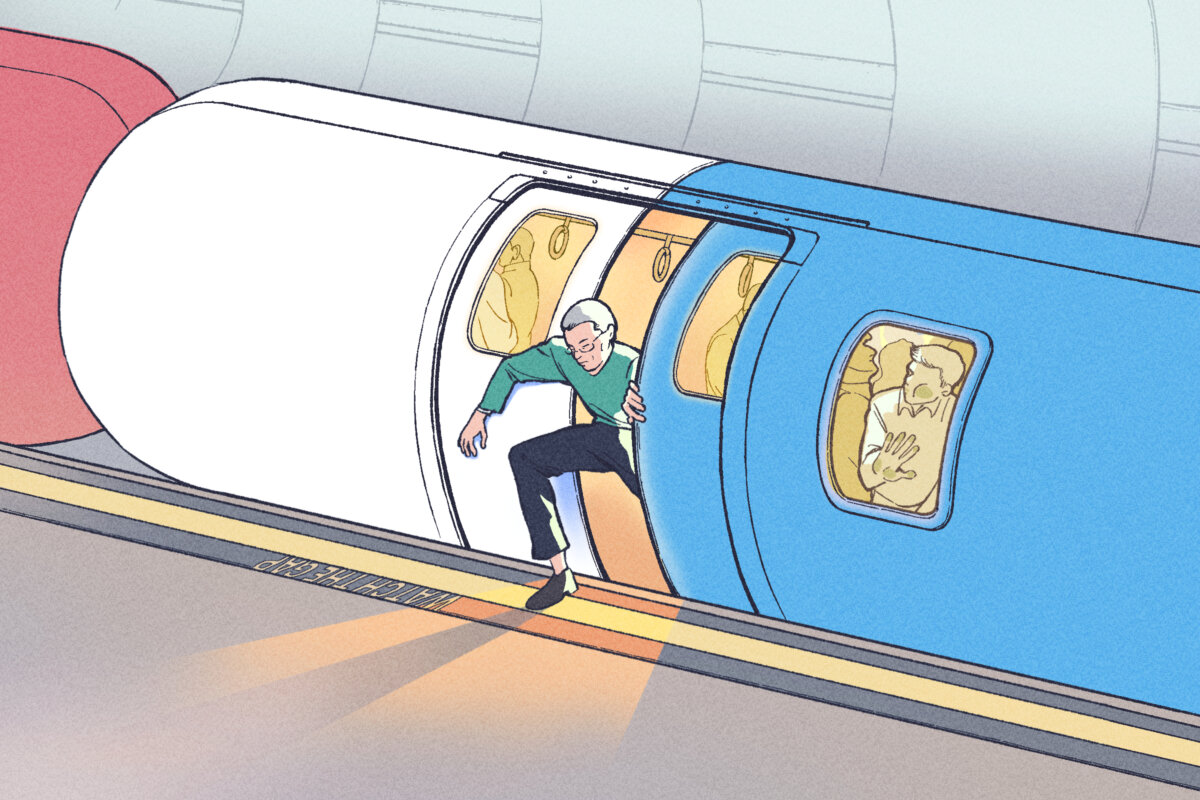
For more than two decades, “Jane,” a woman in her early 70s, took the same small white pill each night to sleep. It had been prescribed when menopause first disrupted her rest.
She tried to stop more than once. Each time, her insomnia came rushing back. It wasn’t that she needed the drug. Her body had become dependent on it.
With the help of Stacey D’Angelo, a Toronto pharmacist who specializes in deprescribing, Jane tapered off the medication over six months. She adopted a consistent sleep schedule, got morning light, and adjusted her bedroom to be cooler and darker.
For the first time in more than 20 years, she slept through the night—all without a pill.
“I assumed she’d heard of sleep hygiene after all those years,” D’Angelo told The Epoch Times. “She hadn’t.”
Like many Americans, Jane stayed on a medication longer than intended. It may have had non-drug alternatives, or been meant for short-term use but continued for years, sometimes decades, without reassessment.
Deprescribing—the process of safely reducing or stopping medications that may no longer help or may cause harm—is rarely taught in medical or pharmacy training.
The consequences can be serious. An estimated 750 older adults in the United States are hospitalized each day because of medication-related harm, according to the Lown Institute.
“Every medication has a timeline,” DeLon Canterbury, a board-certified geriatric pharmacist and founder of GeriatRx, a concierge service focused on medication safety, told The Epoch Times.
Medications don’t announce when they’ve outlived that timeline.
The signs appear instead as a fall, morning brain fog, a racing heart, or even a hospital visit for a symptom that seems unrelated—but traces back to a drug.
Where to Start
Deprescribing begins with taking stock.
Patients need an accurate, up-to-date list of everything they take—including prescriptions, over-the-counter drugs, and supplements—and a clear understanding of what each one is for.
“A lot of people are just taking things and don’t even know why they started,” Canterbury said.
A doctor may start a stomach acid reducer during a hospital stay. A clinician may prescribe a sleeping pill during menopause or add an anti-anxiety medication during a period of stress. Each may have made sense at the time. Years later, the patient may no longer have the original problem, but is still taking the medication.
That spurs the key question for anyone taking long-term medications: Why am I taking this—and would I start it again today? That question mirrors prescribing in reverse.
“You’re still weighing risks and benefits,” Dr. Amelia Gennari, a geriatrician at the University of Vermont Medical Center, told The Epoch Times. “You’re asking why the medication was started, whether that reason still applies, and what happens if you stop it.”
Bring Your List to 1 Person–and Make Time to Review It
Once you have a clear list, bring it to a physician who can review the full regimen—ideally, your primary care provider, who can coordinate across specialists. If multiple doctors are prescribing medications, ask one to take the lead.
Gennari recommends requesting a dedicated visit focused solely on medications.
“Bring everything with you—even the over-the-counter drugs—and have the doctor explain how each one is helping you more than it’s hurting you,” she said.
The conversation can begin simply: “I’d like to go through my medications one by one and understand whether I still need each of them.” If it feels rushed, ask for more time.
Some clinics, particularly in geriatrics or larger health systems, embed pharmacists in the care team. That kind of collaboration can be especially valuable, Gennari said, as pharmacists are trained to spot drug interactions and often identify ways to reduce medication use. Yet they remain widely underused.
Start With 1 Medication–Not All of Them
Deprescribing is not an all-or-nothing decision. It’s a series of small ones.
Clinicians often begin by removing a single drug that may no longer be necessary, is causing side effects, or no longer aligns with a patient’s goals.
When patients notice new symptoms, those symptoms are not always new diseases.
“Assume that any new symptom could be a drug,” Canterbury said.
Dizziness, fatigue, confusion, poor sleep, or falls are frequently attributed to aging but can stem from medications or their interactions.
Sometimes a drug still works as intended, but no longer aligns with a patient’s goals or stage of life.
“There are times when the benefit is long-term,” Gennari said, “but the patient may not live long enough to see that benefit—or may no longer want it.”
Prescribing cascades are common: One drug’s side effect is treated with another, and then another.
“You can often trace it back,” Canterbury said. “Drug A led to Drug B, which led to Drug C.”
Rather than untangle everything at once, clinicians look for the clearest mismatch to address first.
Make a Plan Before You Change Anything
The next step is to decide how to safely reduce or stop the medication, usually with a doctor or pharmacist. Some drugs can be discontinued relatively easily. Others—including certain antidepressants, benzodiazepines, beta blockers, and steroids—often require a gradual taper to avoid withdrawal or rebound symptoms.
“That approach—cutting the dose in half and stopping—doesn’t work for everyone,” D’Angelo said.
She often sees patients who try to stop a medication, feel worse within days or weeks, and conclude that they still need it. However, symptoms that come back after stopping a medication too quickly are not always a return of the underlying condition, but rather the way the medication was reduced. A slower taper, sometimes over months, can make the difference by giving the body time to adjust.
“The brain adapts to having the medication there,” D’Angelo said. “When you remove it too quickly, the system hasn’t had time to adjust.”
Guidelines for benzodiazepines and similar drugs typically recommend gradual reductions—often 5 percent to 10 percent every two to four weeks, and generally no more than 25 percent every two weeks—tailored to the individual. When done thoughtfully and closely monitored, deprescribing is often successful.
Studies show that a large majority—typically 70 percent to more than 90 percent—of deprescribing recommendations are implemented when patients and clinicians collaborate.
“If stopping feels worse, it doesn’t always mean you need the medication,” D’Angelo said. “It may mean you need a slower plan.”
[series_posts_list][/series_posts_list]
Build Support Beyond Medication
Deprescribing works best when something replaces the medication—not another drug, but support for the problem that the drug was masking. Sleeping pills may mask insomnia without fixing sleep patterns; acid reducers can ease reflux without dietary changes; anxiety medications may quiet symptoms without tackling stress or routines.
When those medications are removed without anything else in place, the symptoms often return—sometimes quickly. That is why clinicians recommend pairing deprescribing with simple, targeted lifestyle changes.
“These are all tools in the toolbox,” D’Angelo said. “Medication is one of them—but not the only one.”
Lifestyle supports help stabilize the body as medications are reduced, making the process more tolerable—and, in some cases, resolving the problem that the medication was meant to treat.
For many patients, trying the lifestyle support was the missing piece the first time.
Monitor What Happens
Once a deprescribing plan is in place, the next step is to watch what happens.
Clinicians suggest keeping a simple record of sleep, mood, energy, pain, and other symptoms after each dose change to make patterns easier to spot.
As the body adjusts, patients may notice temporary changes such as insomnia, anxiety, fatigue, dizziness, or changes in appetite. These symptoms are often short-lived, but they can feel unsettling if unexpected. If symptoms persist or worsen, it may mean that the taper is moving too quickly.
Plan to follow up with your doctor or pharmacist after each adjustment, especially early on, to review how things are going and decide whether to continue, slow down, or pause. Patients should seek prompt medical attention for severe or rapidly worsening symptoms.
Which Medications to Question First
Not every medication needs review—some drugs are essential. However, as health changes with age, certain types of drugs often warrant a closer look because they carry higher risks for older adults. Researchers have found that 65 percent to 93 percent of older adults injured in falls were taking at least one medication that increased fall risk.
Clinicians often start with the American Geriatrics Society Beers Criteria, a guide that flags “potentially inappropriate medications (PIMs).” Judith Beizer, a clinical pharmacist who has worked on the criteria, calls the guide a simple “stop sign”: time to pause, reassess, and ask whether the drug is still the right fit—or whether a safer alternative exists.
In many studies, more than half of older adults receive at least one such medication, with rates climbing higher in hospitals or specialized settings. Benzodiazepines and related drugs frequently top the list.
That doesn’t mean PIMs are always wrong. It means they warrant a closer look—especially these frequent culprits:
- Sleeping Pills and Anti-Anxiety Drugs: Benzodiazepines and “Z-drugs” such as Ambien raise the risk of falls, confusion, memory issues, and next-day grogginess—and can be hard to stop.
- Anticholinergic Medications: Used for a variety of conditions including bladder issues, allergies, nausea, COPD, and asthma, and as over-the-counter motion sickness and sleep aids. They can worsen confusion, constipation, dry mouth, and urinary problems—symptoms easily blamed on “just getting older.”
- Acid-Reducing Medications for Heartburn and Reflux: Including proton pump inhibitors such as omeprazole or Prilosec. When continued long term, they may contribute to risks, including infections, nutrient deficiencies, or other issues, even when diet or other measures could suffice.
- Nonsteroidal Anti-Inflammatory Drugs: Such as ibuprofen or naproxen. Long-term use heightens the chances of stomach bleeding, kidney problems, high blood pressure, and heart issues.
- Statins in People Without Established Heart Disease: Benefits depend on overall risk; if lifestyle improvements lower the risk, the equation may shift.
A Different Way to Think About Medications
Medications are tools, not permanent fixtures. They serve a purpose, can be adjusted as circumstances change, and sometimes set aside when they no longer fit.
“Prescriptions are easy to start,” Canterbury said. “Taking the time to reconsider them may be one of the most important steps in protecting your health.”
For many, that reconsideration begins only when patients ask.