



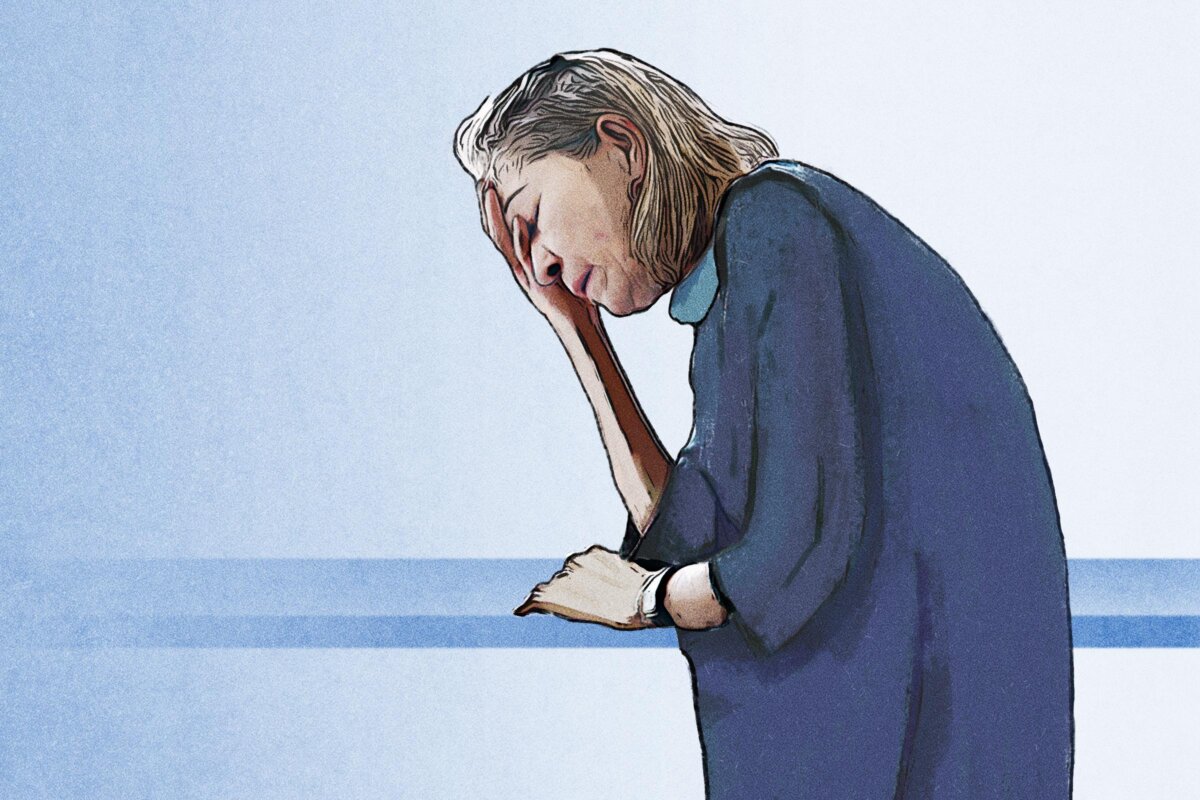
Chronic pain is notoriously difficult to treat.
Standard approaches, such as painkillers, scans, or surgery, often fall short, leaving people stuck in a cycle of pain without real resolution.
What if we looked beyond the injured body part and instead focused on what was happening with the whole person? An integrative, person-centered approach to pain care looks beyond structure and offers a more complete picture and, potentially, better outcomes.
An integrative, person-centered approach to pain care considers not just structure, but also the nervous system, immune responses, trauma history, and lifestyle, offering a more complete picture and, potentially, better outcomes.
Pain Medications
“Most medications used for chronic pain, whether nonsteroidal anti-inflammatory drugs, weak or strong opioids, or nerve agents, tend to work in only about a third of patients,” Dr. Deepak Ravindran, a pain medicine specialist who has helped people overcome pain for more than 20 years, told The Epoch Times.
Ravindran is triple board-certified in lifestyle, musculoskeletal, and pain medicine. He is known for his pioneering, holistic approach to pain management.
He cautioned against overreliance on medications because of their side effects. Clinical trial results of these medications may not reflect how treatments perform in real-world settings, he said, and real-world patients often have depression, anxiety, post-traumatic stress disorder, or diabetes—factors not usually represented in clinical trials. This discrepancy can lead to overestimating a medication’s effectiveness or underestimating its risks when used in more patients with complicated medical histories.
“The results don’t always translate,” Ravindran said.
Opioids, for example, may offer short-term relief but come with serious long-term risks, including dependence, mood disturbances, hormonal disruption, heightened pain sensitivity, and even increased dementia risk in some cases.
Despite this, medication remains a default option, often because of time pressures in clinical settings.
“When you’ve got 10 to 15 minutes with a patient, pain meds can feel like the only choice,” Ravindran said.
“But if they don’t work, we need to be ready to open things up and look deeper.”
Types of Pain
Pain medications typically work by blocking or dampening pain signals traveling from the body to the brain.
They’re often effective in cases of nociceptive pain—pain caused by active inflammation or injury—in which chemical signals are released at the site. However, they tend to be less effective for neuropathic pain, in which the nerves themselves are damaged, and even less so for nociplastic pain, a type of pain in which the nervous system has become overly sensitive or overprotective without a clear structural cause.
Examples of nociceptive pain include acute injuries, fractures, and joint inflammation from arthritis, which may be accompanied by fever or elevated inflammatory markers.
Neuropathic pain, on the other hand, can result from a severed nerve after surgery or conditions such as multiple sclerosis, Parkinson’s disease, and diabetic neuropathy. Treatment often involves stronger nerve-targeting medications, spinal cord stimulation, nerve blocks, or IV infusions.
Nociplastic pain is characteristic of conditions such as fibromyalgia, migraines, irritable bowel syndrome, and lower back pain without identifiable structural changes.
“When the nervous system is oversensitive, most medications don’t work well,” Ravindran said.
What’s often overlooked in current treatment plans are the lifestyle factors that feed into pain. An effective approach should be multimodal and personalized, targeting the full range of influences on a person’s health, according to a 2020 review.
To do that, we need to first shift how we think about pain itself.
The Brain’s Decision
“The prevailing view in health care is still that pain must come from a damaged part of the body, something you can push, pull, or scan,” Ravindran said.
However, over the past two decades, neuroscience has shown that pain is far more complex. It’s not just a direct response to tissue damage.
“It’s the brain’s decision, based on past experience and context, about whether protection is needed. That decision creates the perception of pain,” Ravindran said.
This perception helps explain why pain can linger long after an injury has healed or arise in the absence of any visible damage. Yet, many clinicians continue to focus primarily on structural explanations.
“If we get stuck on structure, we end up chasing our tails, more scans, surgeries, second surgeries, and patients still suffer,” Ravindran said.
One common but often misleading response to pain is imaging. There is a clear disconnect between scan results and pain experience, according to Ravindran. MRI scans find that many people who have structural problems have no pain at all.
According to studies, 67 percent of asymptomatic people had hip structural problems called pincer deformity under medical scan, 75 percent of asymptomatic seniors had disc bulges, and up to 43 percent of asymptomatic people older than 40 had an osteoarthritis feature.
“Structural changes happen with age, and often without causing pain,” Ravindran said.
On the other hand, people who received sham surgeries, in which no actual repair was done, experienced the same improvements as those who had real operations.
“There’s meaning in the ritual. The brain’s expectation response can be incredibly powerful,” he said.
If pain is the brain choosing to protect, we need to ask: “What is it trying to protect against?”
If there’s no sign of injury or infection, what else is going on in the person’s life, nervous system, or immune system?
Pain is not just a physical sensation—it’s also an emotional experience shaped by how the brain interprets stimuli received, Ravindran said. Sensory inputs come from both internal and external sources. Internally, the brain receives signals through interoception, including feedback from internal organs and the gut, largely through the microbiome, immune system, and vagus nerve. Externally, the brain gathers data from the skin (touch), eyes (vision), and nose (smell). It compares this incoming information with previous experiences stored in memory.
Pain is a response to real sensory input, but that response is filtered through a system that’s constantly trying to assess threat. The immune system plays a critical role in this process. It houses cells that retain memory of pathogens and threats, helping the body mount a defense. Depending on what the brain perceives as necessary for protection, pro-inflammatory chemicals can be released. This can lead to collateral damage in the form of low-grade neuroinflammation. The immune, nervous, and endocrine systems are tightly connected, forming a unified front that helps monitor, protect, and adapt to the internal and external environments in which we live, Ravindran said.
The growing understanding of the brain’s role in pain perception also aligns with the work of trauma therapist and author Patricia Worby, though she explores it through a different lens.
Most chronic pain is often brain-generated and rooted in unfelt emotions rather than tissue damage, Worby told The Epoch Times. Healing often requires helping someone safely feel and process those long-buried emotions, she added.
Building on these ideas, there’s growing recognition that managing pain effectively means expanding the toolbox.
Alternative Pain Treatment
According to Ravindran, there’s good evidence for a range of approaches that can help manage pain without relying only on medication or surgery.
The approaches below are mainly helpful for nociplastic pain, which usually doesn’t respond well to standard treatments.
Nutrition
What we eat can affect how much pain we feel.
A diet high in ultra-processed foods, sugar, or refined carbs can increase inflammation, which makes pain worse, whether it’s from an injury, nerve damage, or a sensitive nervous system.
On the other hand, diets rich in whole, unprocessed foods can help calm the immune system and reduce pain signals.
Restorative Sleep
Poor sleep quality is strongly associated with increased pain intensity.
Teaching patients strategies for better sleep hygiene, such as establishing regular sleep routines and exposing themselves to natural light during the day, can be an important part of treatment.
Even low doses of light therapy improved both mood and pain intensity in people with chronic nonspecific back pain.
Movement
Resistance training and core stabilization exercises have been shown to help manage chronic lower back pain. It was also found that a yoga program was just as effective as physical therapy for chronic nonspecific lower back pain.
Calm the Nervous and Immune Systems
Breathwork, meditation, and stress-reduction techniques can calm the nervous system. Practices such as slow diaphragmatic breathing or box breathing (inhaling, holding, exhaling, holding, all for a few seconds each) can help reduce pain and tension.
Mindfulness-based programs such as Mindfulness-Based Stress Reduction have also been shown to help people with chronic pain.
Trauma-Informed Care
The concept of trauma-informed care is crucial. When people have experienced intense, persistent trauma before the age of 18, it can affect their nervous and immune systems. Prolonged impact on the developing nervous and immune systems can affect how the human body is wired to look out for danger and protect itself.
Helping the nervous system feel safe again is key. That might include breathwork, tapping, eye movements, sound therapy, or vagus nerve support, Worby shared.
Holistic Pain Management Plan
An integrated, holistic, and personalized pain management plan based on lifestyle medicine is considered the best approach for supporting people with chronic pain, Ravindran said.
On a day-to-day basis, a plan could include:
- A morning movement practice, such as yoga
- Appropriate use of medications
- Mind-body techniques
- Following an anti-inflammatory diet plan
- Reducing or cutting out alcohol use after 6 p.m.
- Avoiding coffee at least six to eight hours before bedtime
- Aiming for six to eight hours of sleep at night
- Incorporating stress management practices during the day