



Parkinson’s disease is the second-most common age-related disease affecting adults. However, recent research revealed an alarming finding: Current estimates for the number of people diagnosed with Parkinson’s could be nearly 50 percent below the actual figures.
That revelation is the result of work by researchers who combed through patient data from 2012 across several locations and health systems in Canada and the United States.
Key Findings
The study found that a person’s risk for Parkinson’s increases significantly from age 65 through 84. While men and women both have higher rates than previously thought, men are diagnosed at a higher rate than women.
The study also noted that several geographic locations present a higher risk of Parkinson’s including Florida, central Pennsylvania, the Rust Belt states, parts of Texas, and Southern California.
As many as 90,000 people in the United States and Canada will be diagnosed with Parkinson’s annually, the study estimates. Previous estimates ranged from 40,000 to 60,000, according to the Parkinson’s Foundation.
Currently, the federal government, scientific community, and other agencies are accounting for as low as 40,000 Parkinson’s patients annually because of incomplete accounting of the actual numbers. Meanwhile, actual estimates are as high as 90,000—50 percent higher than previously thought.
“That’s a lot of people not being considered in the total disease burden of Parkinson’s disease,” Dr. Honglei Chen, a physician and a professor of epidemiology and biostatistics at Michigan State University, told The Epoch Times.
Parkinson’s Remains Difficult to Detect, Treat
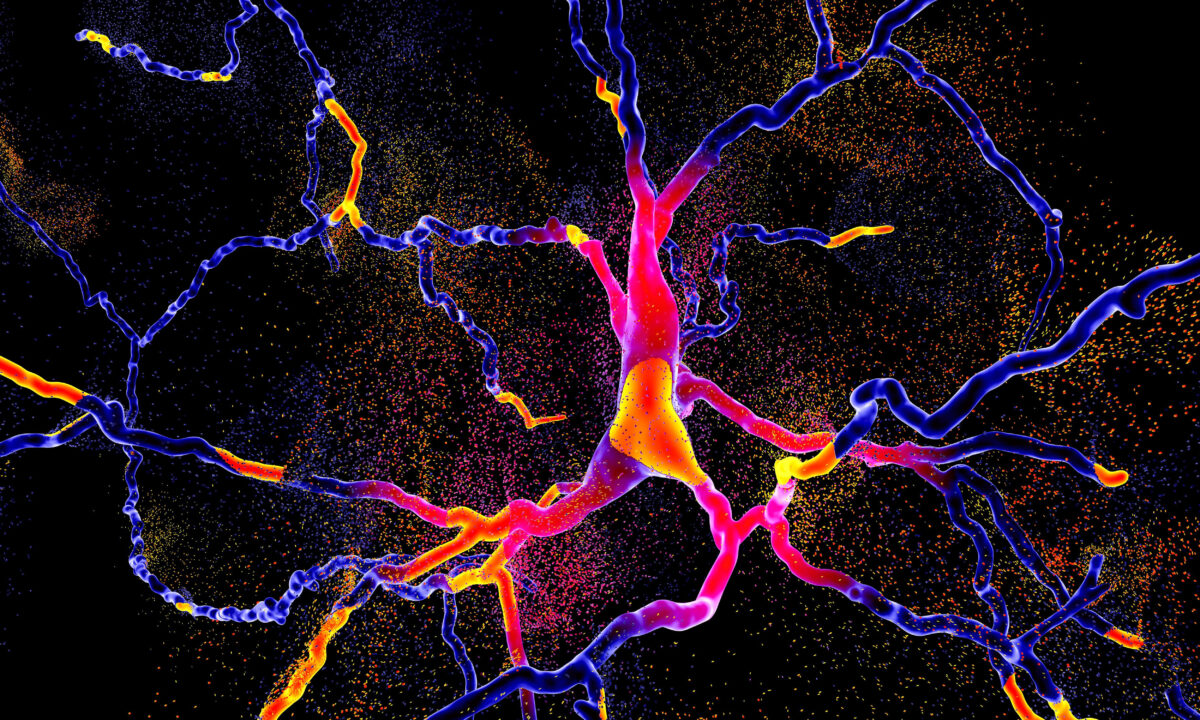
Parkinson’s is a disease that attacks the nerve cells that create a chemical called dopamine, which is responsible for muscle control and movement, resulting in low levels in the brain.
Parkinson’s symptoms mirror other age-related deficits and thus can be a tricky disease to diagnose.
“Parkinson’s disease can be suspected in an individual when a slight resting tremor develops in one hand, daily motor activities become slow, and motor dexterity reduces due to muscle and joint stiffness,” Dr. Aparna Wagle Shukla, professor in the movement disorders division of the Department of Neurology at the University of Florida, told The Epoch Times.
An individual may also notice early signs such as speech turning soft, handwriting becoming smaller, a slight change in posture, slower walking, and reduced arm swing.
Other nonmotor symptoms include hyposmia (reduced ability to detect odors), REM sleep behavior disorder (acting out vivid dreams), and constipation.
Shukla said that these “nonmotor symptoms” usually present themselves several years before the more obvious motor function-related symptoms.
Despite these early symptoms, Parkinson’s is almost always diagnosed after a person begins experiencing more obvious motor function issues.
“The vast majority of the diagnosis still relies on the clinical presentation of the symptoms,” Chen said.
There are some imaging-related techniques to assist doctors in making the diagnosis, but Chen said that the only real way to be absolutely sure that a person has (or had) Parkinson’s is to examine their brain postmortem—something that many families aren’t thinking about after the loss of a loved one.
Nongenetic Risk Factors
While it has generally been accepted that there are nongenetic risk factors, Chen said it isn’t clear what they are. Research has focused on exposure to pesticides, personal care items, air pollutants, and heavy metals as possible risk factors.
Besides a person’s genetic makeup and their environmental exposures, lifestyle factors—such as the amount of exercise a person does and their overall mental well-being—also play a role.
A 2021 study published in the journal Nature found a possible relationship between Parkinson’s symptom severity and the patient’s reported stress level.
But whatever the causes, the disease is showing no signs of slowing down, Chen said.
“Unlike other neurological conditions, you see a potential increasing trend in Parkinson’s over the past 30 years,” Chen said. “For dementia, there’s a slight increase, but for Parkinson’s, you see an increase in prevalence and cause-specific mortality. That by itself is a concern.”
New Treatments, Therapies Continue to Be Discovered
The most common treatment for Parkinson’s is a drug called levodopa, which helps nerve cells produce more dopamine. According to the National Institute on Aging, levodopa is normally given in conjunction with another drug called carbidopa, which is prescribed to ease the side effects of levodopa, which can include nausea, vomiting, low blood pressure, and restlessness.
Some recent treatment experiments have revolved around using stem cells to grow new nerve cells and replace damaged neurological tissue.
Scientists will be trialing the new procedure on patients in both Sweden and the UK next year, according to a statement by Lund University in Sweden. Researchers hope the new therapy will change the way the disease is treated.
The Food and Drug Administration recently cleared Turkish biotech company H2o Therapeutics to make available its Parkinson’s disease symptom-tracking app, “Parky,” to the marketplace. The app helps detect tremors and other muscle control-related symptoms via a smartwatch, which helps patients determine if their current medications are working.
Researchers who studied the app’s effectiveness found that it could be useful in helping patients find the right dose of medications before symptoms worsen. The app also has programs to guide users through exercise plans and mindfulness practices to help alleviate symptoms.