



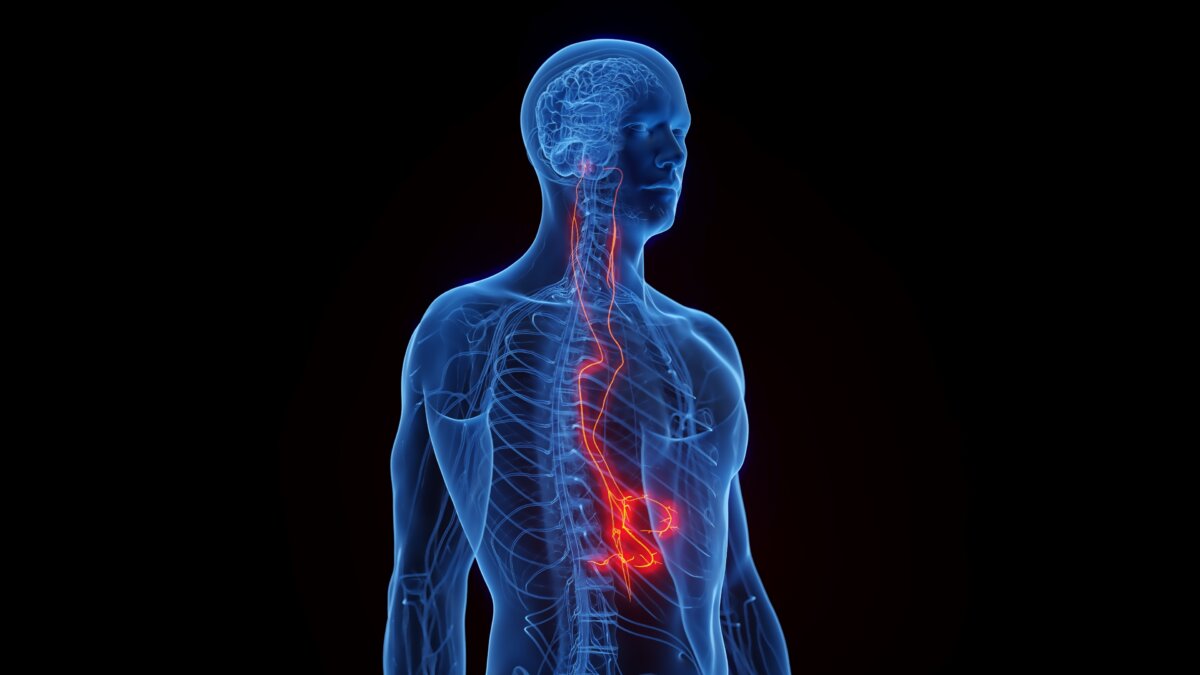
For years, exercise aficionados and scientists held that our “fight-or-flight” system took center stage during a workout. But fresh insights from the University of Auckland are challenging this narrative. A recent study found that the vagus nerve—typically linked to the “rest-and-digest” state—is active during exercise and significantly aids in our heart’s pumping power.
“Our study finds the activity in these ‘rest and digest’ vagal nerves actually increases during exercise,” study co-author Rohit Ramchandra, an associate professor with a doctorate in physiology, said in a recent statement on the university’s website.
New Study Reevaluates Exercise’s Effect on the Heart
In a world where exercise regimens are as common as coffee, understanding the underlying science is important. Most of us believe that exercise is a straightforward, heart-pumping affair that triggers our “fight-or-flight” response. This study suggests that’s not the case.
Using a group of sheep chosen for their surprising similarities to human cardiac anatomy, the team recorded real-time data as the animals exercised. The results were startling—exercise activated the vagus nerve and caused the heart’s pumping activity to surge.
“For the heart to sustain a high level of pumping, it needs a greater blood flow during exercise to fuel the increased work it is doing: Our data indicate that the increase in vagal activity does just this,” Mr. Ramchandra said.
Moreover, the research highlights the active collaboration between our sympathetic (fight-o- flight) and parasympathetic (rest-and-digest) nervous systems. Far from being mere spectators, both systems harmoniously work together during exercise, allowing our hearts to pump blood more efficiently.
From ‘Rest and Digest’ to an Exercise Ally
The vagus nerve is one of our longest and most complex nerves. It runs from the brainstem down to the abdomen, branching out to touch our hearts, lungs, and even our guts. The name “vagus” stems from the Latin for “wandering”—a fitting description given its expansive reach.
For decades, the vagus nerve has been celebrated for managing the body’s relaxation response, allowing us to find solace in the slower rhythms of “rest and digest.” Its connections are critical in moderating mood, heart rate, and digestion. A well-functioning vagus nerve has been equated with optimal internal balance—a touchstone for understanding our overall well-being.
But the revelations from the University of Auckland suggest that the vagus nerve is more than a maestro of calm, it’s also a dynamic partner during our physical exertions. As we’ve now learned, when we lace up those running shoes or hit the gym, this wandering nerve isn’t just sitting on the sidelines. It’s actively involved, working with other systems to ensure that our heart performs optimally during exercise.
VIP a Key Player in Cardiovascular Performance
The vagus nerve’s role extends beyond what was previously understood. “We now know that the vagus nerve releases more than one neurotransmitter. Blocking of the “main” neurotransmitter does not mean that other neurotransmitters do not play a role,” Mr. Ramchandra told The Epoch Times.
His recent research highlights a surprise actor—the vasoactive intestinal peptide, commonly known as VIP. Although VIP has been primarily known for its digestive functions, its pivotal role in cardiovascular health and exercise is emerging.
Mr. Ramchandra and his team’s direct recordings unveiled that the cardiac vagus nerve releases VIP during physical exertion. “We show in this paper that during exercise, the vagus nerve is responsible for releasing VIP, and this causes improved blood flow to the heart,” he said.
This revelation contrasts the formerly acknowledged neurotransmitter acetylcholine, which has a limited impact on exercise capability. Instead, VIP is the key player. By dilating the coronary vessels, VIP ensures smoother and more efficient blood flow to the heart when physically stressed.
“A beating heart during exercise needs more blood to meet the increased demands as it works harder. What causes this increase in blood flow is complex and includes several neural and hormonal factors,” Mr. Ramchandra said. “Our data indicates an important role for the vagal nerves in ensuring that blood flow to the heart increases, enabling the heart to beat more vigorously.”
Vagus Nerve’s Potential in Heart Failure Treatment and Beyond
In a significant shift from conventional understanding, Mr. Ramchandra’s research redefines our perspective on exercise physiology, shining a beacon of hope for heart failure patients. “With high vagal activity or through its enhancement, our heart rate slows down. The vagus nerve plays a pivotal role in this,” he said.
The University of Auckland’s findings hold profound ramifications, especially for those heart failure patients grappling with exercise limitations.
“These patients, unable to perform even basic tasks requiring exertion, experience a drastic decline in their quality of life,” Mr. Ramchandra said.
“A plausible cause for their reduced exercise tolerance is the insufficient blood supply to an ailing heart.”
The discovery of the vagus nerve’s amplified activity during exercise is turning heads, as it presents a potential lifeline for those seeking better cardiac performance.
“Our focus is shifting toward the role the vagus nerve could play in enhancing the beneficial outcomes of long-term exercise,” Mr. Ramchandra said.
As the research story unfolds, it’s clear that the vagus nerve is emerging not just as a topic of interest but also as a cornerstone in the evolving landscape of exercise physiology and therapeutic solutions.