



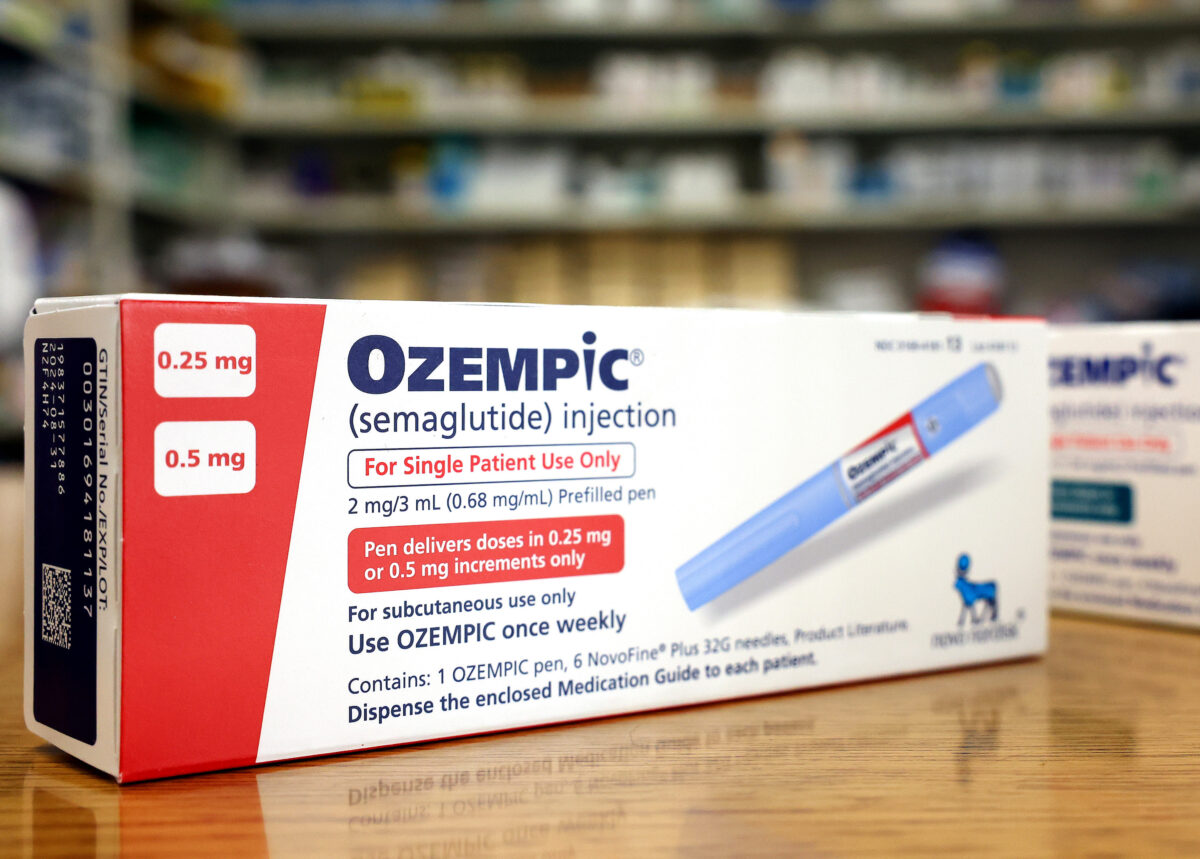
The new diabetes drug Ozempic, largely used for weight loss, and Wegovy, which is approved for chronic weight management in adults with obesity, have helped thousands of people lose weight, although recent evidence suggests that the medications may have rare but serious side effects.
In addition to common side effects such as nausea, vomiting, and diarrhea, some users have an increased risk of three rare—but very serious—stomach conditions, according to a research letter published on Oct. 5 in the Journal of the American Medical Association.
“The risk of severe gastrointestinal side effects is something that patients should be aware of when starting these medications,” Dr. Jessica Folek, director of bariatric surgery at Northwell Long Island Jewish Forest Hills in the Queens borough of New York City, told The Epoch Times. She wasn’t associated with the study.
Study Involved 16 Million Patients
Past research has shown increased risks in diabetic patients using these medications, but those patients already had higher baseline risks of gastroparesis (delayed gastric emptying) and pancreatitis.
The new population-level study examined the risk of serious stomach conditions in nondiabetic patients prescribed the glucagon-like peptide-1 (GLP-1) class of drugs for weight loss.
GLP-1 agonists are a class of drugs that includes semaglutide, the active ingredient in Ozempic and Wegovy. These drugs work by imitating a hormone normally released in the intestines after eating that helps promote feelings of fullness and reduces appetite.
In the latest study, researchers analyzed a random sample of 16 million patient records from the PharMetrics Plus health claims database between 2006 and 2020. This database captures 93 percent of U.S. outpatient prescriptions and diagnoses.
Researchers compared the new GLP-1 drugs—semaglutide (Ozempic, Wegovy, Rybelsus), liraglutide (Saxenda, Victoza)—to the older weight-loss drug bupropion-naltrexone (Contrave).
Their findings suggest that GLP-1 drugs carry increased risks of three potentially severe gut conditions compared to bupropion-naltrexone.
1. Pancreatitis
Pancreatitis, an inflammation of the pancreas, causes severe abdominal pain, nausea, and vomiting.
The study found almost five cases of pancreatitis for every 1,000 people who take GLP-1 drugs, compared to only one case per 1,000 bupropion-naltrexone users.
2. Bowel Obstruction
Bowel obstruction, a blockage that interrupts the normal flow of contents through the digestive tract, causes symptoms such as abdominal pain, bloating, cramping, nausea, and vomiting. The blockage may be partial or complete.
GLP-1 drug users had a four times higher risk of bowel obstruction compared to those who took bupropion-naltrexone, according to the study.
3. Gastroparesis
Gastroparesis delays stomach emptying into the small intestine, causing symptoms such as nausea, vomiting, abdominal pain, and weight loss.
The study found approximately nine cases of gastroparesis per 1,000 semaglutide users, seven cases per 1,000 liraglutide users, but only three cases per 1,000 users of the older weight-loss drug.
What’s the Bottom Line?
“Patients with a history of GI [gastrointestinal] disorders, such as IBS [irritable bowel syndrome] may be at increased risk for these side effects,” Dr. Folek said. “So it would be worthwhile in future studies to study this as a possible contributing factor.”
However, given the superior weight-loss efficacy of GLP-1 drugs and the low incidence of severe side effects (0.7 to 0.9 percent), these drugs remain a powerful tool for treating obesity, she noted.
The study authors acknowledged limitations, including uncertainty about whether all participants took the drugs specifically for weight loss.
The Drugs’ Manufacturer Responds
In an emailed statement to The Epoch Times, Novo Nordisk, the maker of Ozempic and Wegovy, emphasized its priority of patient safety and ongoing work with the FDA to monitor drug safety profiles.
“The FDA-approved product labeling for Novo Nordisk’s GLP-1RA medicines indicated for use in weight management (Saxenda and Wegovy) includes information about their potential side effects, including pancreatitis, acute gallbladder disease, ileus, and delayed gastric emptying,” the statement reads.
Novo Nordisk also noted that similar information is included in the product labeling for its GLP-1RA diabetes medicines (Ozempic, Rybelsus, and Victoza).
“Novo Nordisk stands behind the safety and efficacy of all of our GLP-1RA medicines when used consistent with the product labeling and approved indications,” the company stated, noting that several of its drugs weren’t on the market for much of the 2006 to 2020 study period. Wegovy wasn’t yet approved, Saxenda was approved in 2014, Victoza in 2010, and Ozempic in 2017.