



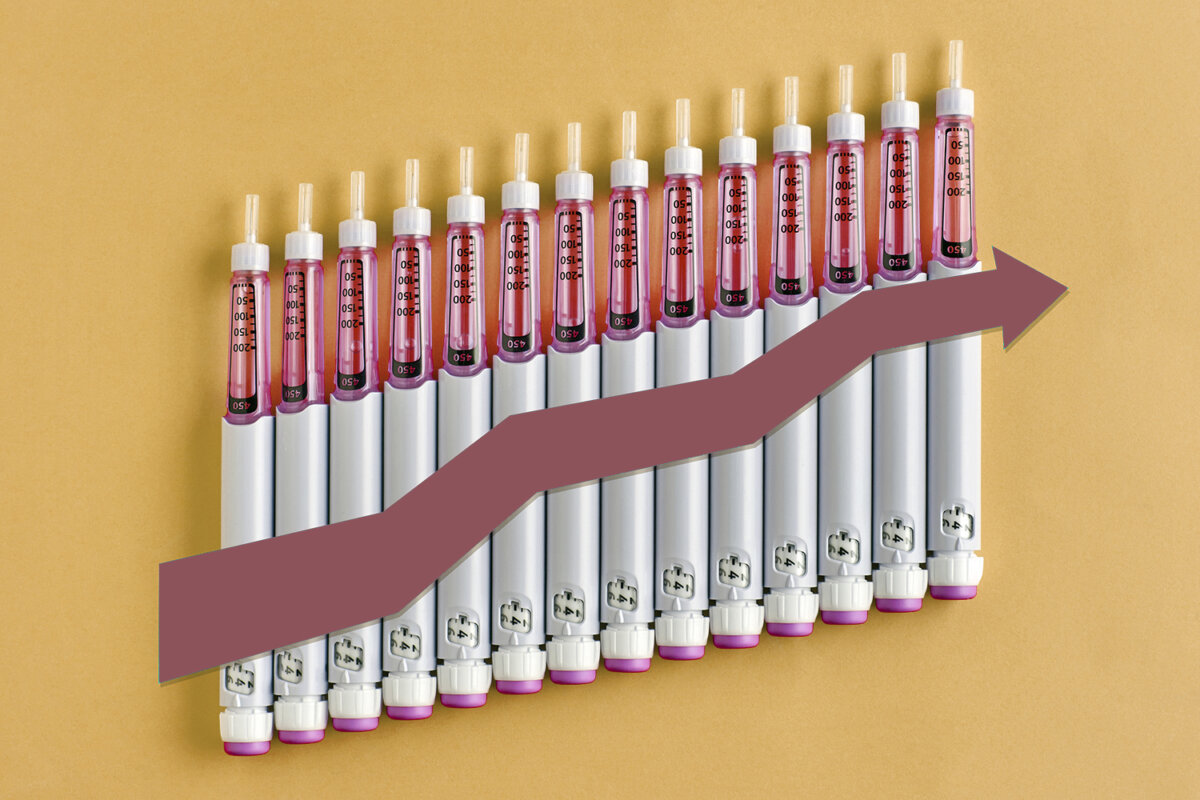
As prices surge for necessities like food and gas, millions of Americans face an even more frightening spike: the cost of staying alive.
For those living with chronic illnesses, rationing life-sustaining medications has become the only option, but it comes with putting their health at serious risk. This desperate predicament is especially true for the over 30 million people in the United States struggling with diabetes, a potentially fatal disease when left uncontrolled.
Nearly 40 Percent of Americans Prediabetic as Insulin Costs Spiral
Nearly 100 million Americans—or 38 percent of the U.S. adult population—are currently prediabetic, with almost 40 million diagnosed with a condition that makes them reliant on insulin to survive, according to the U.S. Centers for Disease Control and Prevention (CDC).
However, prices for this 100-year-old drug have skyrocketed over the past two decades. In 1999, a vial of Humalog, a commonly used fast-acting insulin, cost $21. In 2019, that same vial cost $332—a crushing expense that has forced rationing or hoarding.
Provisions in the Inflation Reduction Act cap insulin prices at $35 per month for Medicare enrollees. But there remains no federal cap for Medicaid recipients, the privately insured, or the uninsured, which, combined, comprise at least 80 percent of Americans.
There is some hope. The Affordable Insulin Now Act, introduced in the Senate in March 2023, would extend copays to private insurance and provide discounts for the uninsured. But with the bill only recently passed in the House, it remains a long way from becoming law.
The Dangers of Insulin Rationing
Rationing insulin involves under-dosing the amount needed to regulate blood sugar. This desperate measure can lead to dangerous short- and long-term health consequences, according to Melody Berg, who has a doctorate in pharmacology and is the editorial director of Patient Medication Information at the American Society of Health-System Pharmacists.
“Short term, the lack of insulin can lead to a condition called diabetic ketoacidosis where your body cannot deliver glucose to tissues to use as an energy source,” she told The Epoch Times. “So the body begins breaking down fat at too quick of a rate, which leads to buildup of a substance called ketones, which makes blood acidic.”
Symptoms include decreased alertness, rapid breathing, headache, nausea, and stomach pain. “If signs or symptoms of diabetic ketoacidosis are present, patients should report to the emergency room immediately, Ms. Berg added.
Diabetic ketoacidosis occurs more often in Type 1 diabetics who rely entirely on external insulin due to their nonfunctioning pancreas. “However, Type 2 diabetics can still get diabetic ketoacidosis and so should be familiar with this risk, as well,” Ms. Berg said.
Long term, lack of insulin may lead to high blood sugar levels, which can build up in tissues and damage the heart, kidneys, and eyes, leading to blindness. It can also lead to neuropathy, a type of nerve damage that could cause tingling or numbness in certain areas of the body, particularly the legs and feet. “This can occur in both Type 1 and Type 2 diabetics,” Ms. Berg said.
While rationing may seem necessary to reduce costs, diabetics should instead consult their doctor or pharmacist about financial hardship programs and resources available, including grants and funding assistance for purchasing insulin, Ms. Berg added.
How Insulin Makers Use U.S. Patents to Block Cheap Generics
Insulin manufacturers have used various strategies over the past three decades to extend market exclusivity on their brand-name products, a recent analysis of drug evaluations by the U.S. Food and Drug Administration (FDA) published in PLOS Medicine found. These strategies include filing new patents on insulin drugs even after FDA approval and obtaining multiple patents on required insulin delivery devices.
Such patents grant 20-year monopolies, preventing FDA approval of cheaper generics.
Researchers analyzed FDA and patent records from 1986 to 2019 and found 56 approved insulin products. Companies extended patent protection by an average of six more years by obtaining new patents post-approval. Many of these patents were also granted on the required insulin delivery devices and not the drugs.
Additionally, most device patents expired after drug patents, further delaying competition by over five years on average.
Through these techniques, manufacturers secured 16 years of exclusivity on average.
The brands with the longest effective monopolies were Sanofi’s Lantus at 32.9 years, Novo Nordisk’s Novolog at 32.3 years, and Novolog 70/30 at 30.9 years.
Recent Action to Address Affordability
Novo Nordisk offers various affordability options for people with or without insurance, including a new $35 insulin program, the company said in an emailed statement to The Epoch Times. Additionally, starting in 2024, the company will cut list prices on some insulin products by up to 75 percent for both Type 1 and 2 diabetics.
Earlier in 2023, drugmaker Eli Lilly announced it would slash insulin prices by 70 percent and cap out-of-pocket costs for the privately insured at $35 a month.
However, these measures only begin to address manufacturers profiting off patients. Many other critical medications continue to be priced exorbitantly higher than in other countries.