



The accuracy of an at-home cancer test designed to assess an individual’s risk of developing certain cancers is under scrutiny following concerns from several physicians.
Despite initial marked success rates of over 87 percent sensitivity and about 90 percent specificity rate touted in a 2021 study, physicians have reported instances of false positives and false negatives.
As reported by Nature, a doctor at the Fukuoka Wajiro Positron Emission Tomography (PET) Imaging Diagnostic Clinic noted that of the 333 people diagnosed as high-risk cancer patients by the nematode-NOSE (N-NOSE) test, just eight had cancer, and two had cancer that N-NOSE does not detect. In another instance, none of the 28 people noted as high risk for cancer at Nishinokyo Hospital in Nara, Japan, was diagnosed with cancer.
A New Way to Screen for Cancer
Typically, routine cancer screening can be burdensome, invasive, and expensive. Between CT scans, MRIs, bone scans, PET scans, and ultrasounds, screening efforts can take a toll on the body. The goal of creating the N-NOSE was to offer a noninvasive, cost-effective method for cancer screening, as most cancers have a much-improved survival rate if detected early. For instance, if diagnosed early, the five-year survival rate of lung cancer is 60 percent. If it’s diagnosed late, that rate drops to 6 percent.
“We expect N-NOSE to contribute to the detection of a wide range of cancers at an early stage, which cannot be detected by usual tumor markers and to offer patients a chance to undergo early cancer treatment,” the researchers wrote in their 2021 paper. “N-NOSE is a simple and inexpensive primary cancer screening test that is non-invasive.”
The N-NOSE test is said to detect the following 15 types of cancer, including breast, esophageal, stomach, and pancreatic, from a urine sample.
The N-NOSE Plus Pancreas is the first screening test for early-stage pancreatic cancer.
Japanese citizens can order the test online for about $100 and have their urine sample picked up from home, or they can drop it off at their local pharmacy. Four weeks later, the consumer receives their results: a letter ranging from A to E, with E indicating a high risk of cancer. EuroNews reported that some 350,000 Japanese residents have already taken the test.
According to Nature, the test’s manufacturer has plans to launch N-NOSE in the United States in 2024.
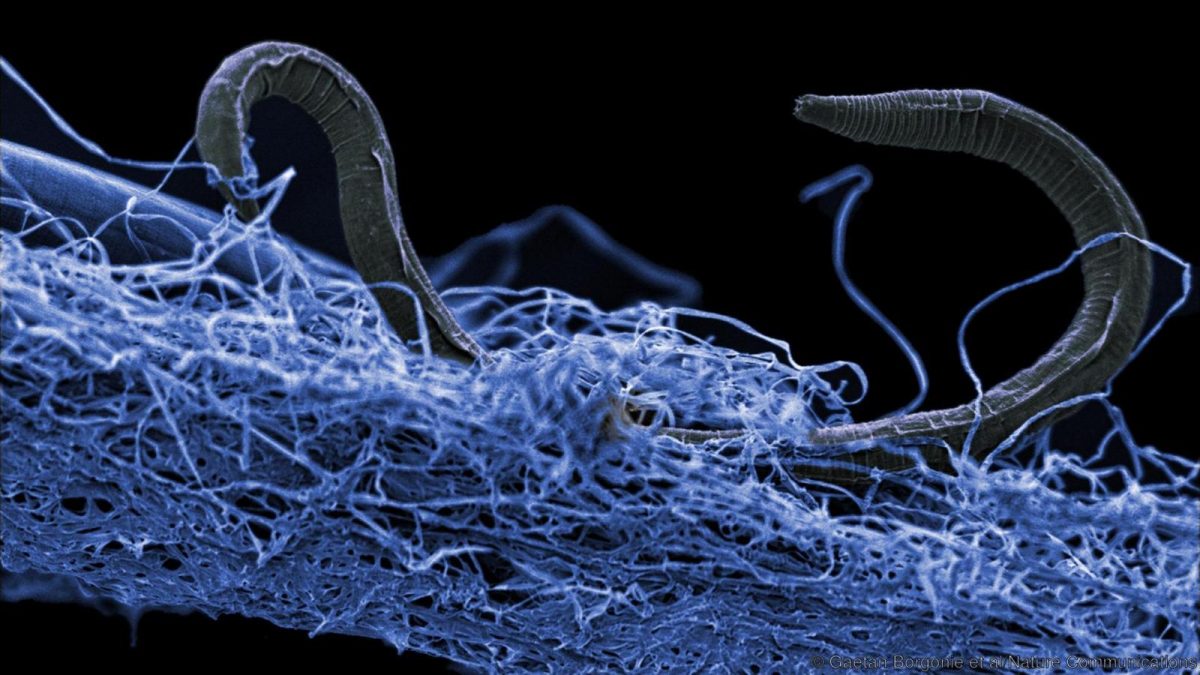
The manufacturer, Japanese-based startup Hirotsu Bio Science, relies on microscopic nematode worms to detect the presence of tumors. Using a proprietary algorithm, the test determines whether the nematode worms have moved toward a urine sample in a dish.
The idea for the test came to the president of Hirostu Bio Science, Takaaki Hirotsu, after he learned that nematode worms have many olfactory receptors attracted to cancer cells. In 2015, his team observed that the worms became attracted to breast and prostate cancer cells. Hence, they hypothesized that certain cells emit chemicals that the nematode worms can detect.
Their theory has been tested and verified in independent studies. Research teams in the United States and Italy worked with prostate cancer cells and observed nematode worm attraction in both cases.
The Significance of False Positives
While the N-NOSE test seemed initially successful, some doctors worry that the number of false positives produced by the tests may outnumber the actual cases of cancer. Masahiro Kami, head of the Medical Governance Research Institute in Tokyo, told Reuters he believed if false positives outnumbered the actual cases of pancreatic cancer, for instance, the test would be unusable.
False positives occur when a test incorrectly indicates that a patient could have a disease or condition. A false positive can be stressful, expensive, or dangerous for an individual and may also skew medical data and unnecessarily strain the medical system.
False positive results can be caused by myriad factors, including technical or biological issues or human error, including the following:
- Poor quality of testing materials.
- Damage to testing materials or kits.
- Poor or misinterpretation of results.
- Failure of technicians to follow standard operating procedures.
- Mislabeling, mixing up, or improperly handling specimens.
Despite questions about its test’s efficacy, Hirostu Bio Science plans to expand. In June, the company signed a memorandum of understanding with the World Health Organization (WHO) to manufacture and distribute N-NOSE in low- and middle-income countries and regions.