



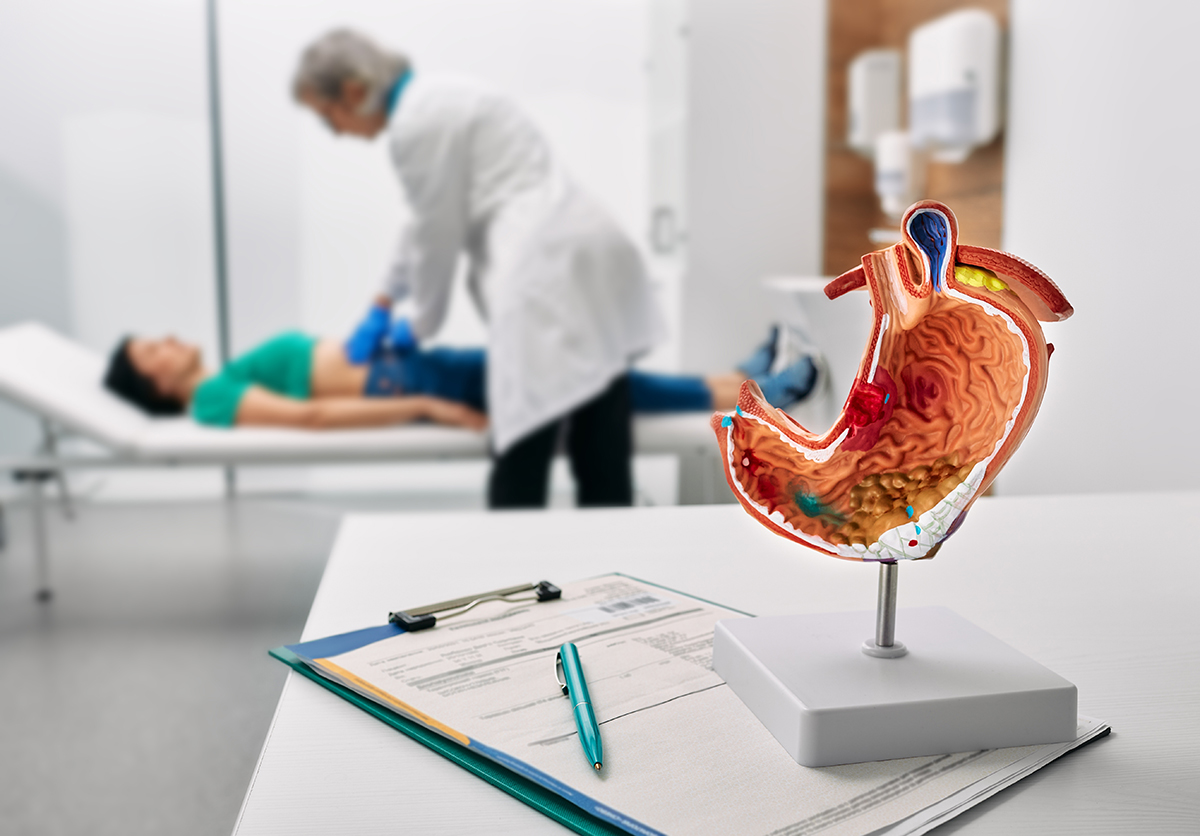
Patients undergoing gastrectomy to prevent developing lethal stomach cancer are finding the operation has harmful, long-term consequences that often require additional support beyond typical postoperative checkups.
A gastrectomy is a procedure in which a patient’s entire stomach is removed. The procedure has been touted as a way to save the lives of those who have inherited a cancer-causing gene mutation called CDH1. CDH1 is associated with roughly 40 percent of hereditary diffuse gastric cancer cases, according to the Cleveland Clinic. When caught and treated early, the cancer’s five-year survival rate is over 90 percent. However, once it has invaded the stomach wall, the survival rate drops to less than 30 percent.
However, a new study indicates that a gastrectomy might not be the panacea patients might expect it to be. The study, recently published in the Journal of Clinical Oncology, followed 126 people who received a total gastrectomy at the National Institutes of Health (NIH) Clinical Center as a measure to prevent hereditary diffuse gastric cancer. Seventy-five percent of the patients were female, and the average age of participants was 43. Most (122) were white, and almost 70 percent also had a history of breast cancer. Sixteen patients reported a family or personal history of cleft lip or palate; both are linked to CDH1 genetic mutations.
The patients were monitored for at least two years after their surgeries. During that time, 94 percent of patients in the study experienced at least one chronic complication from the surgery, such as bile reflux, difficulty swallowing, micronutrient deficiency, dumping syndrome, and depression. Moreover, roughly 25 percent said the surgery complications were life-altering. Some patients had to change jobs due to nausea, fatigue, and inability to eat meals while working. Some patients experienced divorce and alcohol dependency as a result of the surgery.
“Patients have come to me over the years and said that we didn’t talk enough about the mental or psychological aspects of this operation before surgery,” Dr. Jeremy Davis of the National Cancer Institute’s Center for Cancer Research and the study’s lead investigator, said in a press release. “Everybody experiences some consequence of this operation, and in some cases those consequences are disruptive to their daily lives,” he added. “Just talking about it and describing it is important.”
Lives Saved, but Quality of Life Deteriorated
In long-term quality-of-life surveys, the research team found that patients’ quality of life decreased one month after surgery, then returned to baseline six months postoperation.
“The suggests that resources should be focused on optimizing recovery in the immediate postoperative period,” the research team wrote.
The study also points out that previous research indicates quality of life often drops for patients who receive gastrectomy surgery after 24 months. Often, patients with low quality of life report pain, fatigue, insomnia, shortness of breath, and loss of appetite, as well as poor body image.
“We do this [operation] to prevent cancer and help people,” Dr. Davis said. “Patients return to the clinic and say they feel okay, but all you have to do is sit with them for a little while and stuff comes out; problems with family dynamics or not being able to get through the workday because of symptoms.”
While the quality-of-life surveys report that most patients who undergo surgery are satisfied with their decision, Dr. Davis and his team noted the importance of care teams ensuring patients understand the full scope and risk of gastrectomy surgery.
“The risks of cancer-prevention surgery should not only be judged in the context of likelihood of death due to disease if left untreated, but also based on the real consequences of organ removal,” the research team wrote.