



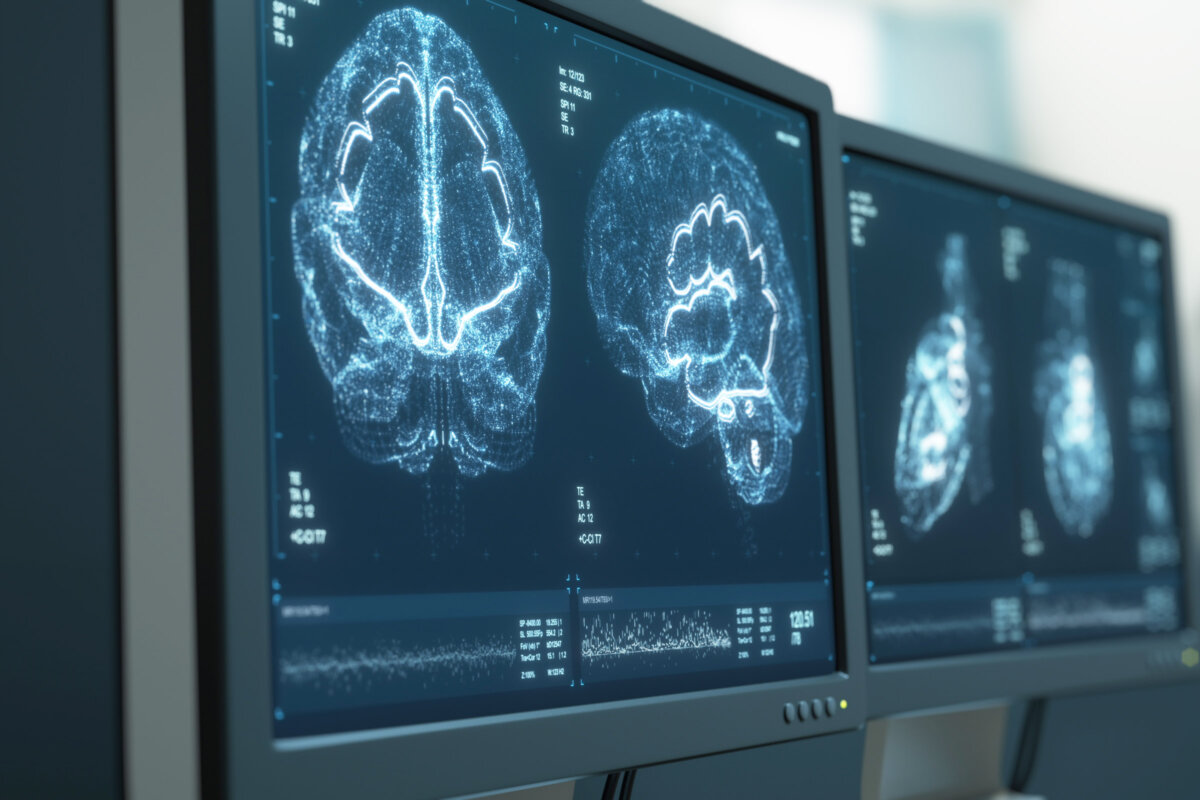
Malignant brain cancer is one of the deadliest and most challenging cancers to treat, primarily due to the difficulty of cancer drugs crossing the blood-brain barrier.
Scientists have discovered a potential method to bypass this semi-permeable membrane that protects the brain from harmful substances and pathogens. This could allow for direct delivery of tumor-shrinking chemotherapy medication where it’s most needed.
Implantable Device Bypasses Brain’s Defenses
Using iontronic technology, Swedish and Austrian researchers showed that continuous administration of low-dose cancer drugs near the tumor site can drastically reduce malignant brain tumor growth. Iontronic technology uses controlled movement of charged particles to connect computer chips with living cells.
The researchers tested this treatment method on bird embryos by surgically implanting an iontronic pump near the tumor. The pump released low doses of gemcitabine, a chemotherapy drug, directly bypassing the blood-brain barrier to target the cancer.
Results published in the Journal of Controlled Release showed a “remarkable growth inhibition” of the tumor when using the iontronic pump, compared to once-daily dosing, which had no effect.
This technology could revolutionize the treatment of glioblastoma, a particularly aggressive and deadly form of brain cancer, according to the study authors.
By overcoming the blood-brain barrier, the iontronic pump may allow the use of highly potent drugs previously unsuitable for brain tumor treatment and can possibly be also applied to other hard-to-treat cancers, the authors noted.
The next steps include refining the technology and conducting larger animal studies before human trials.
Current Treatment Options Limited
While current brain cancer treatments like radiation therapy, surgery, and chemotherapy show some effectiveness, their overall results are limited, Dr. Michael Schulder, vice chair of neurosurgery at North Shore University Hospital and Long Island Jewish Medical Center, who was not associated with the study, told The Epoch Times.
The blood-brain barrier blocks many cancer drugs. Most cancer drug molecules are too large to pass through this barrier, Dr. Schulder said.
Glioblastoma, the most common malignant brain cancer, is an invasive tumor of the brain, not in the brain, Dr. Schulder added. It’s not a purely focal tumor, which is why localized treatments like surgery or focused radiation are not effective against it, he said.
No Proof Early Detection Makes a Difference: Expert
Some progress in treating metastatic tumors and glioblastoma in early-stage has been made over the past 15 years, Dr. Schulder said. “Unfortunately, there is no proof that early detection makes a difference,” he added.
Early detection can introduce a misleading bias. When you find a primary brain tumor earlier—one that is or may become a glioblastoma—patients appear to survive longer simply because the diagnosis was made earlier in the disease course, Dr. Schulder said. “It doesn’t mean that you altered the biology of their treatment or their response to treatment at all.”
Dr. Schulder remains hopeful despite the challenges, noting that researchers are still dedicated to finding better ways to fight brain cancer.