


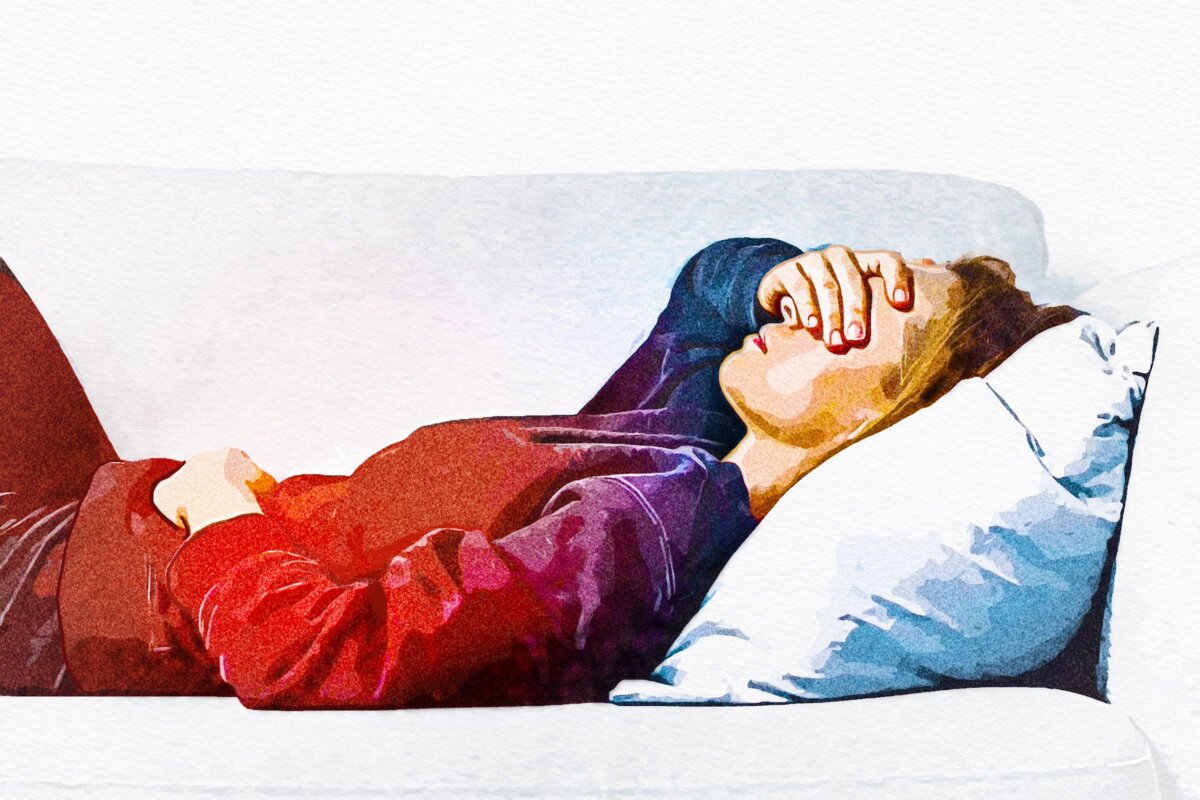
At 22, “Yang” began experiencing irritability, mood swings, breast tenderness, and headaches about a week before her period. Sometimes the headaches were so severe that she could only rest in bed.
Her symptoms were typical of premenstrual syndrome (PMS), which refers to the physical discomfort and psychological or behavioral changes that some women experience before their menstrual period. In addition to the symptoms mentioned above, other possible symptoms may include bloating, abdominal pain, fatigue, acne breakouts, diarrhea or constipation, insomnia, difficulty concentrating, and increased or decreased appetite.
Zhang Guiying, a master of acupuncture at the Northern Medical Center, told The Epoch Times that PMS is related to the patient’s constitution. Yang’s condition was classified as liver qi stagnation type, meaning that the liver’s energy flow was obstructed.
Acupuncture and TCM to Regulate Constitution
In traditional Chinese medicine (TCM), the liver governs emotional balance and energy flow throughout the body. When the liver meridian is blocked, it can disrupt menstruation, cause pain or discomfort, and contribute to insomnia, mood changes, or unexplained muscle and bone aches. Because the liver is sensitive to stress, prolonged emotional tension can lead to liver qi (energy) stagnation, often manifesting as headaches, anxiety, or a poor appetite.
Yang received four acupuncture treatments to soothe the liver and relieve its stagnation—treatment involved stimulating acupoints to clear energy and emotional blockages, and taking medicinal herbs. After two months of treatment, her symptoms improved and eventually disappeared.
The acupoints employed in the treatment included Great Surge (Taichong, LR3), Inner Pass (Neiguan, PC6), Three Miles of the Foot (Zusanli, ST36), and Grandfather (Gongsun, SP4)
1. Great Surge
Great Surge is an important acupoint on the Liver meridian, helping to regulate liver function, relieve stress and anxiety, soothe the nervous system, alleviate irritability, and restore emotional balance.
Location: In the depression in front of the junction of the first and second metatarsal bones on the top of the foot.
2. Inner Pass
Inner Pass can balance emotions and improve chest and abdominal discomfort.
Location: About three finger-widths (index, middle, and ring fingers) above the wrist crease, between the two tendons of the wrist.
3. Three Miles of the Foot
Three Miles of the Foot can boost immunity and improve digestive functionality.
Location: On the front side of the lower leg, approximately four finger-widths (about three inches) below the lower border of the kneecap.
4. Grandfather
Grandfather acupoint can regulate qi and blood and relieve pain.
Location: First, locate the depression behind the big toe joint. Then, follow the inner edge of the foot backwards for about one thumb’s width. The Grandfather acupoint is in the depression just below the metatarsal bones.
In addition to acupuncture, regular massage of these points also provides added health benefits, Zhang said.
An Herbal Formula and Counseling
Apart from acupuncture, Yang was prescribed Augmented Free and Easy Wanderer Pills (Jiawei Xiaoyao Wan), which is the most commonly used herbal formula for treating PMS. It comes from the ancient Chinese medicine formula of the same name, a powder in its maiden form. Nowadays, commercially available Chinese medicinal herbs are usually made into pills for convenience in administration. It is effective in treating mood swings and digestive problems caused by endocrine disorders.
Zhang also noted that PMS patients have different constitutions and require tailored treatment plans. It is recommended to always consult a qualified TCM practitioner for diagnosis and targeted treatment.
Besides acupuncture and medicinal herbs to regulate the body’s constitution, patients with severe PMS issues can also try psychiatric treatment.
Dr. Liu Zongxian, a psychiatrist at Taipei City Hospital, stated in an episode of “She Health” on NTDTV, a sister outlet of The Epoch Times, that in severe PMS cases, seeing a psychiatrist can be helpful. When medication is not desired or its effectiveness is not apparent, psychological counseling may be a good option for relieving stress.
Adjusting lifestyle habits is also crucial for improving PMS, Liu said, including regular exercise, maintaining a healthy diet, avoiding smoking and alcohol, getting enough sleep, and practicing yoga and meditation.