



Sarah Kline spent 15 years seeing doctors for fatigue, inability to lose weight, fertility concerns, and irregular, heavy periods. No one connected the dots.
The reason may be surprisingly simple: Her condition has always had the wrong name.
Many people have long thought PCOS was an ovary cyst problem, because of its name. However, after a 14-year global effort involving 22,000 patients, researchers have launched a plan to rename polycystic ovary syndrome (PCOS) to polyendocrine metabolic ovarian syndrome, or PMOS.
The change, led by endocrinologist Dr. Helena Teede of the Monash Centre for Health Research and Implementation, is designed to reflect what the condition actually is: a hormonal and metabolic disorder that affects the whole body.
“The critical problem here is that there are no cysts that are increased in this condition,” Teede told The Epoch Times. “[The name] completely misses all the main features of the condition.”
Not a Cystic Problem
Early beliefs that cysts were overcrowding the ovaries of patients persisted for decades.
True cysts are large, abnormal ovarian follicles that form on or inside an ovary and occur after ovulation, sometimes causing pain when they rupture.
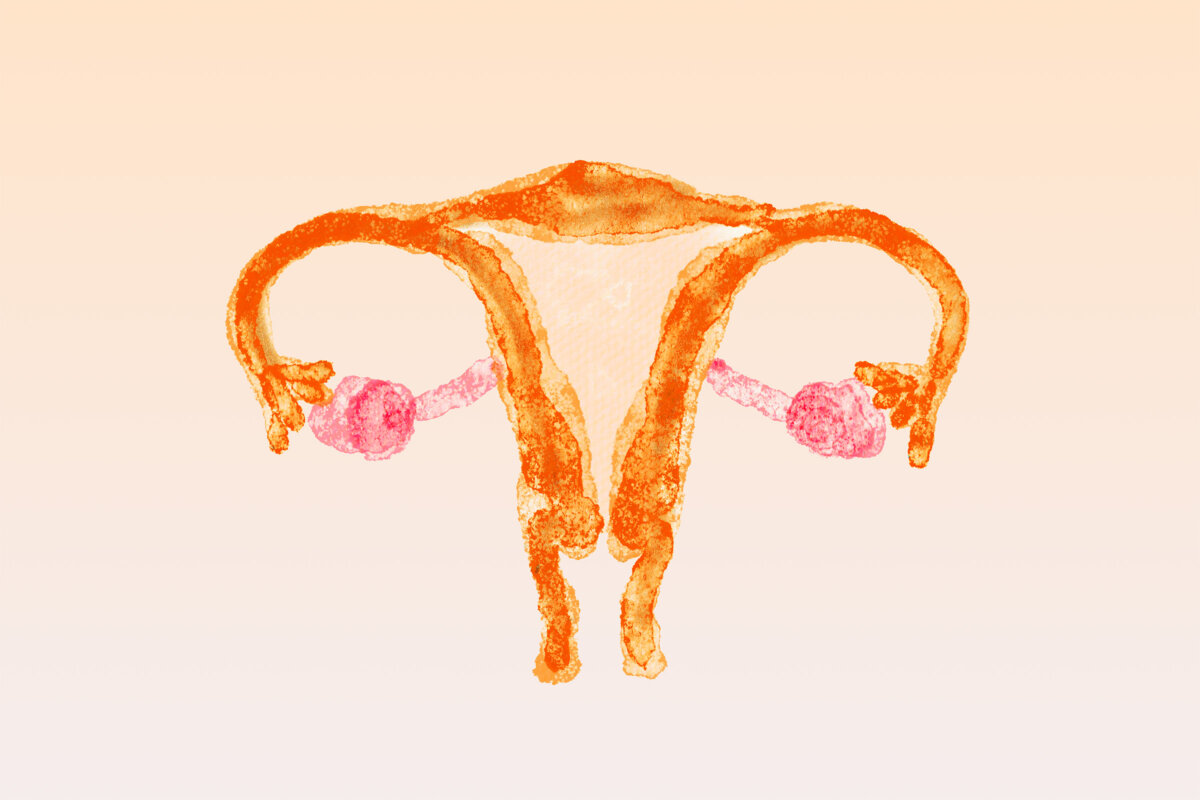
However, the “cysts” seen in PCOS were later found to be immature ovarian follicles—egg sacs that began developing but failed to fully mature and ovulate. These partially developed follicles can accumulate in the ovaries, creating the characteristic “string-of-pearls” appearance on ultrasound.
A handful of studies dating back to 1921 have described metabolic health as playing a key role in immature ovarian follicles and in PCOS. The main driver of the condition is insulin resistance, in which blood sugar increases because cells do not properly absorb it. However, the name PCOS—along with misunderstandings about the condition—has persisted.
Up to 70 percent of women with PMOS are undiagnosed. The lack of understanding of the condition’s metabolic nature was likely why Kline repeatedly received no resolution after many frustrating doctor visits.
The new name—PMOS—is intended to more accurately reflect the various parts of the body that can be affected: hormones, mental health, skin, and the reproductive system. The disrupted hormones in PMOS, Teede said, “go all around the body and cause havoc in many different systems.”
“And all of that has been ignored,” she said.
Insulin Resistance at the Center
The condition presents differently among patients and across a lifetime, but insulin resistance runs through nearly all of it. Teede estimates that 85 percent to 95 percent of PMOS patients have insulin resistance, which drives elevated androgens—sometimes called “male hormones”—that can cause facial hair, acne, and disrupted periods.
“If you treat the insulin resistance, the androgens come down,” Teede said. “If you treat the androgen excess, the insulin doesn’t come down. That really suggests insulin is one of the primary propagators.”
The pattern typically starts in adolescence with acne, irregular periods, and a change in weight. During reproductive years, women often experience infertility and psychological effects such as anxiety and depression, although there is a genetic component.
It might, however, be difficult for doctors and patients to assess insulin resistance in PMOS patients.
The most recent medical guidelines note that “insulin resistance is recognized as a key feature of PCOS, yet routinely available measures of insulin resistance are inaccurate and clinical measurement is not currently recommended.”
Dietitian Martha McKittrick, a certified diabetes educator, said she is hopeful that adding the word “metabolic” to the condition name will be a wake-up call for physicians to do more screening of cholesterol and hemoglobin A1c, a three-month blood glucose measurement.
These tests measure the long-term results of unchecked insulin resistance. Although not normally offered by most doctors, fasting insulin or the oral glucose tolerance test, which can detect insulin resistance before it develops into Type 2 diabetes, can be requested.
The guidelines also mention the benefits of diet and exercise in lowering insulin resistance, although insurance doesn’t cover the cost, leaving it out of reach for some patients, McKittrick told The Epoch Times.
“They should be able to meet with a dietitian or some kind of healthcare provider who could teach them about the diet component … anti-inflammatory diets, Mediterranean-style diets, that can help improve insulin resistance and decrease the risk for Type 2 diabetes, and for heart disease,” she said.
How Food Drives the Cycle
Dr. Joel Evans, gynecologist and cofounder and chief medical officer of Vayas360, told The Epoch Times that diet is always part of his patient plan for treating PMOS patients, and he has seen it have a tremendous effect.
Food fuels the hypothalamus, which sends messages to the pituitary gland, which is in charge of hormonal production.
In someone who eats a healthy diet, this process coordinates a hormonal symphony that releases an egg every 28 days for a normal menstrual cycle.
“When you have elevated insulin because of poor food choices, it changes the way your hypothalamus works,” Evans said. “The pituitary then causes two things to happen in the ovary: It stops making eggs and having periods, and it increases testosterone.”
Testosterone can further worsen insulin resistance, creating a vicious cycle.
Birth control pills have long been used to regulate hormones in PMOS patients, but they don’t always affect insulin levels, and there can be many side effects.
Although weight loss improves symptoms, Teede said, statistics reveal the complication of medical advice to “lose weight,” especially for those who are already obese.
For instance, a study published in the American Journal of Public Health showed that only one in 124 obese women could attain a normal weight, and the annual probability of achieving a 5 percent weight reduction was one in seven for women with morbid obesity, underscoring the importance of early intervention before the condition compounds.
Guidelines call for better recognition of some PMOS features outside of gynecologists’ care, such as the metabolic risk factors, cardiovascular disease, sleep apnea, significant psychological features, and the high risk of adverse pregnancy outcomes.
PMOS’s Identity Crisis
Not everyone is convinced that the rename will quickly translate into better care. Professional organizations and medical insurance companies need to support the effort for it to have an impact, Evans said.
“By and large, I think the momentum is here, but it’s premature to say everyone is changing the name,” Evans said.
The condition’s identity crisis isn’t new. Early medical books described it as chronic ovaritis, with symptoms of pelvic pain, menstrual disturbances, enlarged ovaries, and sterility. It was later called Stein-Leventhal syndrome, named for the doctors whose work built on earlier discoveries.
Until the 1970s, researchers focused on the endocrine origins of the conditions, and attention shifted to metabolic abnormalities beginning in the 1980s and 1990s, which was also when the term PCOS first emerged.
The name-change effort of today took 14 years and involved surveying 22,000 patients. Ironically, a major barrier has been the patients themselves, because many have felt so dismissed and stigmatized that they didn’t want to be involved in the renaming effort, Teede said.
“They are so frustrated. There is a very strong emotional response to this condition,” she said.
McKittrick noted that recent years have brought a lot more attention to PMOS. She said she’s concerned that, now that awareness has risen, the name change could add more confusion.
“It could be a positive thing, and I’m not against the name being changed,” she said. “But I’m also skeptical that everything’s all of a sudden going to be great.”
A Virtuous Cycle
Kline was finally diagnosed in March, prompting a transformation that involved a blend of new medication and lifestyle changes.
She takes metformin, used off-label to treat PMOS. It reduces androgens, improves insulin sensitivity, and triggers ovulation. Using the drug was a difficult decision, Kline said, because it does come with side effects such as stomach discomfort, nausea, and diarrhea.
Kline also takes myo-inositol, a supplement that helps with insulin signaling and brain chemical messengers, for mental health.
Her new regimen has resulted in substantial energy, allowing her to cook for herself and work out regularly, creating a virtuous cycle. She’s also working with a nutritionist who has educated her about food.
“I can’t believe half of the stuff that I had in my pantry was so horrendous,” Kline said. “I’m definitely moving in the right direction now, but it’s been a long time coming.”
Kline said that after the runaround she received, the diagnosis itself meant little to her. It was the treatment that finally brought her peace. That’s the ultimate aim in the name change, Teede said, because the delayed care is harming patients and stifling research.