




A weaker urine stream or repeated trips to the bathroom at night can be easy to dismiss as part of getting older. Some men live with these changes for years before seeking help.
Dr. Shih-Wei Huang, director of the Department of Urology at National Taiwan University Hospital Yunlin Branch, has encountered patients who struggled to urinate for seven or eight years before seeing a doctor. Some waited until they could no longer pass urine and needed a catheter; others already had impaired bladder or kidney function.
Embarrassment and the belief that urinary difficulties are inevitable with age often contribute to that delay, Huang said on “Health 1+1” on NTD, a sister outlet of The Epoch Times.
Prostate enlargement becomes more common with age, but troublesome urinary symptoms deserve attention. Understanding the condition—and the choices available—can help men seek care before problems become more difficult to manage.
Why an Enlarged Prostate Affects Urination
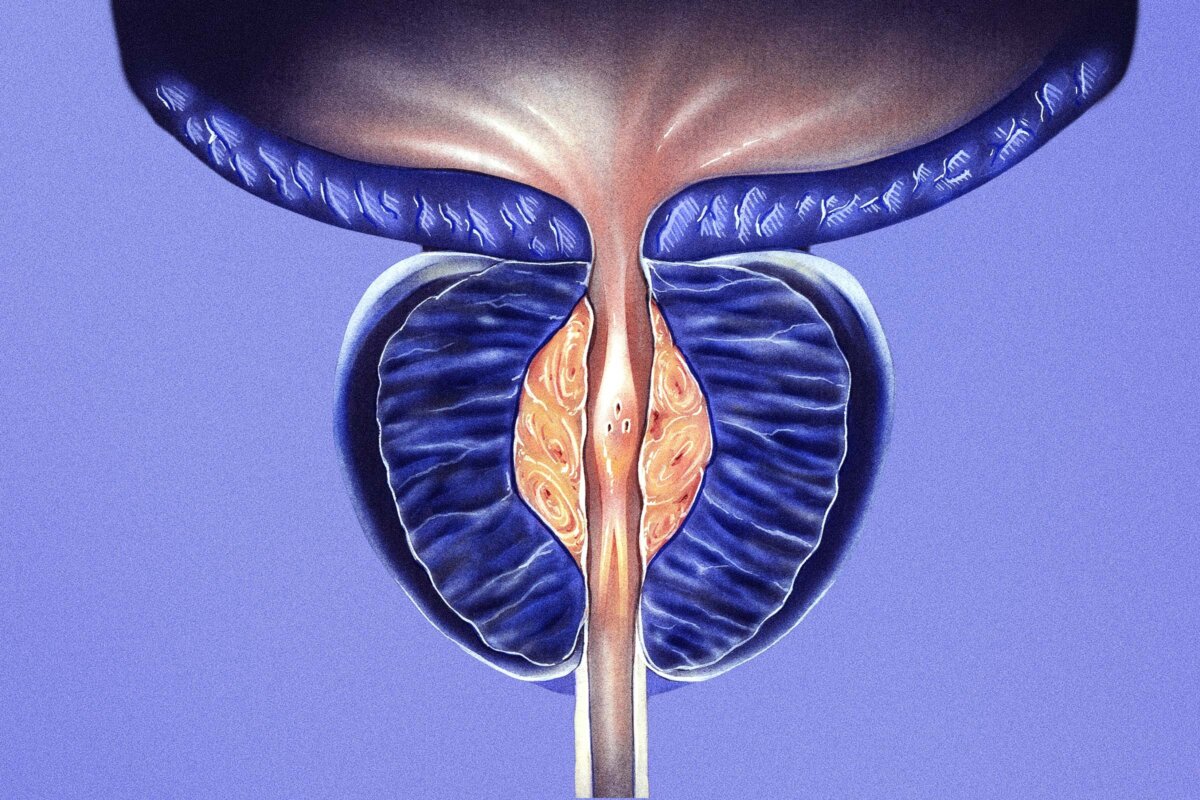
The prostate sits below the bladder and surrounds the urethra, the tube that carries urine out of the body. Noncancerous enlargement, known as benign prostatic hyperplasia (BPH), can narrow this passage, making it harder to start urinating or maintain a steady stream.
However, prostate size does not always predict symptom severity. A large prostate may cause few problems, while a smaller one may interfere substantially with urine flow. Urinary symptoms can also have other causes, making an evaluation important.
When the outlet is obstructed, the bladder initially compensates by contracting more forcefully. Over time, its muscle may weaken and lose the ability to empty effectively.
Huang said worsening obstruction can lead to urinary retention, recurrent infections, and blood in the urine. In severe cases, pressure can back up toward the kidneys, causing hydronephrosis—swelling from accumulated urine—and potentially damaging kidney function.
Enlarged Prostate May Not Mean Surgery
Treatment options for an enlarged prostate can broadly be classified into three groups: medications, minimally invasive procedures, and conventional surgery. According to Huang, symptom improvement varies across these approaches. Medications generally offer the most modest results, while minimally invasive treatments tend to provide greater relief.
Traditional surgery typically delivers the most substantial improvement in urinary symptoms. Nevertheless, the most effective treatment is not automatically the best choice for every patient.
The decision should also consider possible side effects, recovery requirements, and the overall burden of each treatment.
What Medications Can Do
When treatment is needed, doctors usually consider medication first. Commonly used medications generally fall into two types, Huang said. One type relaxes the muscles around the prostate and bladder outlet, making it easier for urine to pass through. The other gradually shrinks the prostate.
However, medications mainly control symptoms. “They simply make you feel better; they cannot cure the underlying problem,” Huang said. In some cases, urinary symptoms may return after discontinuing the medication.
Some medications can also cause side effects. For example, drugs that shrink the prostate may affect sexual function in a small number of patients. If discomfort occurs after starting medication, patients can ask their doctor to change the medication or adjust the treatment approach.
Minimally Invasive Therapies
If medication does not work well or the patient cannot tolerate its side effects, minimally invasive therapies such as prostate stents and water-vapor ablation may also be considered.
With water-vapor ablation, for example, an instrument is inserted through the urethra and uses high-temperature steam to treat the enlarged prostate tissue. The treated tissue gradually shrinks, allowing the compressed urethra to slowly open up.
One study involving 193 patients found that urinary symptoms improved significantly after water-vapor treatment, while the amount of urine remaining in the bladder after urination was reduced by about half.
Another consideration with minimally invasive therapies is how long their effects will last. A prostate stent may need to be replaced after three to five years, and surgery may be necessary if replacement is no longer possible. Water-vapor treatment may also need to be repeated because it does not remove all of the prostate tissue, allowing some tissue to gradually grow back, Huang said.
Surgery: Relief and Tradeoffs
If a patient wants more substantial improvement in urination, traditional surgery generally provides stronger results. However, the prostate is highly vascular, Huang said.
In older patients who also have cardiovascular disease or are taking blood thinners, the risk of bleeding and the physical burden of surgery must be taken into account.
Younger patients, meanwhile, are often more concerned about whether treatment will affect sexual function. Huang said, “Surgery for an enlarged prostate does not actually affect sexual function, but it can affect ejaculation.”
He noted that surgery for an enlarged prostate more commonly causes retrograde ejaculation, in which semen flows backward into the bladder. Prostate cancer surgery, however, is more likely to affect erectile function because it involves the nerves surrounding the prostate.
Consider What Matters Most to You
Medication, minimally invasive therapies, and traditional surgery differ in the degree of improvement they provide, how long the effects last, and their potential side effects. Some people want a more noticeable, lasting result in a single treatment, while others are willing to undergo treatment again in the future in exchange for an initially less burdensome experience.
“Everyone experiences the effects and side effects differently, and everyone’s needs are truly different,” Huang said.
For this reason, he suggests shared decision-making. Doctors should not simply tell patients what treatment options are available. They should also consider the patient’s age, overall health, financial considerations, what the patient most wants to preserve, and what they are least willing to accept—then make the treatment decision together.
Can Enlarged Prostate Turn Into Cancer?
In addition to concerns about treatment, many patients who learn they have an enlarged prostate have another worry: Could it turn into cancer?
An enlarged prostate itself does not turn into cancer, although the two conditions can occur at the same time, Huang said. “The prostate is like an orange. Enlargement means there is too much flesh inside the orange; cancer cells mostly develop in the peel.”
Benign prostate enlargement usually occurs in the area close to the urethra, so it can easily cause symptoms such as a weaker urine stream and incomplete bladder emptying. Prostate cancer, on the other hand, more commonly develops in the outer part of the prostate and may not cause noticeable urinary symptoms in its early stages.
Therefore, difficulty urinating does not mean you have cancer, and normal urination does not rule out early prostate cancer.
Doctors commonly use the prostate-specific antigen (PSA) blood test to assess prostate cancer risk. An elevated PSA level may indicate an abnormality in the prostate, but it does not necessarily mean that cancer is present.
“It’s not that a high PSA definitely means cancer; it’s a matter of probability,” Huang said. Doctors consider factors including age, prostate size, changes in PSA levels, and individual risk. When necessary, they may then recommend an MRI scan or biopsy.
Pay Attention to Changes
Prostate problems generally become more common starting in a person’s 40s, Huang said. “A healthy lifestyle should be the priority, followed by getting regular health checkups.”
He recommends maintaining a healthy weight, exercising regularly, keeping a normal sleep schedule, and eating a primarily whole-foods diet while limiting processed foods.
After age 40, people should also pay closer attention to changes in urination. If you experience nighttime urination, a weaker or thinner urine stream, or difficulty completely emptying your bladder, don’t dismiss it as a normal part of aging. Seek medical attention early for an evaluation.