



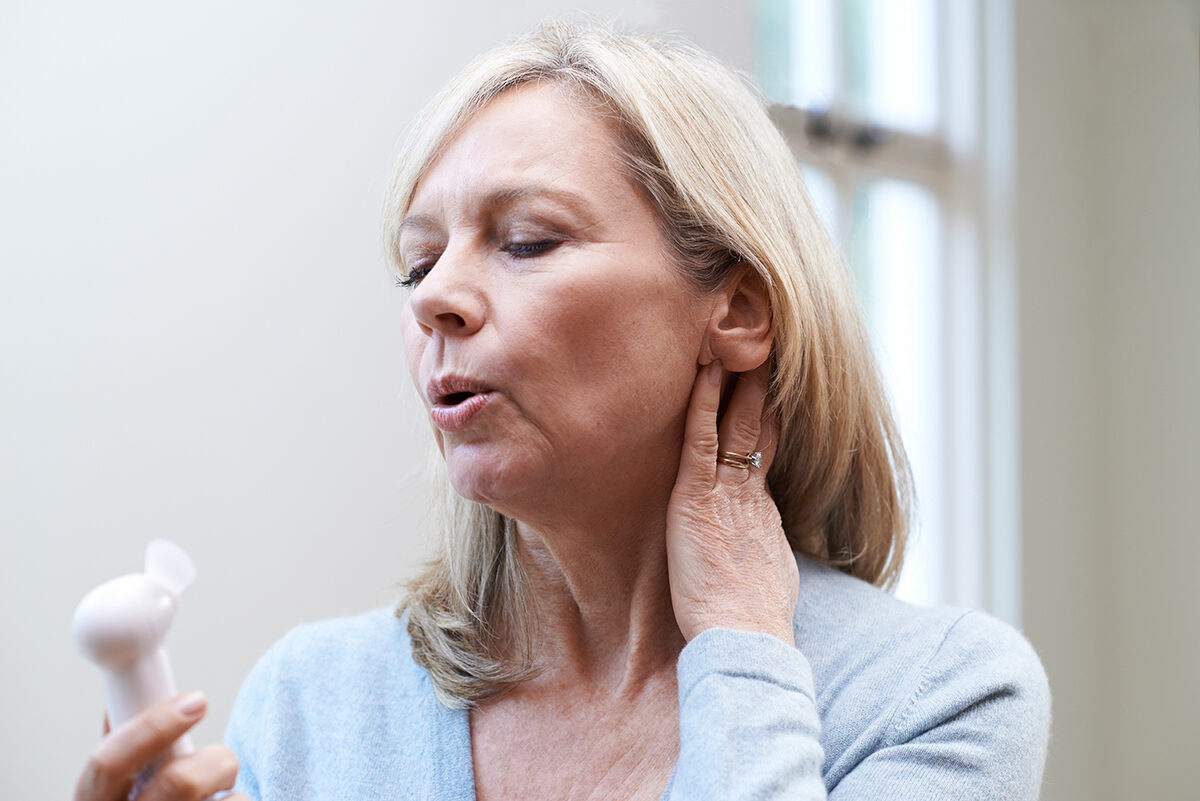
Formally, menopause is a period that begins once a woman’s body is done having menstrual cycles. A woman is said to have entered menopause once her body has not menstruated for 12 months, as long as no medical conditions or surgeries can be identified as the cause for the absence of menstrual cycles. Most women enter menopause in their early 50s, though menopause can begin as early as the 30s or 40s.
Menopause, when it begins naturally, is a normal and healthy part of the aging process. A woman’s menstrual cycle has been continually cycling since she entered puberty. As she ages, the body naturally begins to slow down its reproductive cycle, until the ovaries fully stop releasing eggs, bringing the recurring cycle to a full stop.
The hormone estrogen is required for a woman’s natural reproductive cycle to occur. As a woman gets older, particularly once entering her 40s and 50s, her ovaries will slow the production of estrogen. Lower estrogen levels will produce menstrual changes which can vary for each woman. For many, there is a time of irregular menstrual cycles before the cycles fully come to an end.
While menopause is an entirely natural and normal biological process, it may manifest symptoms and side effects that can be challenging to navigate on both a physical and emotional level.
Stages of Menopause
There are four individual stages of menopause. As a woman’s body adjusts to the fluctuating levels of estrogen and other hormones, she will likely experience a variety of physical changes throughout these stages.
Premenopause
Premenopause is the earliest stage of the menopause journey. Women are still considered fertile during this stage, though their reproductive hormones are slowly beginning to shift. Most women do not notice any obvious symptoms, but they may experience a slight irregularity in their cycle from time to time. This is typically the clue that the body has begun its hormonal shift.
Perimenopause
Perimenopause is often referred to as the “menopause transition” phase. This stage is characterized by more obvious symptoms as a woman’s estrogen and other sex hormone levels begin to drop more significantly. However, perimenopause is still a slow process and can take eight to 10 years before a woman fully enters the menopausal stage. During this time, a woman is still having menstrual cycles and can get pregnant, though her cycles will likely just be more irregular. She may go several months without a cycle and then have several periods closer together, as the cycles typically become shorter during perimenopause.
Menopause
A woman reaches the menopause stage when her ovaries have stopped producing estrogen and the body is not releasing eggs for at least 12 consecutive months. If necessary, health care providers may run a variety of blood and urine tests to identify hormone levels to diagnose a woman as having reached menopause.
Postmenopause
The postmenopause stage begins once a woman has entered the menopausal stage, and it will continue for the rest of her life. For many women, menopause symptoms will begin to slowly diminish. However, for some, the symptoms don’t disappear as quickly or fully as they might hope. Some women may experience symptoms for five to 10 years or longer after entering postmenopause. There are ways to manage symptoms and decrease their impact on a woman’s day-to-day life.
Symptoms
If a woman of menopausal age experiences any of the following symptoms, she may be transitioning into one of the stages of menopause:
- Night sweats
- Irregular periods (this can include an irregular schedule, heavier or lighter flow, and shorter or lengthened cycles)
- Cold sweats
- Hot flashes
- Vaginal dryness
- Insomnia or general difficulty sleeping
- Breast tenderness
- More intense PMS symptoms
- Mood swings
- Urinary urgency or frequency
- Changes in libido
- Headaches
- Weight gain
- Cognitive decline
Is There Treatment for Menopause?
Menopause is a normal stage of life, not a condition that requires treatment. However, there are ways to treat symptoms that may impact a woman’s quality of life.
Conventional Approach
Hormone therapy and prescription medication are what most providers will offer to a woman who is looking for treatment for her menopause symptoms.
Prescription medications such as estrogen creams and pills, or birth control and antidepressants are utilized to manage hot flashes or mood swings. Patients need to discuss these medications with their providers to understand what they are intended to do, as well as the potential side effects they may experience.
Hormone therapy essentially boosts the body’s hormones to attempt to bring balance back, therefore lessening the bothersome symptoms a woman may be experiencing.
There are two types of hormone therapy:
- Estrogen Progesterone/Progestin Hormone Therapy (EPT): This therapy uses a combination of both estrogen and progesterone hormones.
- Estrogen Therapy (ET): ET therapy includes treatments of low-dose estrogen.
It must be mentioned that hormone replacement therapy does have drawbacks. Research shows that hormone therapy can increase the risk of conditions such as heart disease, stroke, blood clots, and breast cancer. It also can increase inflammatory markers, such as C-reactive protein, in the body. Some integrative practitioners use bioidentical hormones rather than synthetic ones to treat menopausal hormone concerns. Women often see good results with bioidentical hormone replacement therapy (BHRT), but there are still drawbacks as hormones work on a negative feedback loop. Careful monitoring is essential.
Functional Approach
Many patients seek an alternative to hormone therapy and prescription medications and turn toward a more functional approach. This approach to wellness seeks to offer whole-person, integrative care to understand what is occurring in the body.
Lifestyle changes such as diet, exercise, herbs, and supplements are more natural efforts to make to manage menopause symptoms. Oftentimes women who work with a functional medicine provider come up with a plan that is unique to her physiology so she can move through menopause with ease and empowerment.
- Diet: The foods a woman consumes daily can make a deep impact on helping or irritating symptoms. Consuming a nutrient-dense diet full of proteins, healthy fats, fruits, and vegetables will help to support the body. Many women find nourishing themselves on an anti-inflammatory diet helpful during this season of life.
- Exercise: As with each stage of life, daily movement is essential to physical and mental wellness during this time. Exercise methods will look different for every woman and may change throughout the stages of menopause. Slower, more methodical forms of exercise like stretching or Pilates may be best for some women to help keep hot flashes at bay, while others may find that a higher intensity form of exercise benefits their body and helps to manage weight gain and mood swings.
- Herbs and supplements: It is important to work with a practitioner to identify deficiencies and concerns before beginning any sort of supplement routine. Supplementing with nutrients and herbs such as vitamin D, ashwagandha, magnesium, berberine, curcumin, and resveratrol can be an effective way of managing symptoms.
Considerations
Regardless of the approach, these considerations are important for practitioners and patients to discuss as they seek to set up the best plan for the management of menopause symptoms.
- Discuss symptoms and how they relate to a patient’s quality of life goals.
- Consider the type of menopause (natural or surgical), and if there was a full or partial hysterectomy.
- Discuss the pros and cons of BHRT and non-BHRT.
- Consider any personal or family history of cancer (endometrial, uterine, ovarian, breast, or other).
- Consider any personal or family history of cardiovascular disease (including clots, DVT, stroke, hypertension, and improper cholesterol ratios).
- Discuss any personal or family history of osteoporosis.
- Discuss any personal or family history of Alzheimer’s disease.
Lab Testing
Lab testing can be an invaluable resource in seeking to treat and manage menopausal symptoms.
- Follicle-stimulating hormone (FSH): Elevated FSH levels for an extended period once a woman has not menstruated for 12 consecutive months is a great indicator that a woman has reached the menopausal stage.
- Luteinizing hormone (LH): LH levels increase as estrogen and progesterone levels decrease. This increase is often a cause of hot flashes during perimenopause and menopause.
- Anti-Müllerian hormone (AMH): AMH is a reliable marker of ovarian function and a predictor of the time of menopause.
- Prolactin: Excess prolactin during postmenopause can be a cause of hypothyroidism.
- Progesterone: Testing progesterone levels can help to diagnose why a patient may be experiencing severe hot flashes and other menopausal symptoms.
- DHEA: DHEA is a pro-hormone that is converted to both testosterone and estrogen.
- Cardiovascular markers (NMR lipoprofile, homocysteine): Hormonal changes in menopause can lead to an increased risk for cardiovascular complications such as high cholesterol and high blood pressure. Monitoring these cardiovascular monitors can help identify any concerns to be managed and treated preventatively.
- Liver function tests (AST, ALT): As estrogen reduces, the liver is impacted and this can create concerns like decreased mitochondrial function in liver cells and fatty liver disease.
- Inflammation (CRP, ESR, ferritin): Inflammation levels often increase during menopause as estrogen is no longer working as effectively as an anti-inflammatory. Menopausal inflammation can hinder bone health, joint health, muscle health, cardiovascular health, and brain health.
- Thyroid (TSH, T4, FT3, T3, FT3, RT3, thyroid peroxidase (TPO) antibodies, thyroglobulin antibody: Women with a preexisting thyroid disorder may often experience more intense symptoms.
- Nutrients and minerals (vitamins A and D, magnesium, selenium, zinc): Testing nutrient and mineral levels helps to identify deficiencies that can be exacerbating menopause symptoms or hindering overall health.
- Estrogens:
- Estrone (E1): This is the only estrogen that women continue to produce after menopause.
- Estradiol (E2): E2 is mainly produced in the ovaries and is the most important form of estrogen for fertility. This estrogen is primary in women who are not pregnant and still experiencing recurring reproductive cycles.
- Estriol (E3): This estrogen is identified in a woman’s body during pregnancy and is often used to monitor the progress and health of the growing baby.
Imaging
Additional methods of measuring a woman’s overall health and identifying any areas of concern throughout the stages of menopause include a DEXA scan, a breast exam, and a pelvic exam.
- DEXA scan: Menopausal women are at a higher risk for osteoporosis as bone density begins to decline more rapidly. This scan will measure bone mass in specific bones and help your provider to track any changes in density over time.
- Breast exam: It’s recommended that women who have gone through menopause do a breast exam on themselves on the same day each month to identify any changes, as well as get an annual exam from a practitioner. The standard of care is visualizing breast tissue with mammography. Some holistic providers suggest a combination of thermography and ultrasound for monitoring breast tissue.
- Pelvic exam: A pelvic exam is a way for a woman’s practitioner to identify signs of disease or infection during the stages of menopause. This is especially important for women who may be experiencing menopausal symptoms related to the vagina, cervix, uterus, or ovaries.
Entering the stages of menopause can be an unsettling time for women as their bodies move past the child-bearing years. This is entirely normal and something every woman experiences to some extent. Supporting her body as a woman walks through the menopausal years is not only a way to ease symptoms and increase quality of life, but also gives a woman a sense of control and confidence as she navigates learning to thrive in her changing body.
To learn about how menopause affects your blood sugar read Part 2: Menopause, Blood Sugar, and Weight Management
To learn about whether hormone replacement therapy read Part 3: Is Hormone Replacement Therapy Helpful for Women Going Through Menopause?