




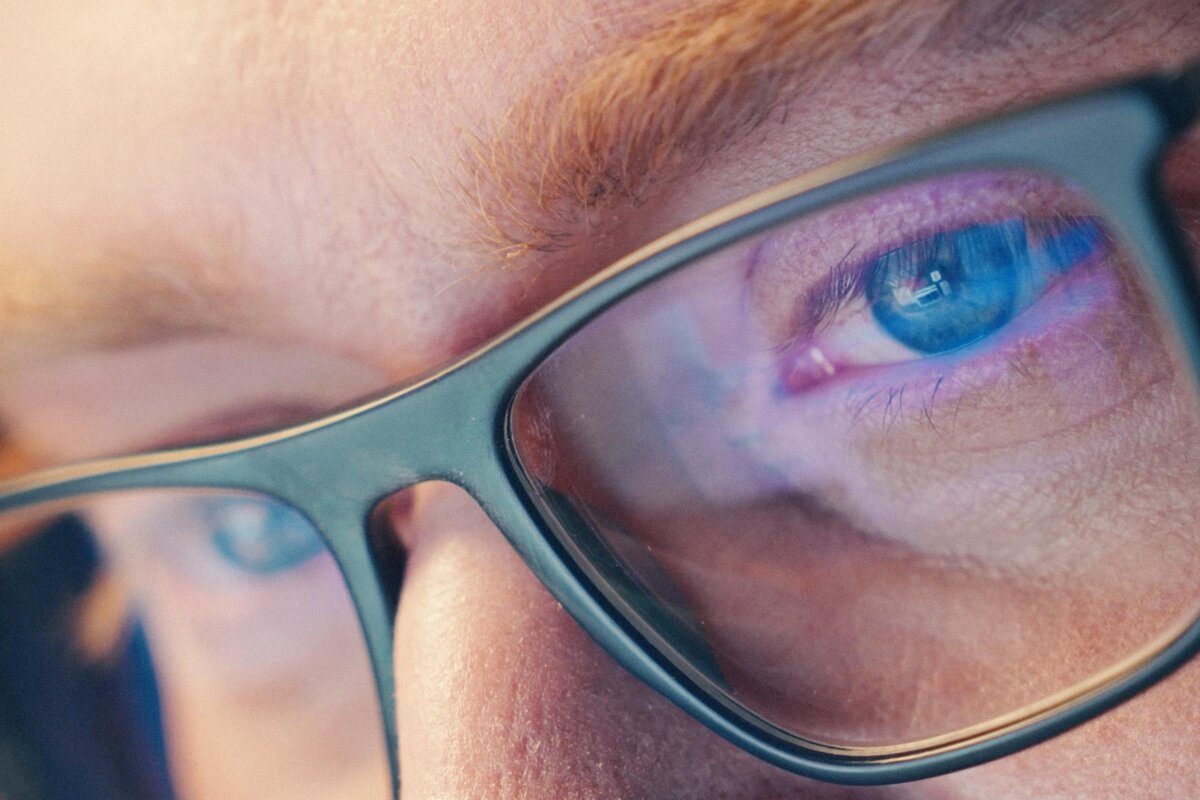
“Outdoor ultraviolet rays are like high-heat quick cooking, while the blue light from indoor screens is like low-heat slow cooking that gradually cooks the lens,” said Jwo-Huei Jou, a professor of materials science and engineering at Taiwan’s National Tsing Hua University who has spent years researching anti-blue-light technology.
Modern life exposes the eyes to light throughout the day—from sunlight outdoors to computer screens, desk lamps, and overhead lighting indoors. Jou recommends paying attention to both the intensity and duration of that exposure, particularly for people who work long hours on computers.
Ultraviolet radiation is a recognized risk factor for cataracts and other eye disorders. Blue light from ordinary screens has not been shown to cause eye disease in humans, but intense or prolonged short-wavelength light has produced oxidative damage in laboratory studies. Long hours of screen use can also cause dry eyes, blurred vision, headaches, and eye fatigue, largely because people blink less and focus at a fixed distance for extended periods.
Even without electronic devices, bright overhead or desk lighting can contribute to visual discomfort, particularly when it shines directly into the eyes or creates glare.
A review published in Ophthalmology and Therapy reported that animal and cell studies have found that blue light can trigger photochemical reactions in the cornea, lens, and retina, increasing oxidative stress and damaging cells. The authors noted that children and older adults may be more sensitive to certain light exposures because of differences in how their eyes transmit or filter light.
In a 2022 study, Jou and his team developed a method for estimating permissible retinal exposure to artificial light. Their model considered the brightness and color temperature of a lamp, as well as its distance from the eyes.
The findings suggested that exposure time can vary considerably among lamps and viewing conditions. Brighter lamps, cooler color temperatures, and shorter viewing distances generally produced shorter calculated exposure limits. The study highlights the importance of positioning lamps properly, avoiding direct glare, and taking regular breaks during prolonged reading or close work.
Protect the Lens Early
Jou believes protecting the eyes before significant vision loss develops is preferable to waiting until problems become severe.
He recalled working with a high school principal who had developed mild cataracts. Following Jou’s recommendation, the principal began wearing glasses that filtered both blue and violet light. Years later, the principal’s vision remains relatively clear, and cataract surgery has not been necessary.
Jou has encountered several people whose cataracts remained stable for many years after consistently wearing blue-light-blocking glasses. One example is a 70-year-old woman with mild cataracts who used the glasses long term. During an eye exam, her ophthalmologist was surprised to find that her cataracts appeared to be less advanced and less cloudy than during earlier examinations.
Although individual experiences cannot determine how a cataract would have progressed without the glasses, Jou said these cases strengthened his interest in whether reducing cumulative exposure to short-wavelength light could help protect the aging lens.
Most cataracts develop gradually as proteins in the natural lens break down and clump together with age. Other factors—including diabetes, smoking, steroid use, eye injuries, previous eye surgery, genetics, and prolonged UV exposure—can increase the risk or accelerate progression.
Wearing UV-protective eyewear outdoors, managing blood sugar, avoiding smoking, and receiving regular eye examinations are among the most practical ways to protect long-term eye health.
Cataract Surgery and Continuing Eye Protection
Cataract surgery removes the cloudy natural lens and replaces it with an artificial intraocular lens.
Artificial lenses generally filter ultraviolet radiation, and some also filter a portion of visible blue light. The degree of filtration varies among lens designs. People preparing for cataract surgery can ask their ophthalmologist about the light-filtering properties of different lenses, along with their possible effects on color perception, contrast sensitivity, and night vision.
For those who have already undergone cataract surgery, Jou recommends continuing to protect the eyes from intense sunlight. UV-blocking sunglasses and a wide-brimmed hat provide practical protection outdoors. People who want additional blue-light filtration can discuss suitable glasses with an eye-care professional, especially if they have retinal disease, glaucoma, migraines, or other eye conditions.
How to Choose Blue-Light-Filtering Lenses
However, many clear, colorless “blue-light-blocking lenses” on the market offer only limited protection. Jou recounted the case of a professor in her 50s who, after cataract surgery, was prescribed a pair of glasses advertised as blue-light-blocking. When his team tested the glasses with specialized equipment, they found that the lenses merely reduced overall light intensity and did not effectively filter blue or violet light.
So how can you choose truly effective blue-light-blocking products? Jou offers the following key methods:
-
Visual Check: White light consists of red, green, and blue. When blue light is filtered out, the remaining red and green combine to produce yellow or orange. Therefore, lenses must appear yellow or orange to provide real filtering. Completely clear lenses mean that not all the blue light has been removed.
-
Color Intensity: A pale yellow offers only limited protection. Deeper yellow or orange lenses filter blue light more effectively.
-
Spectrometer Testing: The most reliable method is to examine the spectral graph. Truly effective glasses should completely flatten the sharp blue-light peak.
Regarding contact lenses, Jou said he had tested blue-light blocking products from multiple brands and found that almost all were ineffective. This is because manufacturers worry that making the lenses too dark would affect their appearance. He called on manufacturers to develop truly effective blue-light-blocking contact lenses for those with real needs, such as athletes.
Ordinary dark-gray sunglasses indiscriminately reduce the intensity of all light, so clarity also drops significantly, Jou said. Entering a tunnel or going indoors can increase safety risks because people cannot see clearly. In comparison, high-quality orange blue-light-blocking glasses improve eye protection while maintaining high clarity.
Shield Your Eyes Indoors and Outdoors
Outdoors, Jou recommends combining UV-blocking sunglasses with a hat or umbrella to reduce direct sunlight. Wraparound frames can provide additional protection by limiting light entering from the sides.
Indoors, avoid placing a bright desk lamp where it shines directly into the eyes and wear blue-light-blocking glasses. The lamp should illuminate the reading material evenly without producing glare or harsh reflections. Warmer-colored lighting may feel more comfortable in the evening, while excessively bright or cool lighting should be reduced when it is unnecessary.
When using electronic devices, adjust the screen so its brightness is similar to that of the surrounding room. Keep the screen at a comfortable distance and position it slightly below eye level. Increasing text size can also reduce the tendency to lean forward or stare intensely.
Regular breaks remain one of the simplest ways to relieve screen-related discomfort. The commonly recommended 20-20-20 practice involves looking at something at least 20 feet away for 20 seconds every 20 minutes. Blinking consciously during close work can also help replenish the tear film and reduce dryness.
Protecting the eyes is not about avoiding light altogether. Rather, it means reducing unnecessary exposure, using appropriate eyewear outdoors, and giving the eyes opportunities to rest throughout the day.