



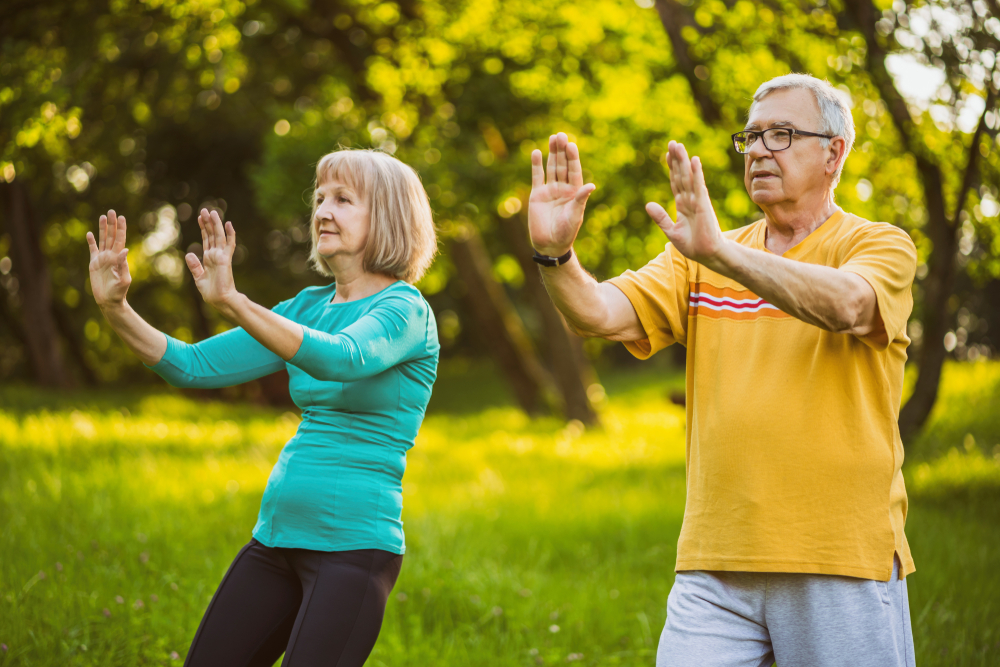
An ancient Chinese martial arts form may slow the effects of Parkinson’s disease.
A new study published in the Journal of Neurology, Neurosurgery and Psychiatry shares the potential medical benefits of tai chi for people with Parkinson’s disease. Tai chi is a practice involving a series of slow, gentle movements, physical postures, meditation, and controlled breathing.
While other studies have focused on the short-term effects of tai chi on symptoms of Parkinson’s disease, this is the first to focus on long-term benefits—from reducing involuntary movements to improving overall quality of life.
The Benefits of Tai Chi for Parkinson’s Disease
There’s no cure for Parkinson’s disease, and symptoms tend to worsen over time. The new study concentrated on the progression of symptoms over 3 1/2 years while evaluating whether the long-term practice of tai chi could help to manage symptoms.
The study showed lower instances of movement problems, such as muscle twitches and involuntary contractions, in the tai chi group. The study also demonstrated that practicing tai chi slowed the impairment of brain function associated with Parkinson’s disease when compared with the assessments of patients who didn’t exercise at all.
Specifically, 1.4 percent of the tai chi group participants experienced involuntary random movements, or dyskinesia, compared to almost 7.5 percent in the control group that didn’t exercise. More than 1.5 percent of those who didn’t exercise experienced dystonia, or contorted posture, compared to zero percent in the tai chi group.
Regarding nonmotor complications, 2.8 percent of participants in the tai chi group showed mild cognitive impairment, and about 7 percent had restless legs syndrome, compared to the control group at 9.6 percent and 15.5 percent, respectively. Sleep and quality of life improved, and cognitive function deteriorated more slowly in the tai chi group.
As this was a small, observational study consisting of 330 subjects, researchers couldn’t determine cause and effect. However, the tie between complications and disease progression shows long-term benefits of tai chi on Parkinson’s disease, “indicating the potential disease-modifying effects on both motor and non-motor symptoms, especially gait, balance, autonomic symptoms, and cognition,” according to the study’s authors.
Understanding Parkinson’s Disease
Parkinson’s disease is a brain disorder that causes nerve cell damage in the basal ganglia, the region of the brain responsible for movement control and dopamine production. As a result, people with the disease often experience tremors, muscle stiffness, and difficulty maintaining balance. Additional symptoms include cognitive impairment and restlessness.
While genetics is thought to play a role, Parkinson’s disease doesn’t always appear to be strictly hereditary. Instead, it may be connected to a combination of family history and environmental elements. Exposure to toxins, such as pesticides, herbicides, and heavy metals, could elevate a person’s risk.
Incidence also increases with age, starting in people older than 65, but it’s more common in men than in women regardless of age. Rates are higher in certain geographic regions in the Northeast and Midwest, possibly because of exposure to environmental toxins.
Can Tai Chi Improve Other Health Conditions?
The potential health benefits of tai chi have been widely studied, with researchers testing its effects on symptoms of cancer, heart disease, dementia, and other conditions.
Cancer
A large 2019 systematic review showed cancer survivors who practiced tai chi showed a reduction in cancer-related fatigue, lower cortisol levels, and better limb coordination. Other evidence links tai chi to reduced cell inflammation and downregulated disease gene expression in breast cancer survivors.
Heart Disease
Studies have shown that tai chi improves psychological well-being in people with heart disease, resulting in an improved quality of life. The studies showed various other benefits for people who practiced tai chi. For example, some revealed that people with chronic heart failure who practiced tai chi experienced less depression, while patients with high blood pressure reported better physical health and less stress.
Dementia and Cognitive Function
Other studies have shown that tai chi improves cognition in older adults with dementia when done an average of 30 to 60 minutes three times per week. Practicing tai chi has also been shown to strengthen physical balance and support emotional well-being.
Additional Benefits
The American College of Rheumatology and the Arthritis Foundation strongly recommend tai chi to manage joint pain such as knee osteoarthritis. Tai chi has also been shown to reduce the severity of symptoms of depression and to help individuals cope with the COVID-19 pandemic. Tai chi poses no additional risk of adverse events when compared to inactivity.