


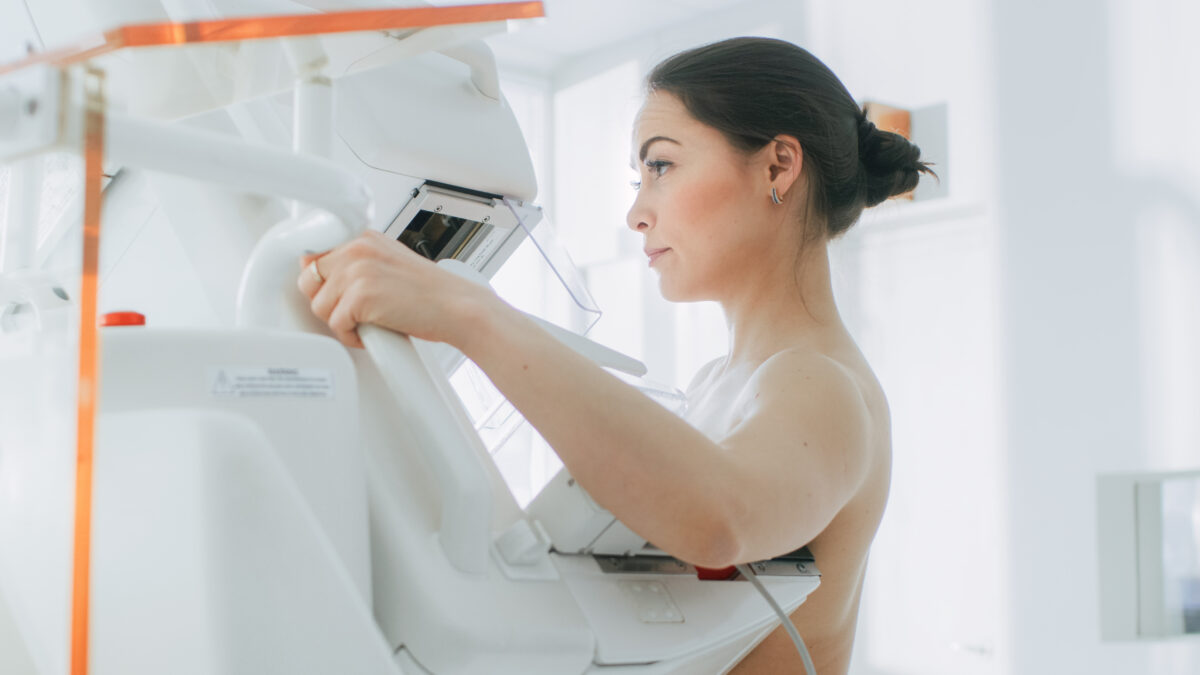
A recent study published in JAMA Oncology made an intriguing discovery. The findings indicated that women who received a false positive mammography result were more likely to develop breast cancer in the 20 subsequent years than women who did not receive a false positive result.
The findings showed that the risk is highest for women between the ages of 60–75 that have low breast density and was also highest in the four to six years following a false positive result.
The study was conducted by researchers at the Karolinska Institutet who noted in a news release that at each screening visit, approximately 3 percent of women have a false positive result—which means that they are recalled for further testing without receiving a cancer diagnosis.
Previous studies suggested that false positive results were associated with an increased risk of breast cancer in the short term. But the new findings—that women who receive false-positive results are more likely than other women to develop breast cancer in the subsequent 20 years—suggests that the risk is long-term. The new data also translates to a 60 percent increased risk.
So what are the reasons for this increased risk among women who did not have breast cancer but thought they did before it was proven otherwise?
Xinhe Mao, is a postdoctoral researcher at the Department of Medical Epidemiology and Biostatistics, at Karolinska Institutet in Sweden, and one of the study’s co-authors. When asked if psychological distress and anxiety—which are often triggered by a false positive result—could be a factor in the development of breast cancer, Ms. Mao told The Epoch Times that this was not a hypothesis they tested.
“To the best of our knowledge, there is no evidence so far that the psychological distress and anxiety from a false-positive test increases the breast cancer risk.”
When asked if the additional testing and procedures like a biopsy might be a factor, Ms Mao stated:
“Consistent with results in previous studies, we found that women with a false-positive recall and a biopsy had a higher breast cancer risk than women with a false-positive recall without a biopsy. We did not suspect the increased risk was due to the biopsy tests or other procedures. On the contrary, we would speculate that the more pronounced risk increase was because women who were given the biopsy test were more likely to have premalignant lesions than those who were not.”
So what other factors might contribute to developing breast cancer after a false positive result? Ms. Mao said that there were two reasons that could potentially explain the increased risk:
“First, women with high mammographic density are more likely to have false-positive recalls because their mammograms make it difficult to distinguish between normal tissues and tumors. Since high mammographic density is a risk factor, these women are at an increased risk for breast cancer. Alternatively, some women are recalled due to premalignant lesions, such as proliferative benign breast diseases, which also place them at a higher risk of developing breast cancer.”
Based on the study results, Ms. Mao and her colleagues recommend more women undergo regular mammography screening.
But what if the anxiety and distress associated with a false positive result play a more prominent role in the development of cancer than we think?
False Positives
According to the American Cancer Society, approximately half of women who get mammograms over a ten-year period will receive a false positive result. However, few studies have examined how this phenomenon affects the women who receive false positive results.
The new study findings demonstrate that many of these women are at a higher risk of developing breast cancer in the two decades after their initial false positive result. So what can they do to reduce their risk? And what other factors might be involved?
Could It Be More Than Just Physiology?
Researchers have found substantial evidence that positive emotions enhance the immune system and negative ones can suppress it. A new area of research called affective immunology aims to study the point where the emotions and the immune response converge.
The Mind-Body Connection
Mind-body medicine uses the power of thoughts and emotions to influence physical health.
“Mind-body medicine is grounded in an understanding of the profound interconnection of mind and body, the ways in which thoughts, emotions, and behaviors impact health, the body’s innate healing capacity, and the importance of compassionate care and self-responsibility in the healing process,” according to the American Association of Mind-Body Medicine.
The modalities used in mind-body medicine are diverse—here are a few of them:
- Meditation.
- Prayer.
- Breathing techniques.
- Yoga.
- Guided imagery.
- Massage therapy.
- Reiki.
- Aromatherapy.
- Acupuncture.
- Tai chi.
- Qi gong.
- Art Therapy.
- Reflexology.
- Hypnosis.
- Biofeedback.
- Cognitive behavioral therapy.
-



Research Supports Mind-Body Medicine
Research supporting the use of mind-body medicine modalities abounds for conditions that range from anxiety and depression to chronic pain, to cancer. Below are some studies investigating the effects of mind-body medicine modalities on women with breast cancer.
In a study published in 2020, researchers used data from the 2017 National Health Interview Survey (NHIS) to study the prevalence of breast cancer and the use of mind-body medicine among those with breast cancer in the U.S. population.
Of the women diagnosed with breast cancer, 25.2 percent had used some form of mind-body medicine in the last twelve months. Modalities used were as follows:
- Spiritual meditation–14.3 percent.
- Yoga–9.6 percent.
- Mindfulness meditation–4.3 percent.
The only predictor of using mind-body medicine in the women studied was a higher education.
In a review of 24 studies of women with breast cancer published by The Cochrane Database of Systematic Reviews, the authors concluded that the evidence supported yoga as a “supportive intervention for improving health-related quality of life and reducing fatigue and sleep disturbances when compared with no therapy, as well as for reducing depression, anxiety, and fatigue when compared with psychosocial/educational interventions.”
A recent report published in the Journal of Clinical Oncology in 2023 created a new set of national guidelines for adults living with cancer based on a summary of scientific literature and available research. The guidelines recommend that cancer patients use mind-body techniques like yoga, relaxation, hypnosis, music therapy, and acupuncture, as well as mindfulness-based interventions to ease anxiety and depression during and after their cancer treatments. The report breaks down how each of the modalities has been successful for treating anxiety and depression for patients undergoing cancer treatment.
Healing Beyond the Physical–The Power of Thoughts
Louise Hay, who passed away in 2017, was a motivational author, professional speaker, founder of Hay House publishing, and author of the seminal book “Heal Your Body,” published in 1976. In the book, she explains how our beliefs and ideas about ourselves and their resulting mental patterns are often the causes of diseases in our bodies. She taught that by using certain techniques, we can change our thinking and heal our bodies, minds, and spirits.
Ms. Hay put her teachings into practice when she was diagnosed with cervical cancer. When considering the alternatives to surgery and medications, she decided to develop her own intensive program using affirmations, visualization, nutritional cleansing, and psychotherapy. In six months of using the program, she completely healed her cancer. If you would like to know more, you can hear Louise Hay’s healing story here.
In her book “Heal Your Body,” Ms. Hay includes a list of areas of the body (as well as ailments), and the potential thought patterns that may have led to a problem there. She suggests using the list as a way to evaluate if the patterns listed seem true for you and affirmations to help change those thought patterns and beliefs which she believes initiate the healing process beginning in our thoughts and extending to our physical bodies. As Ms. Hayes says in the preface, this knowledge can awaken within you the ability to contribute to your own healing process—a process where our participation is essential.
According to the list, the breasts represent mothering and nurturing, as well as nourishment. And the healing affirmation, or new thought pattern is “I take in and give out nourishment in perfect balance.”
The list states that problems with the breasts are often caused by a refusal to nourish the self, putting everyone else first, over-mothering, overprotection, and/or overbearing attitudes. The new thought pattern, or belief in this case is “I am important. I count. I now care for and nourish myself with love and with joy. I allow others the freedom to be who they are. We are all safe and free.”
The idea is that the thoughts we have and the words we speak have an effect on the physical body and that negative thoughts and patterns can create disease. The good news is that thoughts and beliefs can be changed with awareness, and illnesses can be healed if we understand their root cause and are willing to face the thoughts and beliefs that may have created them.
A new study published Jan. 3 in Nature Mental Health demonstrates the power of our beliefs and their impact on the brain. Researchers from Mount Sinai Hospital and the Mount Sinai School of Medicine showed, for the first time, that one’s beliefs about drugs can influence their brain activity and behavioral responses—similar to the dose-dependent effects of some medications.
The implications are that our thoughts and beliefs really can change our physiology—for better or worse.
-


The Power of Emotions
In her book “Radical Remission: Surviving Cancer Against All Odds,” Kelly Turner, a researcher and psychotherapist, documents her findings of more than a thousand cases of people who recovered following a severe and often terminal cancer diagnosis. She discovered nine key factors that almost all her research subjects had in common:
- Radically changed their diet.
- Took control of their health.
- Followed their intuition.
- Used herbs and supplements.
- Released suppressed emotions.
- Increased positive emotions.
- Embraced social support.
- Deepened their spiritual connection.
- Had strong reasons for living.
The above list represents the chapters in the book—with two chapters devoted exclusively to emotions—“releasing suppressed emotions,” and “increasing positive emotions.”
Ms. Turner states that in talking to the cancer survivors she interviewed for her book, one of the most suppressed emotions is fear. She says that fear of death, in particular, is something we all must face at some point—but that fear comes crashing into the present moment when someone hears the words, “You have cancer.”
One example was a man diagnosed with stage 4 lymphoplasmacytic lymphoma (a rare and hard-to-treat type of lymphoma). Conventional doctors knew very little about this type of cancer, and when a few rounds of chemotherapy caused the patient’s cancer to grow dramatically, he decided to stop conventional treatments and pursue alternative ones. His doctors told him he had one to two years to live. He said the decision forced him to face his fear of death.
“When I decided that I would stop [the chemotherapy], the fear really hit me hard—worse than before, because I really knew that this decision involved that I might die in the next year … And there were about four days when I didn’t sleep. I couldn’t sleep at night when I went through this process of facing this fear and accepting that I was going to die. But after that, it was gone! The fear of death was gone. And once you make those decisions, once you jump into trust, things just happen you know? Two days later I just happened to meet [a famous healer].”
When Ms. Turner spoke to the same patient six years later, he was enjoying life and traveling the world.
Many traditional medicines have long known about the connection between our emotions and health.
In Chinese medicine for example—a system around 5000 years old—emotions are so vital to our health and well-being that they are considered one of the causes of disease. Although this concept may seem strange to us in the West, it is important to point out that it is not having emotions per se, but emotions that reach a toxic state that can harm us. This includes emotions that are unacknowledged or unexpressed or those expressed in inappropriate ways and without proper awareness.
After centuries of observation by ancient Chinese practitioners, different emotions were seen to affect particular organs, giving practitioners insights into the diagnosis and etiology of certain conditions. These insights, developed over millennia, are still used to successfully treat modern-day diseases.
Final Thoughts
For centuries humans have been trying to unravel the complex interactions between the seen and the unseen. In the realm of science and medicine, physicians and researchers are uncovering the connections between how we feel, what we think, and their effect on our physiology.
Perhaps healing, and even the development of disease extends beyond the physical and into a realm that science and medicine do not yet fully understand. Or maybe, we just need to remember what many ancient healers knew that we have forgotten—that healing is innate and accessible to us all.
As Hippocrates, the ancient Greek physician considered by many to be the father of modern medicine famously said:
“The natural healing force within each of us is the greatest force in getting well.”