



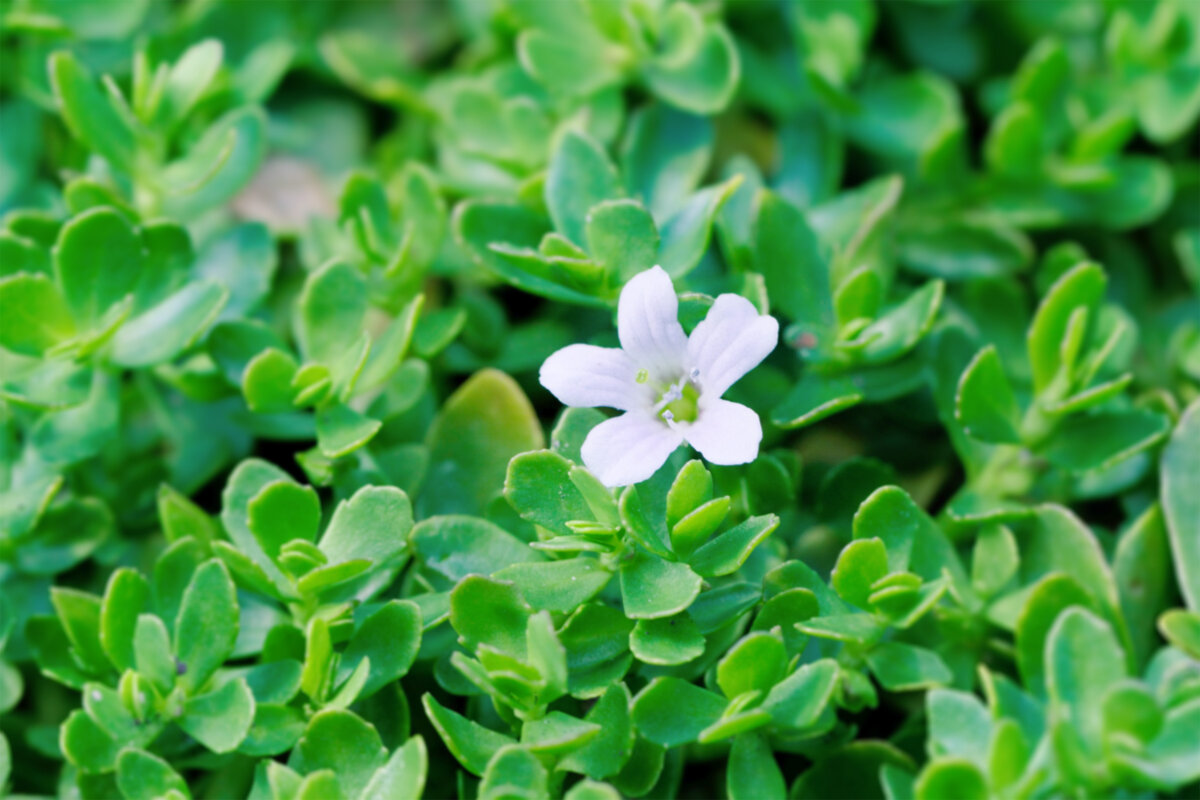
Bacopa monnieri in its natural form doesn’t look especially impressive—it is a creeping succulent with small white flowers that thrives in swamps and bogs. However, this unassuming plant has been India’s go-to brain tonic for more than 3,000 years, and modern research is beginning to understand why.
Cognition and Memory
Known in Ayurvedic medicine as a natural nootropic—a substance that enhances cognitive function—Bacopa is traditionally used to improve memory, sharpen focus, and protect the aging brain.
A 2024 study published in the Journal of Psychiatry and Cognitive Behaviour examined the effects of Bacopa on cognitive function and memory in 80 healthy adults. Participants received either 300 milligrams (mg) of Bacopa (containing 90 mg of bacosides, the plant’s primary active compounds) or a placebo daily for 12 weeks.
The group taking Bacopa showed significant improvements across multiple measures: verbal short-term, spatial short-term, visuospatial working, episodic, and working memory. Cognitive functions, including concentration, reasoning, alertness, and mental flexibility, also improved. Other benefits reported included improved anxiety and sleep quality, reduced cortisol levels, and increased brain-derived neurotrophic factor levels.
Brain-derived neurotrophic factor is a critical protein that the brain needs to promote the growth, survival, and maintenance of neurons. It is also vital for the brain’s plasticity—strengthening connections between neurons—essential for learning, memory, and cognitive function.
The study authors also noted that concentration improved significantly within three hours of a single dose of Bacopa.
Clinical herbalist Geo Derick Giordano, who has worked extensively with Bacopa, calls it “the number one herb in India for the brain, cognition, and memory.” In traditional Ayurvedic practice, it’s given to children to enhance learning and to older adults experiencing cognitive decline.
Neuroprotection
Scientific studies are also validating Bacopa’s neuroprotective effects.
According to the authors of a 2024 systematic review investigating Bacopa’s neuroprotective and cognitive-enhancing actions, Bacopa can repair damaged neurons, restore synaptic function, improve nerve transmission, and improve neuroprotection. It also has antioxidant and anti-apoptotic actions, meaning that it inhibits apoptosis (programmed cell death) and promotes cell survival.
The team found that in the 22 clinical trials included in the review, Bacopa reduced oxidative stress and pro-inflammatory biomarker levels, both hallmarks of neurodegenerative diseases.
Bacopa monnieri proved effective in optimizing cognitive performance, specifically by improving memory retention, learning capacity, and attention span. The research highlights its ability to stabilize emotional and psychiatric well-being, showing marked improvements in symptoms of depression, impulsivity, and anhedonia (the inability to experience pleasure).
Additionally, participants experienced improved sleep routines and reductions in both hyperactivity and attention deficits, suggesting that Bacopa may serve as a comprehensive tool for managing complex psychological and developmental challenges.
Brain Trauma
Bacosides, Bacopa’s main active ingredients, are plant chemicals known as triterpenoid saponins. When we take Bacopa, our bodies convert bacosides into new compounds—ebelin lactone and bacogenin A1—which are more potent and can more easily cross the blood-brain barrier, herbalist Karta Purkh Singh Khalsa, who specializes in Ayurvedic, Western, and traditional Chinese herbs, told The Epoch Times.
These new compounds and their actions may help explain Bacopa’s powerful effects on the brain.
Herbalist and author David Winston frequently uses Bacopa for patients recovering from head trauma, and often in combination with St. John’s wort, ginkgo biloba, and holy basil, he wrote in his book “Adaptogens: Herbs for Strength, Stamina, and Stress Relief.”
In the book, he shares a story of working with a woman who survived bacterial meningitis. Her vision, hearing, sense of smell, and ability to speak were severely impaired, and she could not read, work, or even hold a conversation. After taking an herbal formula containing Bacopa for just one month, she completely recovered, saying that she was “back to normal, and maybe even better than that.”
Stress and Anxiety Reduction
Bacopa is an adaptogen, meaning that it helps us better adapt to the effects of stress—one of its traditional uses in Ayurveda.
It rejuvenates the mind, calms the nervous system, and is used for anxiety and stress.
Bacopa supports calm, clarity, and emotional resilience, Khalsa said, and is commonly used when the mind is overstimulated, which can manifest as irritability, insomnia, or mental fatigue.
A 2021 study examined the effect of Bacopa on depression, anxiety, and stress among people between the ages of 12 and 60 during the COVID-19 pandemic. Participants took two 500-mg Bacopa capsules after breakfast and dinner daily for 30 days. The researchers found that the participants had a significant decrease in depression, anxiety, and stress scores after using Bacopa for one month, highlighting its effectiveness in psychological health.
How to Take Bacopa
Bacopa is generally considered safe, with a standard dosage of dried, powdered herb ranging from 2 to 10 grams, Khalsa said.
It can be taken in powder, capsule, or liquid extract form, and found in health food stores and online—just ensure that you are getting a quality product and that it is grown organically to avoid unnecessary impurities.
Khalsa recommends buying Bacopa from a verified high-quality vendor with a good reputation among clinical professionals.
Because Bacopa grows in wet, potentially contaminated environments, sourcing is critical.
“I grow my own because it grows in ditches in India—and I would not want to get it from there,” Giordano, who runs The Sanctuary Wellness Center in Virginia, said. “I just want to make sure it’s clean.”
Although Bacopa is a great plant, it is bitter, so she makes it into a glycerite to sweeten it.
Glyceritesare herbs made into a concentrated liquid extract, similar to alcohol tinctures. However, instead of alcohol, glycerites use vegetable glycerin as the solvent to extract the herbs’ medicinal properties. Giordano notes that glycerins only extract the water-soluble elements of a plant, so are not as potent as tinctures, which include the lipid-soluble components. Glycerites are highly versatile, gentle, sweet-tasting, and do not need to be refrigerated. They are an excellent alternative to alcohol tinctures and are often used for children, pets, or those wishing to avoid alcohol. Glycerites can be stored for one to two years if kept in a cool, dark place.
Bacopa is considered safe and well-tolerated. Some studies suggest that the most common side effects are gastrointestinal discomfort such as abdominal cramps, increased stool frequency, and nausea.
Always work with a qualified herbalist to get the appropriate dosage for you, especially if you have health conditions or are on medication. The American Herbalists Guild maintains a database of qualified herbalists trained in a variety of herbal traditions.
You may see Bacopa called “brahmi” in Ayurvedic contexts, although this name is also used for gotu kola, a different herb, so be sure that you know which you are getting. The term derives from “Brahman,” meaning “universal consciousness” in Vedic philosophy—fitting for a plant long used as a brain tonic.
Final Thoughts
With the increase in neurodegenerative disorders such as dementia, and a growing percentage of the population experiencing anxiety and depression and feeling overwhelmed and exhausted by stress, Bacopa seems to be an ancient herb made for modern times. Its relative ubiquity and ease of growth, both outdoors and in, make it an excellent choice for your garden—and your medicine cabinet.