



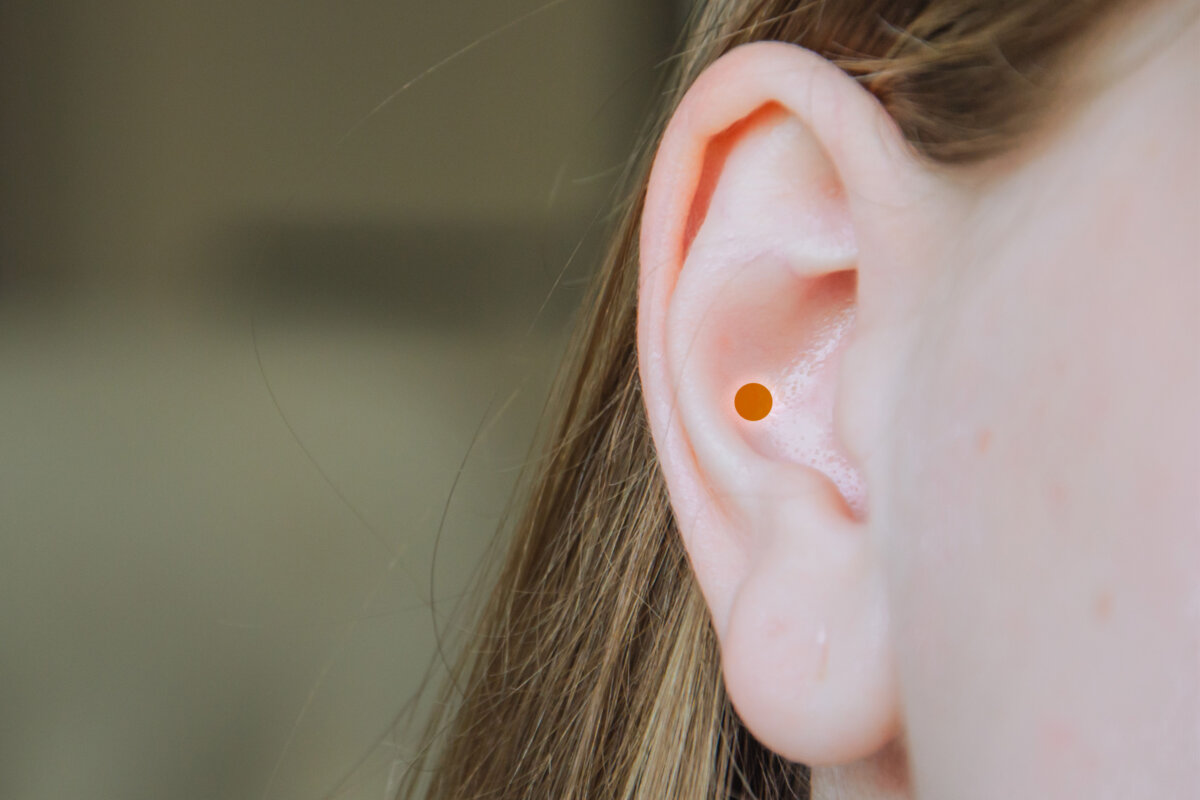
Shelane Frederick drove her 10-year-old daughter more than 1,000 miles for a few acupuncture needles in her ear—that stayed taped there for a few weeks.
Her daughter had developed a severe allergy to meat after a tick bite, a condition called alpha-gal syndrome. Every time she ate meat, her body reacted with anaphylaxis, a rapid and potentially life-threatening allergic response. Eventually, she began reacting to eggs and milk too.
“It was so distressing, because I thought, I can’t live this way. My daughter can’t live this way. I can’t tie an EpiPen around her neck,” Frederick told The Epoch Times.
Frederick is a nurse and knew the hospitals had nothing to offer beyond medication for symptoms. Meanwhile, she did her own research and managed her daughter’s reactions herself. After only a few weeks, she discovered Soliman Auricular Allergy Treatment (SAAT) and Donald Liebell’s clinic.
After the needles came out and she slowly reintroduced meat, milk, and eggs, her daughter was able to eat normally again.
What Is SAAT?
SAAT is a protocol that treats all types of allergies. Dr. Nader Soliman, a board-certified anesthesiologist and medical acupuncturist with a clinic in Rockville, Maryland, developed and refined it over more than a decade. About a dozen practitioners worldwide are certified to perform it, Soliman told The Epoch Times.
Soliman’s inspiration came from his years of treating patients with allergic reactions, whose only options were symptom management or relying on daily medications with considerable side effects.
The protocol is simple: A practitioner identifies a specific point on the ear that corresponds to a given allergen, inserts a needle, then leaves it taped in for three to four weeks.
However, each allergen requires its own needle, Soliman said.
He adds that some substances, such as milk, are made up of several components—in milk’s case, casein, lactose, and whey. Each must be tested to identify it.
The Possible Mechanism
Liebell, a chiropractor and acupuncturist who trained under Soliman in 2013, describes SAAT as a neurologically based treatment that works through cranial nerve pathways.
“SAAT is not about suppressing symptoms chemically. It is not about forcing tolerance through exposure. It is about restoring proper electrical communication so the immune system stops making the wrong decision,” he told The Epoch Times.
In simple terms, the immune system behaves like a security system. It’s supposed to ignore harmless substances, but in an allergic reaction, the alarm goes off anyway. SAAT “resets” that alarm through a nerve pathway accessed via the ear.
Two studies have investigated SAAT for treating alpha-gal syndrome.
In 2020, Liebell published a study in the American Journal of Biomedical and Life Sciences that found that among 155 patients with alpha-gal, 94.8 percent who responded at follow-up reported a significant reduction in symptom severity or frequency, or that they could eat some mammalian meat again without a reaction.
In 2021, Soliman and colleagues published a study in Medical Acupuncture.
The study included 137 people, all of whom received SAAT for alpha-gal syndrome. Of the 126 participants with available outcome data, 121—or 96 percent—reported symptoms in remission. At least nine months had elapsed for every participant by the time of the analysis, and some reported remaining in remission for years. Eleven individuals were unsure of their treatment response or could not be reached for follow-up. A small number of patients received a second treatment only because the needle fell out before the 3-week timeline.
Among the 29 participants with a previous diagnosis of anaphylaxis who provided outcome data, 27—or 93.1 percent—reported no subsequent symptoms following accidental or, in some cases, intentional exposure.
The study’s authors believe the results warrant further investigation.
Liebell approached leading U.S. tick researchers to study SAAT, but met what he called “industry silence.”
Not every acupuncturist uses the SAAT protocol; it’s a special certification acupuncturists can take if they want to use the treatment with patients. Sue McComb is an acupuncturist with a clinic in Missouri. She hasn’t pursued SAAT certification due to the distance and having to take it in person—but does treat allergy patients—including those with alpha-gal—using standard body and ear acupuncture.
“I do what I do, and it should help you, but it’s not that specific treatment,” she told The Epoch Times.
When asked her thoughts about SAAT, she said that acupuncture in the ear for addiction and digestion is extremely effective.
“So, if acupuncture can help with addiction and help with digestion, certainly it can help someone who has had a tick bite in dealing with a reaction to red meat,” she said.
What Happened After SAAT
William Alexander is an acupuncturist and the owner of Affinity Acupuncture in Brentwood, Tennessee. While treating pain is a primary focus of his practice, he is also certified in SAAT and uses the protocol with patients with alpha-gal syndrome and environmental allergies, including his own daughter.
“It’s been a game changer for my daughter,” Alexander told The Epoch Times. “Every spring, she would spend a couple of months congested and miserable. Between the allergy symptoms and the medication, she was often tired, too. Since the treatment, she hasn’t needed to take her allergy medicine.”
Another of Alexander’s patients with a dog allergy got the SAAT treatment before staying with a family member with a dog. Previously, she’d felt terrible during and after those visits, but after SAAT, she reported spending time with the dog with no issues whatsoever.
In 2021, April Rupe’s 12-year-old son was active and played sports until he developed swollen joints and unexplained weight gain. His doctors initially suspected juvenile arthritis, and nothing —including cryotherapy and cold plunges—helped.
“He hurt all the time. He’d wake up in the morning, and he was so stiff he could barely walk,” Rupe told The Epoch Times.
A blood test eventually confirmed alpha-gal syndrome. After SAAT, her son lost 25 pounds and returned to playing sports pain-free, Rupe said.
“After the protocol, he plays sports again, no joint pain—he wakes up in the morning fine, walks fine, and runs, with no swollen joints. It’s just … it was amazing,” she said.
Frederick’s daughter had a similar turnaround. “When I drove her down, she was lethargic. She slept the whole way down. She just was not herself.”
On the drive home in 2024, her daughter was animated and talkative.
Frederick’s daughter and Rupe’s son both remain healthy today.