



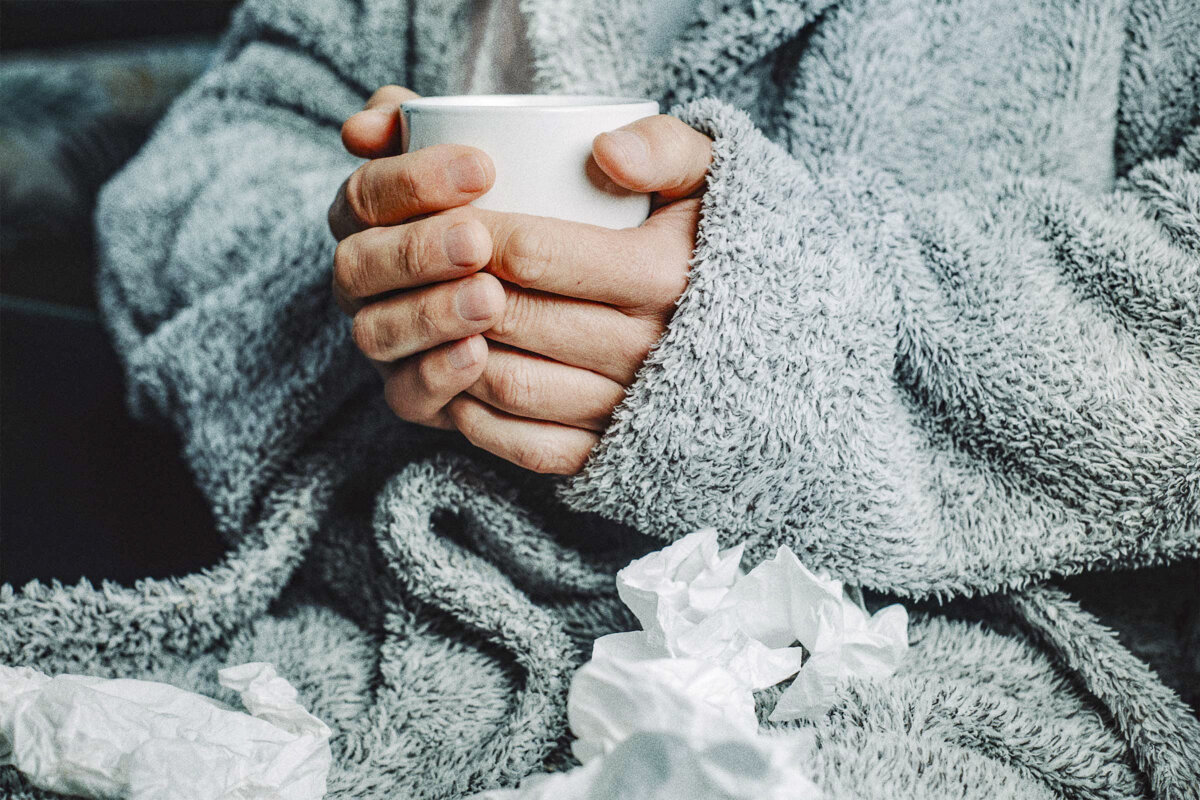
As the days get shorter and the mornings colder, someone in your office may already be coughing. Cold and flu season is coming, and the habits you build now can help your body navigate it with ease.
Start With Stress
Fall is a natural time to turn inward, and a good time to ask whether any stress in your life has become chronic.
The distinction matters. While acute stress can temporarily boost immunity, stress that lingers over weeks or months suppresses the immune system and releases hormones such as cortisol that, over time, can lead to inflammation and lower levels of the white blood cells our bodies need to fight off invaders.
You can’t eliminate stress, but how you respond to it makes a real difference. Practices like prayer, journaling, yoga, and meditation can help center us, renew our sense of purpose and value in the world, and help us manage stress more effectively.
Herbs for Stress Support
Adaptogens are herbs that build resilience, balance the body, and help us manage stress and its wide-ranging effects. You can take them as capsules, powders, teas, or tinctures. Popular examples of adaptogens include ashwagandha, schisandra, rhodiola, licorice, holy basil (tulsi), and ginseng.
A small study found that adults taking ashwagandha root extract daily reported major reductions in perceived stress, anxiety, and morning cortisol levels. They also had significant improvements in sleep quality. Other small studies have found that rhodiola reduces cortisol, helps combat mental fatigue, and improves mood during periods of high stress.
Protect Your Sleep
Sleep is another factor that significantly affects immunity and overall health. Consistent, quality sleep is critical for a robust immune system. Sleep deprivation has become common in our culture, and studies have found that not getting adequate sleep weakens the immune system, lowers the body’s defenses against infection, and increases chronic inflammation.
Although we still need regular movement for a healthy immune system, as we move into the colder months, our activity levels should decrease slightly compared with summer to conserve our energy, and we need more sleep to maintain our health and well-being.
While this is easier said than done, unplugging from devices and dimming the lights an hour or two before bed help your body produce melatonin and prepare for sleep. Consistent, quality sleep supports a robust immune system, while chronic sleep loss, now common in our culture, is linked to weaker defenses against infection and higher levels of chronic inflammation.
Kitchen Medicine
Herbs and spices in your kitchen are potent medicines that fortify the body against infections common at this time of year.
Garlic
One of the best-known is garlic, an ultimate all-around health booster. It’s easy to find, inexpensive, and, if you’re feeling adventurous, simple to grow, too.
Garlic is a powerful antibacterial, antiviral, antifungal, antiparasitic, and anti-inflammatory, making it excellent for boosting immunity and preventing illness.
The easiest approach is to add more to your meals. Chop or crush raw cloves and let them sit for about 10 minutes before cooking. This allows allicin, garlic’s main active compound, to form. Take it raw if you feel a cold coming on. Crush a clove or two, let it sit for 10 minutes, and swallow it with food. It isn’t for the faint of heart, but it’s a readily available, natural option. Try capsules if you don’t like the taste. Consider black garlic for an added health boost; it is fermented until it turns chewy and sweet. Reportedly, people have been using it for centuries in Thailand, South Korea, and Japan.
Clinical herbalist, acupuncturist, and functional medicine practitioner Kerry Adams, who has practiced for nearly 50 years and owns Herbally Yours in New Jersey, shares how she uses it. “I like to add it to thyme and ginger tea, which are both warming and increase circulation,” Adams told The Epoch Times via email. “I also often add it to onion and honey as a cough syrup,” she added.
If you are taking medications or being treated for chronic health conditions, speak to a healthcare provider before taking garlic in medicinal doses. Because garlic is a warming herb, Adams cautions against using it if you already have signs of heat, like fever, red eyes, and a red face. She adds that those using blood-thinning medications, or those with a history of gastric ulcers or gastritis, should be cautious with garlic.
Cayenne Pepper
Cayenne pepper is another herb that many people have in their spice racks or kitchen cabinets. If you like spicy foods, this can be a great way to strengthen the body and keep illness away. It is highly nutritious and full of vitamin C. It also contains vitamins E, A, and B vitamins, all of which are needed for a healthy immune system. Cayenne’s vitamin A helps the body build up healthy mucous membranes in the nose, mouth, and lungs, helping to keep microbes out.
In a small study in the Journal of Allergy and Clinical Immunology, participants with nonallergic rhinitis (nasal congestion, runny nose, and sneezing) who used a capsaicin nasal spray experienced rapid, lasting, and significant symptom relief after 14 days of use.
You can try it by adding a pinch of dried cayenne to soups, stews, or teas, and increasing the amount gradually based on how you feel. Cayenne is generally considered safe in food, but avoid it if you have signs of heat, and stop if it causes stomach upset or irritation.
Honey
Honey has a long history of medicinal use, thanks to its antibacterial, antimicrobial, and anti-inflammatory properties. One study states that honey inhibits about 60 types of bacteria, as well as some species of fungi and viruses. Lab research also suggests it may stimulate immune cells, including antibodies, monocytes, neutrophils, natural killer cells, and T and B lymphocytes, though these effects haven’t been shown to translate into a stronger immune response from a daily spoonful.
Even so, honey is a soothing, time-tested addition to cold and flu season. It’s an ingredient in many herbal home remedies, including an effective cough syrup when combined with sliced onions, as shown in an infographic by The Epoch Times, Home Remedies for Everyday Ailments.
Raw honey is the better choice. Many commercial honeys are pasteurized, meaning they’ve been heated to high temperatures, which may destroy many of their beneficial compounds. Raw honey, on the other hand, comes straight from the hive and retains most of them. A daily spoonful of honey during cold and flu season is a great way to boost your immune system.
If you don’t mind paying a premium, you can supercharge honey’s benefits with Manuka honey, made by bees pollinating the manuka bush—found almost exclusively in New Zealand. To ensure it’s authentic, look for the Unique Manuka Factor grade on its label. You can read more about it here.
People with diabetes should use honey with caution because of its sugar content, and children younger than 1 should never have honey due to the risk of botulism spores.
Final Thoughts
No single herb or habit will make you immune to cold and flu season, but managing stress, protecting your sleep, and stocking your kitchen with a few time-tested ingredients can all help your body stay resilient.
“The condition of the terrain, not the virus or bacteria, is the critical factor for resistance to illness,” Adams said. She added that a strong immune system, healthy mucous membranes, and the digestive and nervous systems are the main areas to support.