



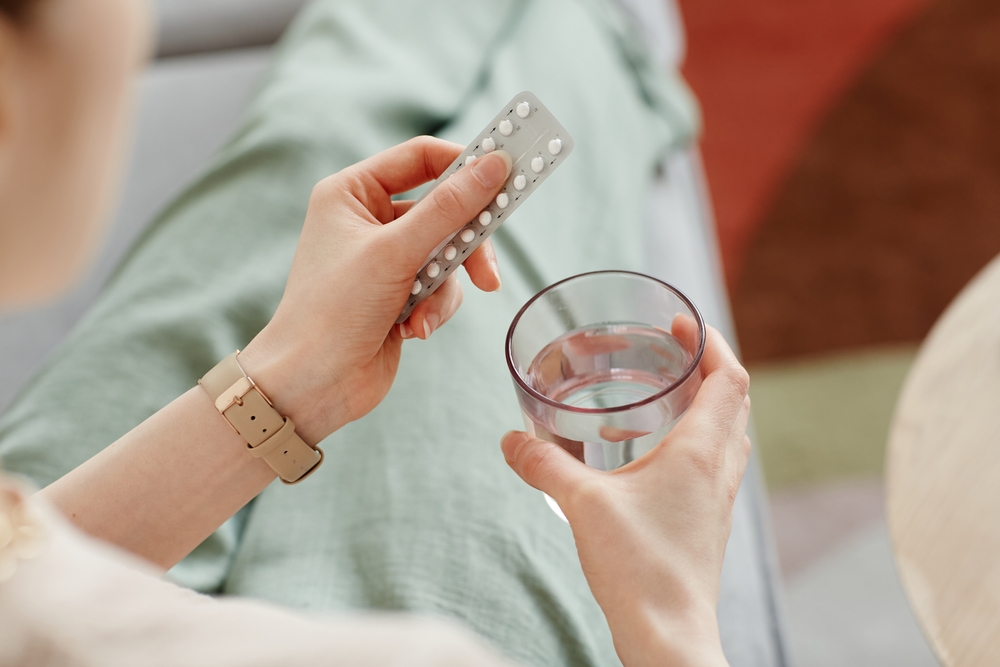
Even though women have been using the birth control pill for the better part of the past seven decades, researchers are still discovering the complex ways it affects the body and mind—which go far beyond reproduction.
The study has wide-reaching implications, as millions of women worldwide use the birth control pill, many of them beginning at puberty.
Previous research has shown that women using oral contraceptives have a heightened risk of cardiovascular disease, metabolic conditions, and mental health issues such as suicide and depression, although the mechanisms that cause these adverse effects aren’t well understood.
Recent evidence also suggests that the use of oral contraceptives influences behaviors that include reduced cognitive ability, altered emotional memory, changes in partner preference, and lower relationship satisfaction, though again, more research is needed to understand why.
The new research may provide some insight to help answer these questions as it points to an issue that can underly many other physical and mental ailments—stress.
The Study
Researchers at Aarhus University in Denmark and Claremont Graduate University in the United States recently conducted a study to see how birth control pills affect the way women react to and recover from stressful situations.
One hundred and thirty-one young women participated in the study and were an average of 20 1/2 years of age. Researchers studied the women’s stress response while they were having their blood drawn. Some women in the group were on the birth control pill, and others weren’t. Stress responses were evaluated by measuring levels of the stress hormone ACTH, or adrenocorticotropic hormone in the women’s blood.
The study was designed so that the women would have their blood taken, and their ACTH levels would be measured (to determine stress response). The women would then engage in 15 minutes of social activities and have their blood drawn again, to see if and how their stress levels had changed.
To reduce unnecessary stress to the participants, the researchers inserted a small intravenous catheter during the initial blood draw so that after the 15 minutes of social activity, the young women could have their blood taken without the need for another needle prick.
After having a blood sample taken, the women engaged in 15 minutes of social activities that could include playing board games, singing songs together, attending a church service, or getting to know each other in a group setting.
According to the study, the 15-minute group activities were designed to encourage interpersonal attachment and help buffer the effects of stress.
After 15 minutes of social interaction—which involved a choice of six different group activities—blood samples were taken to evaluate the effect of socializing on their stress levels.
The study showed that 15 minutes of social activity lowered stress hormone levels in women not on the birth control pill–or with a natural menstrual cycle. By contrast, women in the group taking birth control pills had no change in their ACTH levels after socializing together.
The study also states that both groups of women—those on birth control and those who weren’t—experienced beneficial effects during the group activities, which included increased closeness and improved mood, regardless of their contraceptive use or what phase of their menstrual cycle they were in.

“Being with other people is one of the most effective ways of reducing stress. Our results are really important because they indicate that people who use birth control pills do not experience the same reduced stress hormone levels in connection with social activity as people who do not use the pill,” Michael Winterdahl, a visiting scholar at the Translational Neuropsychiatry Unit at the Department of Clinical Medicine and one of the study’s authors, said in an Aarhus University article.
The connection between birth control pills and the stress response in women is well established in the scientific literature; however, using ACTH in connection with social activity is a new approach. The present study differs from previous studies that have primarily focused on cortisol, another stress hormone. Studying ACTH gives researchers an advantage as it changes much more quickly than cortisol does. Using ACTH allowed the researchers to observe and evaluate rapid changes in the women’s responses to stress.
ACTH, or adrenocorticotropic hormone, is a hormone produced by the pituitary gland—a small gland that sits at the base of the brain. ACTH controls the production of the hormone cortisol. Cortisol is made by the adrenal glands, two glands located above the kidneys. ACTH and cortisol are both vital to helping the body respond to stress.
Birth control pills are known to affect the hypothalamic-pituitary-adrenal (HPA) axis. As the name suggests, stress signals travel from the hypothalamus in the brain through the pituitary gland, which releases ACTH, which then travels to the adrenal glands to release cortisol.
“By studying ACTH levels, we take another step towards understanding how the brain regulates stress as ACTH acts as a neurotransmitter from the brain to the adrenal cortex, which produces cortisol. When we analyze ACTH levels, we can gain insight into the quick-response mechanism that controls the body’s reaction to stress,” Mr. Winterdahl said.
Although the researchers don’t have a definitive answer as to why the women using birth control don’t experience the same reduction in stress hormone levels in connection with social activities as those who aren’t on the pill, there are several theories.
“Our research has pushed us closer to an explanation that centers on the brain and the ACTH dynamics. The biochemistry is complex, but we are working based on the assumption that birth-control pills can suppress the body’s own production of progesterone,” Mr. Winterdahl explained.
Chronic stress also affects levels of progesterone. Because progesterone is a precursor to cortisol, which is released in stressful situations, when cortisol levels go up, levels of progesterone decrease. Progesterone is also broken down into the hormone allopregnanolone, which is involved in a wide range of calming effects. Progesterone and allopregnanolone are associated with our ability to adapt to stress.
Variations in the Menstrual Cycle
The study also revealed that in the women who weren’t taking birth control pills, the stress-lowering effects of social activities depended on where they were in their menstrual cycle.
In the analysis after the social activities, researchers found that the women not taking birth control had a significant decrease in ACTH levels if they were in the menstrual and secretory phases of their cycle, but ACTH levels were unchanged if they were in the proliferative phase.
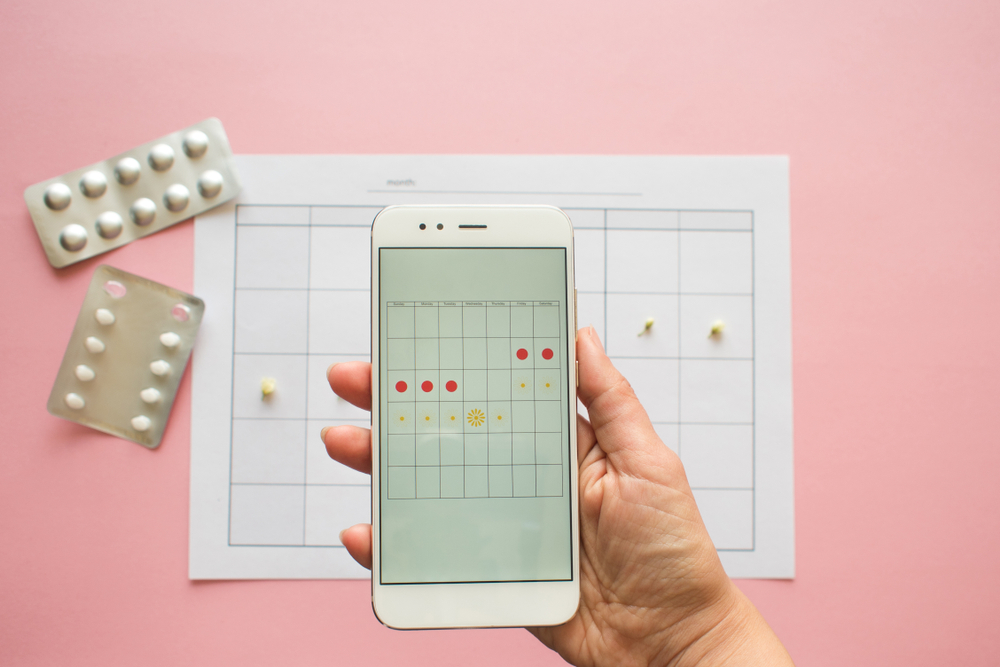
The menstrual phase is during the period, and the secretory phase is the last phase of the menstrual cycle and occurs from ovulation until the beginning of the next period.
The proliferative phase occurs just after the period when the body begins producing the hormones needed to initiate ovulation.
The women taking birth control didn’t show decreased ACTH levels after the social activities, regardless of where they were in their cycle.
According to Mr. Winterdahl, progesterone levels are very low at this phase of the menstrual cycle, leading to a minimal conversion into the hormone allopregnanolone. He continues by saying, “Since allopregnanolone is important for activating the receptors that regulate the stress response, we don’t see a reduction in ACTH levels in women with a natural cycle who have just had their period.”
He also notes that women tend to be more physically active during this phase in their cycles, which could be an adaptation causing stress levels and behavior to synchronize with a woman’s cycle. In women taking birth control pills, this stress response is “disconnected” and, therefore, can’t adapt to changing situations.
Other Implications for Health
Mr. Winterdahl also notes that not all birth control pills are created equal.
“It’s also relevant to point out that birth-control pills aren’t just contraceptives. There are different generations of the pill, each with its own chemical structure due to the hormones used, which means the pills have different side-effect profiles. It’s therefore crucial that our experiments are reproduced with a larger and more diverse group of test subjects,” he said.
The study offers another piece of the complex puzzle involving hormones, stress, and their effect on women’s physiology.
“I hope that our research can contribute to improved treatment and prevention of stress-related conditions in women. In addition, the study also contributes to a broader understanding of the interactions between gender and stress hormones,” Mr. Winterdahl said.